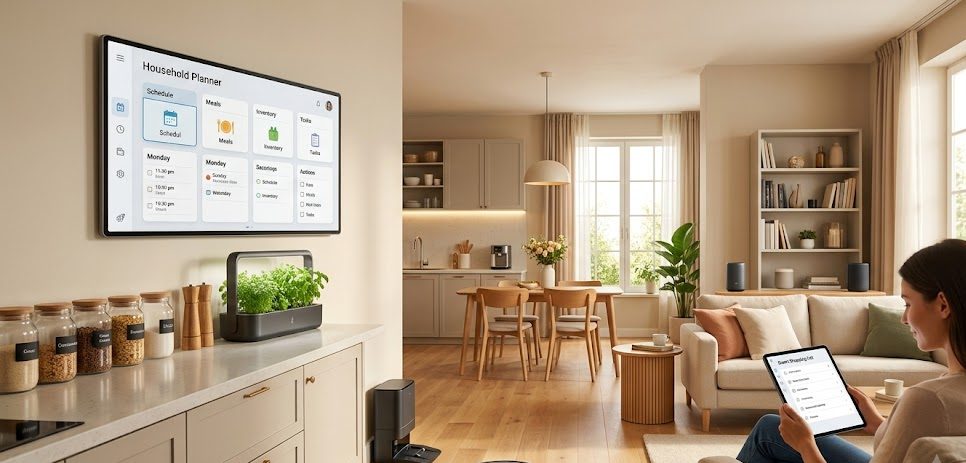
A comfortable home does not necessarily require expensive furniture, a large amount of storage, or a complicated cleaning system. In many cases, a well-managed household simply comes from knowing what needs to be done, where things belong, and when regular responsibilities should be handled. A little planning can prevent everyday chores from becoming overwhelming and can make the home feel calmer and easier to manage.
Household planning is really about creating simple systems that fit the way people actually live. Every home has different rooms, schedules, storage limitations, family responsibilities, and routines. A system that works for one household may not work for another, so the best approach is to build practical habits around your own needs.
Instead of trying to organize everything at once, focus on the areas that create the most daily frustration. A few thoughtful changes can improve the flow of household activities, reduce wasted time, and make routine responsibilities easier to handle.
Good organization is not about keeping a home perfect. It is about making everyday tasks easier, more predictable, and less stressful.
Start With a Household Overview
Before creating schedules and storage systems, take a broad look at the household. Consider which responsibilities happen every day, which occur weekly, and which only need attention occasionally.
Common responsibilities include meal preparation, grocery shopping, laundry, cleaning, bill payments, maintenance, pet care, and organizing personal belongings. When these tasks remain in your head without a system, it becomes easier to forget something or spend unnecessary time deciding what to do next.
Writing down recurring responsibilities gives you a clearer picture of the household workload. It can also reveal tasks that could be combined, simplified, delegated, or scheduled differently.
Daily
Small cleaning, meals, dishes, and basic tidying.
Weekly
Laundry, deeper cleaning, shopping, and planning.
Occasional
Maintenance, seasonal organization, and repairs.
Give Every Frequently Used Item a Home
One of the simplest ways to make a home easier to manage is to decide where commonly used items belong. When objects have predictable locations, putting them away becomes much easier and finding them later takes less time.
Think about the things that regularly end up on tables, counters, chairs, or floors. Keys, chargers, bags, shoes, paperwork, kitchen tools, and small household items often create clutter because they do not have convenient storage locations.
The storage location should be practical. If an item is used every day, its storage should not require several complicated steps. Convenience increases the likelihood that people will actually return things to their proper places.
The “easy return” rule
Store frequently used items where they can be taken out and put back quickly. The easier the process, the more sustainable the organization system becomes.
Create a Weekly Household Planning Session
A short weekly planning session can prevent many small household responsibilities from accumulating. Choose a convenient day and spend a few minutes reviewing the coming week.
Look at appointments, work schedules, school activities, grocery needs, meals, cleaning responsibilities, and any upcoming household tasks. The goal is not to create a rigid schedule but to identify potential pressure points before they arrive.
Your weekly planning checklist
Plan Meals Before the Week Gets Busy
Meal planning can save both time and unnecessary decision-making. When people do not know what they are going to prepare, they may repeatedly make last-minute choices, order food unexpectedly, or discover that an important ingredient is missing.
Meal planning does not mean every meal needs to be complicated. Choose a few practical meals that fit your schedule and consider preparing ingredients in advance when convenient.
A flexible plan is often more useful than a strict one. Keep a couple of simple meal options available for days when the original plan becomes impractical.
See what ingredients are already available.
Choose practical meals for busy days.
Prepare useful ingredients when convenient.
Make Grocery Shopping More Efficient
Grocery shopping becomes easier when it is connected to meal planning and household inventory. Before making a shopping list, quickly check the refrigerator, freezer, pantry, and other storage areas.
Group items on your list by category, such as produce, dairy, pantry products, household supplies, and personal-care items. A categorized list can make shopping more efficient and reduce the chances of forgetting important items.
It is also useful to keep a running list throughout the week. When something runs out or is nearly finished, add it immediately instead of relying on memory during the next shopping trip.
Smart shopping habit
Check → List → Group → Shop → Store. This simple sequence can reduce repeated trips and make household supplies easier to monitor.
Break Large Cleaning Jobs Into Smaller Routines
Waiting until the entire home needs a major cleaning can make the task feel exhausting. Instead, divide household cleaning into smaller activities that can be spread across the week.
For example, one day may focus on bathrooms, another on floors, while another can be used for changing bedding or cleaning frequently touched surfaces. The exact arrangement should depend on the size of the home and the household’s routine.
Small, consistent efforts can make larger cleaning sessions less demanding.
Think in cleaning zones
Use a “Reset” Routine at the End of the Day
A short evening reset can make the next morning noticeably easier. Instead of attempting a major cleaning session every night, focus on returning frequently used spaces to a basic, functional condition.
Put away items that were used during the day, clear important surfaces, return dishes to the kitchen, and prepare anything needed for the following morning.
The objective is not perfection. A ten-minute reset that is repeated consistently can be more practical than an occasional large cleanup.
The evening reset
1. Clear the main living area.
2. Put commonly used objects back.
3. Handle obvious kitchen clutter.
4. Prepare important items for tomorrow.
5. Stop when the basic reset is complete.
Organize Storage According to Frequency of Use
Storage becomes much more useful when the things you use most often are easy to reach. Items that are used only occasionally can be placed in less accessible areas.
For example, everyday kitchen equipment should generally be easier to access than seasonal cookware. Frequently worn clothing can occupy convenient locations while rarely used items can be stored separately.
This approach reduces unnecessary searching and makes everyday routines smoother.
Keep within easy reach.
Use secondary storage.
Store out of the way.
Keep Important Household Information Together
Household management becomes easier when important information can be found quickly. Bills, appliance manuals, warranties, maintenance records, contact details, and other useful documents can become difficult to locate when they are scattered across different drawers, devices, or email accounts.
Create a simple digital or physical filing system. Use clear categories and meaningful names so that another household member can also understand where information belongs.
For sensitive documents, use appropriate security measures and avoid leaving private information openly accessible.
📄 Home documents
🔧 Maintenance information
🧾 Receipts and warranties
💳 Regular household payments
Create a Maintenance Calendar
Household maintenance is easier when it is planned before something becomes a major problem. Many homes contain tasks that need occasional attention, such as checking filters, cleaning appliances, inspecting fixtures, or reviewing outdoor areas.
Rather than relying entirely on memory, keep a basic maintenance calendar. Add recurring tasks and review them periodically.
Not every maintenance task should be handled personally. For electrical, plumbing, structural, or other specialized work, use appropriately qualified professionals when necessary.
Simple maintenance planning
Review routine household needs.
Prepare systems for changing conditions.
Review larger maintenance requirements.
Avoid Buying Storage Before Reducing Clutter
When a home feels crowded, the immediate temptation is often to buy more containers, shelves, or organizers. These products can be useful, but additional storage does not always solve the underlying problem.
First determine whether everything currently being stored is genuinely useful. Items that are broken, duplicated, unused, or no longer relevant may be taking valuable space.
Once unnecessary items have been reduced, it becomes easier to understand what kind of storage is actually needed.
Before buying organizers, ask:
• Do I actually use these items?
• Do I already own duplicates?
• Could frequently used items be stored somewhere more convenient?
• Is the current storage system too complicated?
Share Household Responsibilities Clearly
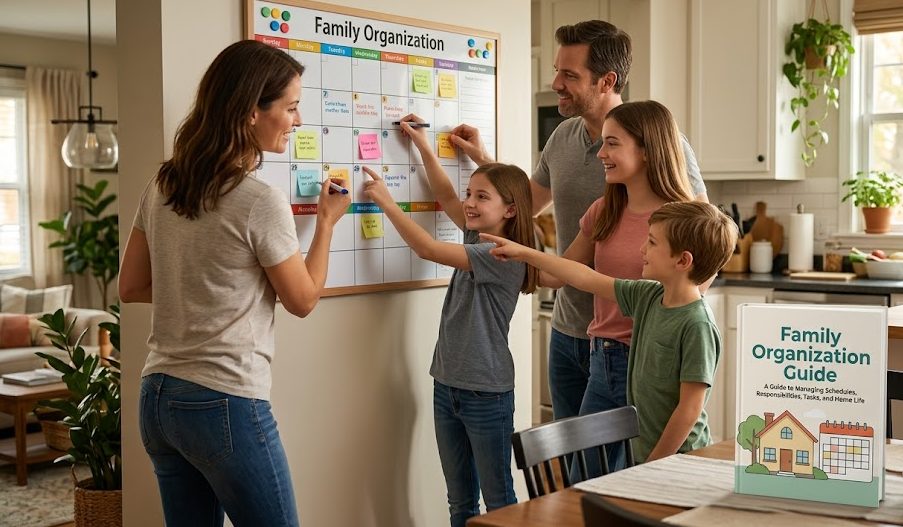
In a household with multiple people, organization should not depend on one person remembering everything. Responsibilities can be shared according to age, ability, schedule, and household circumstances.
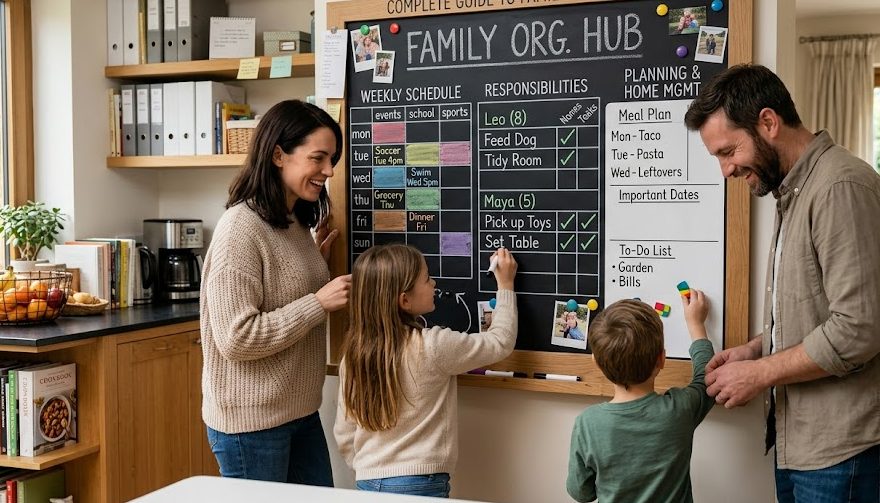
Clear expectations can prevent confusion about who is responsible for a particular task. A shared calendar or simple checklist can be useful when several people need to coordinate.
The goal is not to create a strict list of obligations for every minute. It is simply to make recurring responsibilities visible and manageable.
A shared responsibility system can include
Make the Home Easier to Navigate
Organization should support movement through the home rather than create additional obstacles. Keep frequently used pathways reasonably clear and avoid placing everyday items where they repeatedly block doors, stairs, or working areas.
Entryways deserve particular attention because they often become temporary storage areas for bags, shoes, packages, and outdoor items. A small, clearly defined drop zone can help prevent this clutter from spreading into other rooms.
Build Routines Around Natural Habits
The strongest household systems usually connect new habits to things people already do. For example, putting keys in the same place immediately after entering the home is easier to remember than adding a completely separate organizational ritual.
Similarly, putting dishes away after a meal or returning a tool immediately after use connects organization to an existing activity.
Look for moments when a small action can naturally become part of an existing routine. These habits tend to require less mental effort over time.
Habit stacking examples
🚪 After entering → put keys in their place.
🍽️ After eating → clear the eating area.
🛋️ Before relaxing → complete a quick room reset.
🌙 Before bed → prepare essential items for tomorrow.
Keep Emergency and Essential Items Easy to Find
Some household items should be easy to locate when they are needed unexpectedly. Basic first-aid supplies, flashlights, important contact information, household tools, and other essential items should have predictable storage locations.
Household members should know where important items are kept. An organization system is less useful if only one person knows how to find everything.
Review these locations occasionally and make sure frequently needed supplies have not been moved or mixed with unrelated items.
Leave Space for Real Life
A common mistake in household planning is creating a system that is too complicated to maintain. A schedule may look perfect on paper but become frustrating when unexpected events, visitors, busy workdays, or family responsibilities appear.
Leave some flexibility in your household routine. Not every room needs to be perfectly organized every day, and not every task needs to be completed immediately.
A practical system should survive an unusually busy day without collapsing completely.
A flexible household system has three levels
Tasks that genuinely need attention.
Regular activities that keep the home running.
Tasks that can wait when life becomes busy.
Review the System Every Few Months
Household needs change. People move rooms, schedules change, children grow, work arrangements shift, and storage requirements evolve. A system that worked last year may no longer be the most convenient option.
Every few months, walk through the home and ask whether frequently used items are still easy to access, whether storage areas are overloaded, and whether household responsibilities are being handled efficiently.
Small adjustments can keep the organization system useful without requiring a complete redesign.
Quick home review
✓ Which area becomes cluttered most often?
✓ Which household task is easiest to forget?
✓ Is anything stored in an inconvenient location?
✓ Are responsibilities shared clearly?
✓ Which routine could be simplified?
A Practical Household Planning Framework
Identify the areas and tasks that create the most daily difficulty.
Remove unnecessary steps, duplicates, and avoidable clutter.
Give important items predictable and convenient locations.
Assign recurring household responsibilities to practical times.
Make responsibilities visible when multiple people manage the home.
Adjust the system when household needs change.
An Organized Home Should Make Life Easier
Household organization is not about creating a picture-perfect home where everything is always in exactly the right place. Real homes are used every day, and normal life naturally creates mess, interruptions, unexpected responsibilities, and changes in routine.
The purpose of household planning is to reduce unnecessary friction. When frequently used items have clear homes, recurring responsibilities are scheduled, groceries are planned, important information is organized, and household members understand their roles, everyday life can become considerably easier to manage.
The most useful systems are also flexible. A household should be able to handle a busy week without requiring everyone to follow an exhausting routine. That is why simple habits often work better than complicated organizational systems.
Start with the areas that cause the most frustration. Maybe the entryway is always cluttered, grocery shopping is unpredictable, laundry piles up, or important household documents are difficult to find. Solve one problem at a time and build habits around solutions that are convenient enough to maintain.
Over time, these small improvements can create a home that feels more predictable, comfortable, and functional. You do not need to organize everything in one weekend. A few practical systems, repeated consistently, can make a surprisingly large difference.
Ultimately, the best household plan is one that supports the people living in the home. Keep it simple, allow room for real life, and focus on making everyday responsibilities easier rather than chasing perfection.