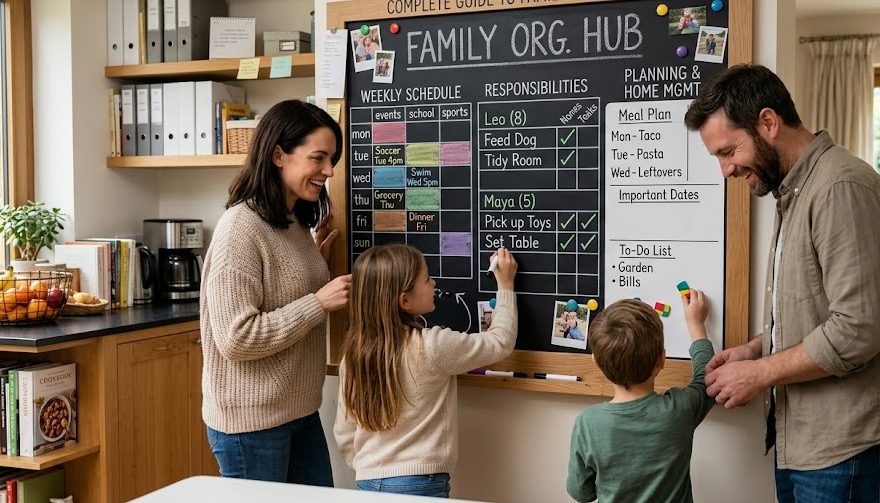
Build a Family System That Keeps Everyday Life Easier to Manage
Family organization is about creating simple systems for schedules responsibilities planning communication and household tasks. A good system does not need to be complicated. It simply helps everyone know what needs to happen and when it needs to happen.
Why Family Organization Matters
A busy household can quickly become difficult to manage when important tasks are kept only in one person’s memory. School activities work schedules appointments meals shopping cleaning and personal plans can all compete for attention. A shared organization system gives the family a clearer view of everyday responsibilities.
The goal is not to plan every minute. Instead the goal is to create predictable routines while leaving enough flexibility for unexpected events and changes. Even a basic calendar and a short weekly planning session can make household management more comfortable.
Build a Simple Family Schedule
Divide Household Responsibilities Clearly
Cleaning
Decide which household areas need regular attention and divide simple tasks between available family members.
Meals
Plan basic meals and decide who can help with preparation serving and cleaning after meals.
Shopping
Maintain a shared shopping list so important household items are easier to remember.
Home Care
Track maintenance organizing laundry supplies and other recurring home management tasks.
Use a Weekly Family Planning System
A short planning session at the beginning of each week can help everyone understand what is coming next. Keep the process simple and focus on the most important activities.
Organize Everyday Home Management
Meal Planning
Planning meals can make grocery shopping and daily cooking easier. You do not need a complicated menu. A simple list of familiar meals can provide enough structure for the week.
- Choose several meals for the week
- Check ingredients already available
- Create one shared shopping list
- Keep a few simple backup meal ideas
Household Supplies
Keep frequently used household supplies in predictable locations. This makes it easier to notice when something needs to be replaced.
- Keep similar items together
- Review supplies regularly
- Maintain a basic restocking list
- Avoid buying duplicates unnecessarily
Important Documents
Family documents are easier to manage when they have a dedicated storage system. Use clearly labeled folders for important records.
- Create separate folders for major categories
- Keep frequently needed documents accessible
- Review old papers occasionally
- Use secure digital storage when appropriate
Home Maintenance
Small maintenance tasks are easier to remember when they are part of a regular household routine.
- Keep a simple maintenance list
- Record tasks that need professional help
- Check common household areas regularly
- Plan larger tasks ahead of time
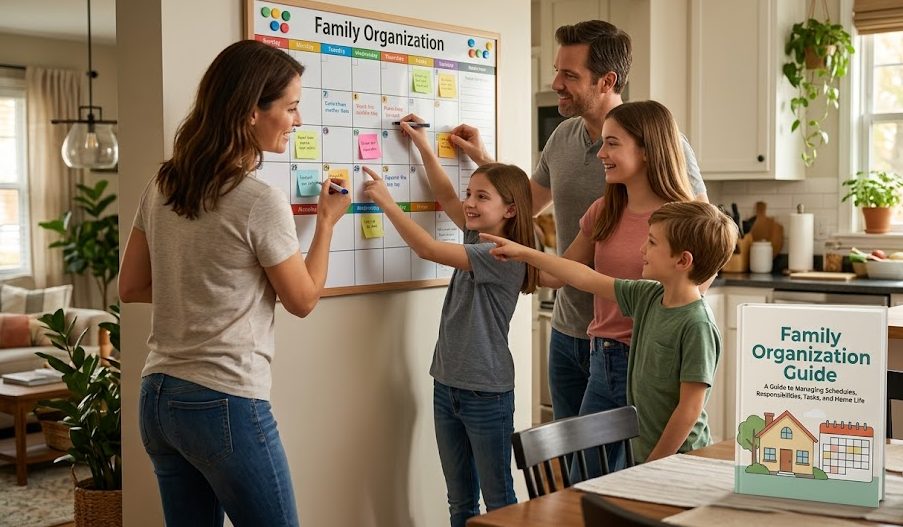
Example Weekly Family Planning Board
Keep Family Communication Simple
Organization works better when everyone has access to the same basic information. Regular communication can reduce confusion and make it easier to adjust plans when something changes.
Practical Organization Tips
Keep It Visible
Place the main family schedule somewhere that household members can easily check it.
Use Simple Categories
Separate school work household activities personal plans and important events into clear categories.
Review Regularly
Spend a few minutes each week reviewing what worked and what needs to change.
Do Not Overplan
Leave enough open time for rest unexpected events and spontaneous family activities.
Make Tasks Easy
Break larger household responsibilities into smaller actions that are easier to complete.
Celebrate Progress
Notice when the household system becomes easier to follow. Small improvements can build better long term habits.
Common Family Organization Mistakes
- Keeping every important task in one person’s memory
- Creating schedules that are too complicated to maintain
- Assigning responsibilities without explaining them clearly
- Forgetting to update the schedule when plans change
- Trying to organize everything at the same time
- Leaving no flexible time between planned activities
A useful organization system should make life easier rather than becoming another source of stress. If a system feels difficult to maintain then simplify it until the family can use it naturally.
Create a System That Works for Your Family
Family organization does not require a perfect schedule or a large collection of planning tools. The most useful system is one that the household can actually follow. Start with a shared calendar then add responsibilities meal planning shopping household tasks and regular communication. Keep the system flexible and review it as family needs change. With simple routines and clear responsibilities everyday home management can become easier to understand and more consistent for everyone.