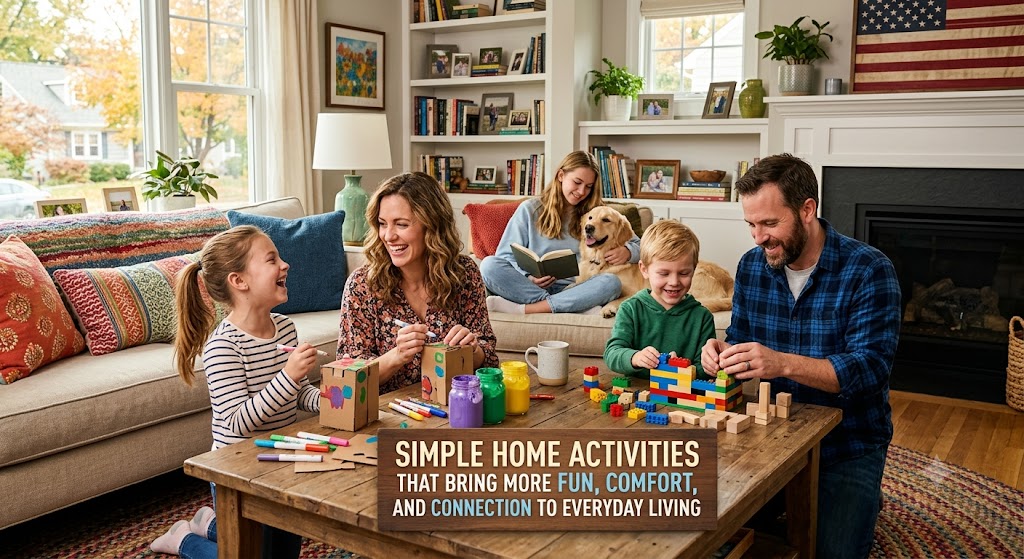
Home is often where the busiest parts of life finally slow down. It is where people eat, rest, talk, work, watch something together, prepare for tomorrow, and enjoy small moments between responsibilities. Yet when routines become repetitive, it can be easy to move through the same spaces without really enjoying them. Everyone may be in the same house while still spending most of the evening focused on separate screens or individual tasks.
Creating more enjoyable home life does not require a major renovation, an expensive hobby, or a perfectly planned weekend. Simple activities can introduce variety while encouraging people to spend meaningful time together. Cooking something new, playing a board game, creating a comfortable reading corner, starting a small project, or simply sharing stories can turn ordinary time into something memorable.
The best activities are flexible enough to work for different schedules and personalities. Some require several people, while others can be enjoyed alone. What they have in common is that they make home feel more intentional—a place where people can relax, be creative, laugh, learn, and connect without needing to leave the house.
Bring a little friendly competition and laughter into the evening.
Use simple creative projects to make time at home more engaging.
Turn meals into opportunities for conversation and participation.
Make room for quiet activities that help everyone recharge.
Turn an Ordinary Evening Into a Theme Night
One easy way to make home life feel less repetitive is to give an ordinary evening a small theme. It could be a movie night with homemade snacks, a breakfast-for-dinner evening, a family game night, a music night, or a simple “try something new” evening.
The theme does not need to involve elaborate preparation. Its purpose is simply to create a change from the usual routine. When people know that a particular evening has a small activity attached to it, even a normal weekday can feel like something worth looking forward to.
Make Cooking a Shared Activity
Preparing food together can be much more enjoyable when it is treated as an activity rather than simply another household responsibility. Choose a familiar recipe and let different people take different roles. One person can prepare ingredients, another can handle mixing, while someone else sets the table or prepares drinks.
You can also make the process more interesting by trying a recipe from another region, recreating a favorite restaurant-style meal at home, or creating a simple tasting night with several small foods. The goal is not culinary perfection. It is the conversation, teamwork, and shared experience that happens while everyone is involved.
Bring Back Simple Games
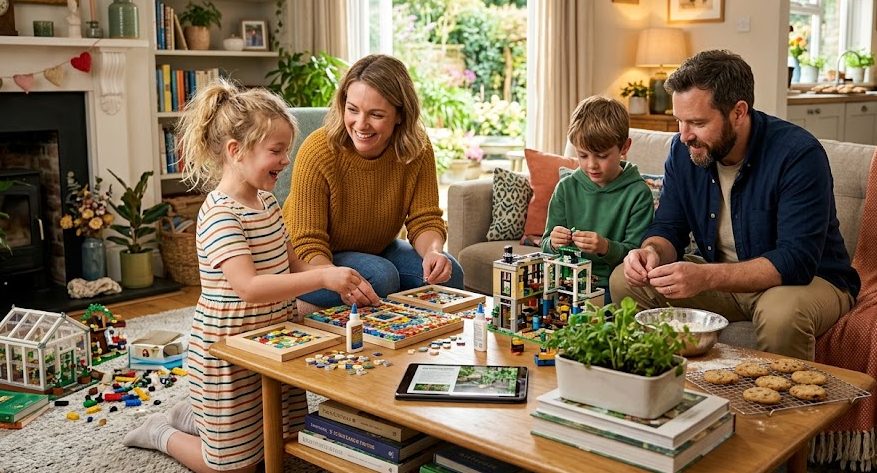
Games are an easy way to create interaction because they give everyone something to do together. Board games, cards, puzzles, word games, trivia, and simple guessing games can work for different ages and group sizes.
The most important part is keeping the atmosphere relaxed. Not every game needs to become a serious competition. Sometimes the funniest moments happen when people create their own rules, choose unusual challenges, or play a familiar game in a completely different way.
“`Quick and easy to start.
Great for conversation.
A calmer shared activity.
Little preparation required.
Give Your Hands Something Interesting to Do
Creative activities can change the atmosphere of an ordinary afternoon or evening. You do not need specialized skills. Try drawing, painting, simple crafts, decorating a small area, making a photo collage, building something from a kit, or creating a small piece of home décor.
The finished result is not necessarily the most important part. Working on something together creates natural opportunities to talk, exchange ideas, and laugh about mistakes. It can also provide a welcome break from activities that involve constantly looking at a screen.
Create a Comfortable Reading or Quiet Corner
Connection does not always mean talking or doing an activity together. A comfortable home should also make it easy to slow down. Choose a small area with a comfortable chair, useful lighting, a blanket, or a small table and turn it into a place for reading, journaling, listening to music, or simply sitting quietly.
A quiet corner can be especially useful when different people in the home have different energy levels. One person can read while another works on a puzzle nearby. Being together does not always require everyone to participate in exactly the same activity.
Start a Conversation Tradition
Meaningful conversations often happen more naturally when there is a regular opportunity for them. Instead of waiting for a special occasion, create a small tradition. It might be a weekly dinner where everyone shares the best part of their week, an evening walk around the neighborhood, or a relaxed conversation over tea or another favorite drink.
Questions can make the conversation more interesting without making it feel like an interview. Ask what surprised someone recently, what they are looking forward to, what they learned, or what small thing made them laugh. Simple questions can open the door to stories that otherwise might never be shared.
Photo Night
Look through old photographs, create digital albums, or choose favorite memories and talk about the stories behind them.
Indoor Picnic
Put a blanket on the floor, prepare simple foods, and change the normal setting for an easy weekend activity.
Music Session
Take turns choosing songs, explore unfamiliar artists, or create a shared playlist everyone can contribute to.
Plant Care
Spend time caring for indoor plants, starting herbs, or arranging a small collection of greenery.
Make Screen Time More Social
Screens do not automatically make home life less connected. The difference often comes from how they are used. Instead of everyone watching separate content, choose something that can be enjoyed together. A movie, documentary, comedy special, educational program, or even a video about a shared interest can become the starting point for conversation.
You can also add a small ritual around the activity. Prepare snacks together, let someone choose the next film, or discuss the most interesting part afterward. These small additions transform passive screen time into a more shared experience.
Try a Small Home Project
Projects are excellent for creating a sense of progress and shared achievement. You could reorganize a bookshelf, refresh a small corner, create a memory box, rearrange furniture, build simple storage, or decorate a wall with photographs and artwork.
Keep the project small enough to finish without turning it into a stressful renovation. Completing something together provides a satisfying result and gives the home a personal touch that ordinary purchases often cannot create.
Do Not Underestimate the Value of Doing Nothing
A comfortable home should not feel like an activity center that requires constant entertainment. Sometimes connection comes from sitting together without a detailed plan. Have a quiet meal, enjoy a cup of tea, listen to music, sit outside, or simply talk about whatever comes up.
Giving yourself permission to slow down can be just as valuable as finding something exciting to do. The point of enjoyable home life is not to fill every empty minute. It is to make the time you already spend at home feel more meaningful.
Build a Simple Weekly Home Activity Rhythm
“`The Best Home Moments Are Often the Simplest Ones
Enjoyable home life does not depend on constantly finding new entertainment. It comes from making ordinary moments more intentional. A meal can become a conversation. A rainy afternoon can become a puzzle session. A quiet evening can become a reading hour. A familiar room can feel completely different when everyone participates in creating the atmosphere.
Start with activities that fit naturally into your household. If people enjoy food, cook together. If they like competition, play games. If everyone needs a slower pace, create a comfortable quiet evening. There is no universal formula because every home has different interests, schedules, and personalities.
The real goal is to create more opportunities to enjoy the people and spaces already around you. Small traditions become meaningful because they are repeated. Shared jokes, favorite recipes, weekly games, creative projects, conversations, and quiet evenings can gradually become the memories people remember most. A happier home is often built not through expensive experiences, but through simple moments that make everyday life feel connected, comfortable, and worth enjoying.