Family life can be wonderfully rewarding, but it can also become busy very quickly. Between work, school, appointments, meals, errands, cleaning, activities, and everyday responsibilities, it is easy for a household to feel like everyone is constantly trying to catch up.
Organization cannot remove every challenge, but it can make many ordinary responsibilities easier to manage. When everyone knows where things belong, what needs to happen, and how common tasks are handled, there are fewer last-minute decisions and fewer moments of confusion.
The good news is that a more organized home does not require expensive storage systems or a strict schedule. Small, practical changes can create noticeable improvements when they are easy enough for the whole household to maintain.
The most useful family organization ideas are the ones that fit naturally into everyday life. Instead of creating a complicated system, focus on making common tasks simpler, more visible, and easier to repeat.
Create Systems That Reduce Daily Friction
A well-organized family home is not about everything looking perfect. It is about making everyday responsibilities easier to understand, complete, and maintain.
1. Create One Shared Family Calendar
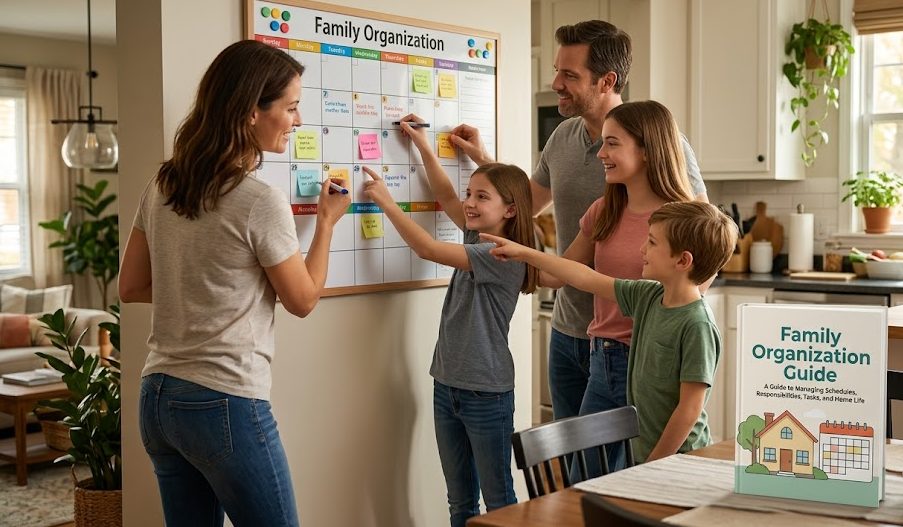
One of the simplest ways to reduce household confusion is to keep important schedules in one visible place.
A shared calendar can include school events, appointments, work commitments, activities, birthdays, travel plans, and other important dates.
Some families prefer a large calendar in a common area, while others use a digital calendar that everyone can access. Either approach can work as long as the information is easy to find and regularly updated.
Instead of relying on one person to remember everything, the calendar gives the household a shared reference point.
Keep important dates visible.
Track school, work, and family plans.
Reduce last-minute surprises.
2. Give Everyday Items a Permanent Home
Household clutter often comes from items that do not have a clear place to go.
Keys end up on counters, shoes collect near the door, papers spread across tables, and chargers disappear into different rooms.
Choose convenient storage locations for items that are used regularly. A basket near the entrance can hold everyday essentials. Hooks can help organize bags or jackets. Small containers can keep chargers, school supplies, or other frequently used items together.
The important part is convenience. If returning an item to its proper location requires too many steps, the system is unlikely to last.
Store Things Where They Naturally Get Used
The most practical storage location is often close to the place where an item is picked up, used, or put away.
3. Set Up a Simple Entryway System
The entrance of a home can quickly become one of its busiest areas.
Shoes, coats, backpacks, keys, mail, and bags often collect there because everyone uses the space throughout the day.
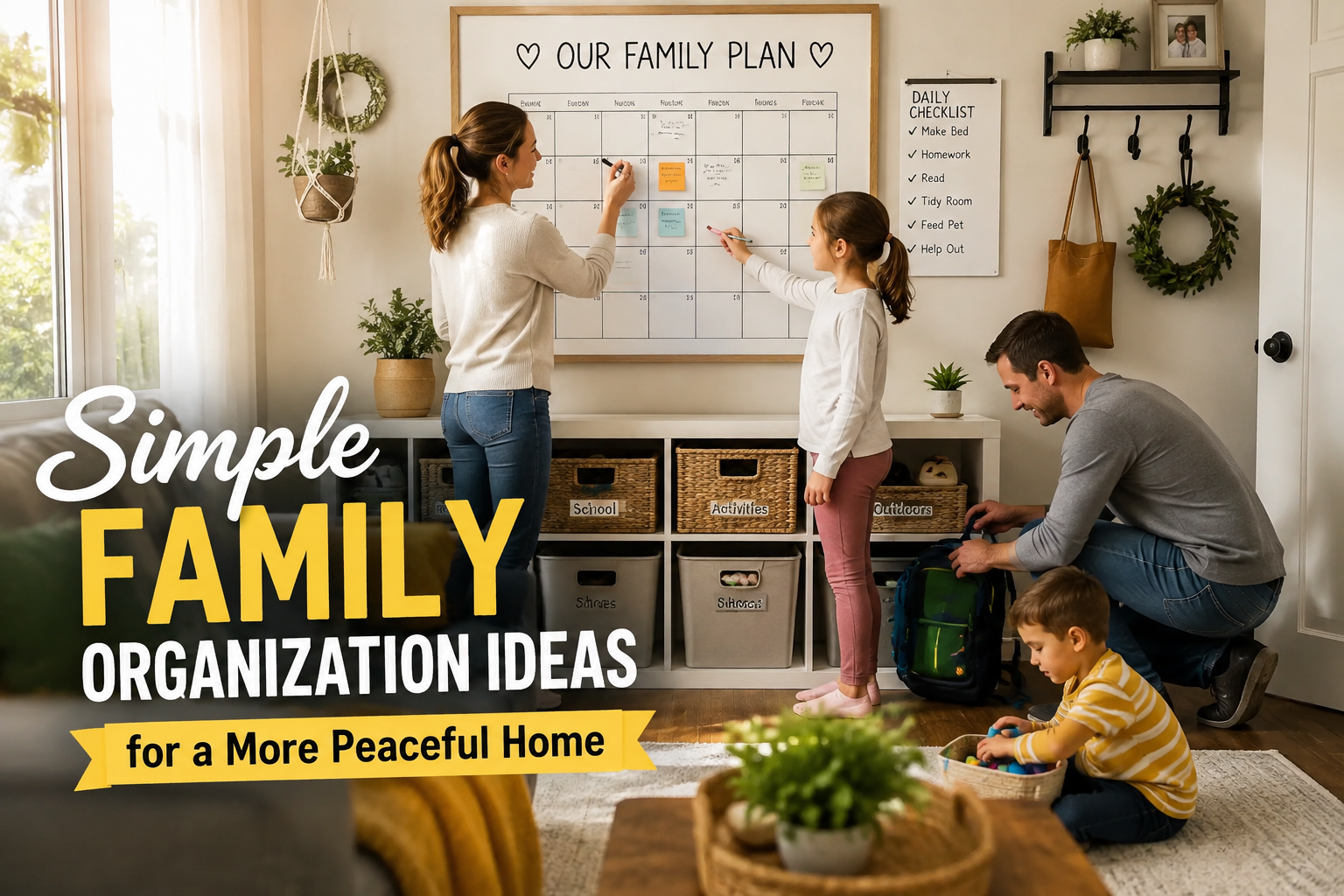
A simple entryway system can make a significant difference. Use hooks for bags and jackets, a basket for small items, and a designated location for shoes.
If space is limited, avoid adding too many storage containers. The objective is to control the most common sources of clutter without turning the entrance into another complicated project.
Make the Front Door a “Drop Zone” With Rules
Give common items specific locations so everyone knows where shoes, bags, keys, and other daily essentials should go when they enter the house.
4. Use a Family Task List
Household responsibilities become easier when they are visible instead of being held in one person’s memory.
Create a simple list of recurring tasks such as taking out the trash, loading the dishwasher, changing bedding, checking supplies, cleaning common areas, or handling laundry.
Responsibilities can be divided according to age, ability, schedule, and preference. The goal is not necessarily to make every task perfectly equal every day. The goal is to make sure everyone understands what they are responsible for.
For children, simple age-appropriate responsibilities can also help develop independence and everyday life skills.
5. Create a Weekly Planning Session
A short weekly planning session can prevent many small problems from appearing during the week.
Choose a convenient day and spend around 15 to 20 minutes reviewing the upcoming schedule.
Look at appointments, work commitments, school activities, meals, errands, household tasks, and anything unusual happening that week.
You do not need to plan every hour. Simply identifying busy days and important responsibilities can help the household prepare in advance.
Look at the upcoming week.
Identify busy days and needs.
Make the plan realistic.
6. Keep a Shared Grocery List
Grocery shopping becomes easier when everyone has a simple way to add items to a shared list.
Instead of relying on memory, add an item whenever someone notices that it is running low.
You can divide the list into categories such as produce, pantry items, household supplies, and personal care products. This can make shopping more efficient and reduce the chance of forgetting essentials.
A shared list is especially useful because it allows everyone in the household to contribute instead of expecting one person to remember everything.
7. Simplify Meal Planning
Meal planning does not have to mean preparing a detailed menu for every meal of the week.
Instead, create a small collection of reliable meals that your household already enjoys.
Keep a few quick meals available for busy evenings and reserve more involved recipes for days when there is enough time.
You can also designate flexible themes such as pasta night, taco night, soup night, or breakfast-for-dinner night. This gives you a starting point without creating a rigid schedule.
A Practical Meal Planning Formula
2–3 quick meals: For especially busy evenings.
2 regular meals: Familiar family favorites.
1 flexible night: Leftovers, takeout, or whatever fits the schedule.
1 experimental meal: Something new when time allows.
8. Create a Paperwork and Mail Station
Paper clutter can make an otherwise organized home feel messy.
Instead of allowing mail, school papers, receipts, and documents to spread across counters, create one designated area for them.
Use separate folders or containers for items that need action, items that need to be filed, and papers that can be recycled or discarded.
Set aside a regular time to process the pile. The goal is to avoid letting small amounts of paperwork become an overwhelming stack.
Act • File • Recycle
When paperwork enters the home, quickly decide whether it requires action, needs to be kept, or can be recycled. A simple decision system prevents paper from accumulating.
9. Use Short Daily Reset Periods
You do not need to spend hours cleaning every day to keep a home reasonably organized.
Short reset periods can help keep common areas under control.
For example, a 10-minute evening reset could involve putting away misplaced objects, clearing the kitchen counter, organizing the living room, and preparing frequently used items for the next day.
If everyone participates, even a short reset can accomplish a surprising amount.
Think of it as maintenance rather than deep cleaning.
10. Make Decluttering a Regular Habit
Clutter becomes much harder to manage when it is allowed to accumulate for months or years.
Instead of attempting a massive decluttering project, choose small areas regularly.
One drawer, shelf, cabinet, or closet section can be enough for a short session.
Ask whether each item is useful, regularly used, meaningful, or necessary to keep. Avoid feeling pressured to remove things simply because a particular organization trend says you should.
The goal is to create a home that works for your household, not to achieve a picture-perfect space.
Small Areas Are Easier to Finish
A completely organized house can feel like an enormous project. One drawer or shelf feels manageable, which makes it easier to build momentum.
11. Give Children Simple Responsibilities
Family organization works better when children are included in age-appropriate ways.
Young children might help put toys away, place clothes in a hamper, or return books to a shelf. Older children may be able to handle more involved tasks such as organizing their belongings, helping with meals, or managing certain personal responsibilities.
Clear instructions are often more effective than general requests. Instead of saying “clean your room,” identify a few specific actions such as putting clothes away, returning books, and clearing the floor.
Over time, predictable responsibilities can become part of the household routine.
12. Create a Calm Bedroom Routine
Bedrooms can influence how people begin and end their days.
Keeping the space reasonably clear can make it easier to relax at night and start the morning without immediately facing clutter.
A simple bedroom routine might include putting clothes in the hamper, returning personal items to their normal locations, and clearing surfaces before bedtime.
You do not need a perfect room. The objective is to create a comfortable environment that supports rest and makes everyday routines easier.
13. Prepare for Tomorrow the Night Before
A few minutes of preparation in the evening can make a busy morning much easier.
Check the next day’s schedule and identify anything that needs to be ready. This could include school bags, work materials, clothing, lunch supplies, or items needed for an appointment.
This habit is especially useful for households with early mornings because it reduces the number of decisions that need to happen immediately after waking up.
Review tomorrow’s schedule.
Gather important items.
End the day knowing you are ready.
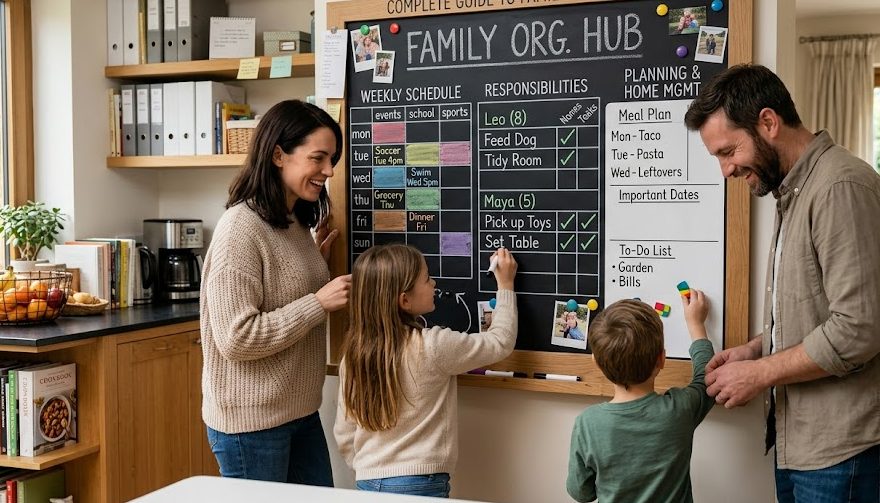
14. Create a Family Command Center
A small area dedicated to household information can make everyday organization much easier.
Depending on your space, it could include a calendar, grocery list, task list, school reminders, keys, or important notes.
Keep the system simple. Too much information can make a command center difficult to use.
The purpose is to give the household one reliable location for the information everyone needs regularly.
15. Create a Household “Reset Rule”
A simple reset rule can help prevent small messes from becoming large ones.
For example, the household might agree that common spaces receive a quick reset before bedtime, or that everyone returns personal belongings to their normal location after using them.
Keep the rule realistic and easy to understand.
The objective is to create a shared habit rather than a list of strict household regulations.
A Simple Family Reset
• Return commonly used items.
• Clear shared surfaces.
• Put dirty clothes where they belong.
• Check tomorrow’s schedule.
• Prepare anything that will be needed in the morning.
Keep the System Flexible
No family schedule goes exactly according to plan every day.
There will be late workdays, unexpected appointments, school events, travel, illness, visitors, and evenings when everyone simply needs a break.
A good organization system should be flexible enough to handle those changes.
If a routine is missed, there is no need to start over. Simply return to the system when life becomes more predictable.
Flexibility is especially important because an organization system that creates additional stress defeats its own purpose.
Organization Should Support Family Life
The purpose of organization is not to create a perfectly controlled household. It is to make everyday life more predictable, practical, and comfortable for the people living there.
Avoid Trying to Change Everything at Once
One of the easiest ways to abandon an organization project is to make it too ambitious.
You might be tempted to reorganize every closet, create a detailed cleaning schedule, change the kitchen storage, build a complicated calendar, and establish new family routines all at the same time.
Instead, choose one problem that causes repeated frustration.
If mornings are chaotic, focus on preparing for the next day. If clutter gathers near the door, create an entryway system. If schedules are confusing, establish a shared calendar.
Once one improvement becomes natural, add another.
Focus on Function, Not Perfection
A family home is meant to be lived in.
There will be toys on the floor, dishes waiting to be washed, shoes near the door, school projects on tables, and moments when the house looks less than perfect.
That does not mean the organization system has failed.
A successful home organization system should make it easier to recover from everyday messes. When belongings have homes and routines are familiar, resetting the house becomes simpler.
Instead of aiming for a spotless home at every moment, aim for a home that can return to a comfortable state without an enormous amount of effort.
A Simple Weekly Family Organization Plan
| Day or Moment | Simple Task | Purpose |
|---|---|---|
| Morning | Check calendar | Know what the day requires |
| Daily | Return items to their homes | Reduce clutter |
| Evening | Quick household reset | Prepare common areas |
| Weekly | Review schedules and tasks | Prepare for the week |
| As Needed | Declutter one small area | Prevent buildup |
Frequently Asked Questions
What is the easiest way to organize a busy family home?
Start with the areas that cause the most daily frustration. A shared calendar, designated storage locations, simple task lists, and short daily resets are practical places to begin.
How can I keep family organization from becoming stressful?
Keep systems simple and flexible. Choose routines that save time or reduce confusion rather than adding unnecessary tasks. Introduce changes gradually instead of trying to reorganize the entire home at once.
Should children have household responsibilities?
Age-appropriate responsibilities can help children learn organization and independence. Tasks should be suitable for their age and abilities, with clear expectations and appropriate supervision.
How often should a family declutter?
There is no universal schedule. Short sessions whenever a drawer, shelf, closet, or other area becomes difficult to manage can be more practical than waiting for a large annual cleanup.
What makes a home feel more peaceful?
A combination of manageable clutter, predictable routines, clear communication, and comfortable shared spaces can help. A peaceful home does not have to be perfectly clean or organized all the time.
A Peaceful Home Starts With Simple Systems
Family organization does not require a perfect schedule or expensive products. A shared calendar, practical storage, simple responsibilities, regular resets, meal planning, and weekly check-ins can make everyday life easier to navigate.
Start with the one part of your household that creates the most stress. Make that area easier to manage, allow the new routine to become familiar, and then build from there.