Building a More Organized and Manageable Family Routine
Family life can become difficult to manage when work schedules, school activities, appointments, shopping, meals, cleaning, bills, and personal responsibilities all compete for attention. A simple organization system can make these responsibilities easier to understand and share. The goal is not to create a strict household where every minute is planned. Instead, good family organization should reduce confusion, make responsibilities visible, and leave more room for rest and time together.
Why Family Organization Makes Daily Life Easier
Many household problems are not caused by a lack of effort. They happen because information is scattered across different places. One person may remember an appointment, another may know that groceries are running low, while someone else may have forgotten an upcoming school activity or payment deadline.
When several responsibilities are managed informally, small tasks can easily become last-minute problems. A shared calendar, simple task system, and regular family discussion can reduce this pressure. Everyone can see what needs attention instead of depending on one person to remember every detail.
Organization can also make family responsibilities feel more balanced. Children and adults can contribute according to their age, ability, availability, and normal responsibilities. This creates a household where tasks are treated as shared responsibilities rather than something automatically assigned to one person.
Start With One Simple Family Information System
The first step is to decide where important information will be kept. The system can be digital, physical, or a combination of both. The most important feature is consistency. If schedules are stored in five different places, organization quickly becomes difficult again.
“`Shared Calendar
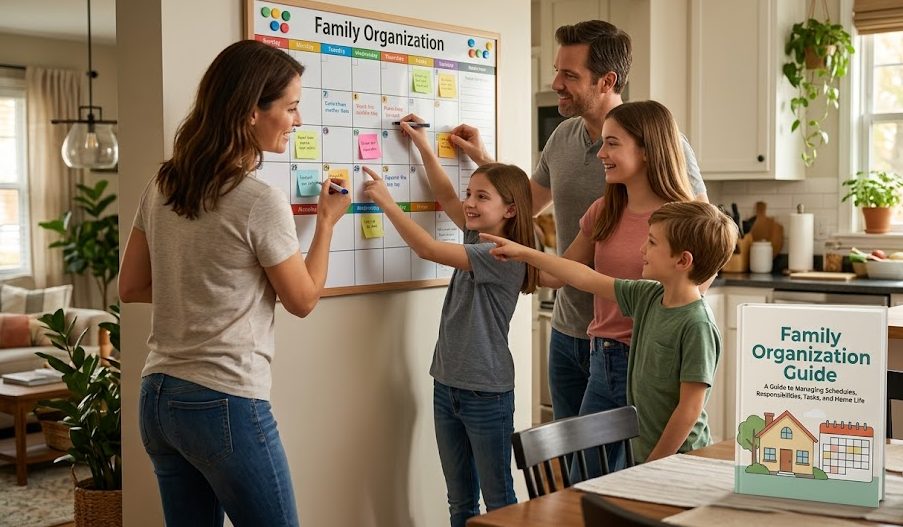
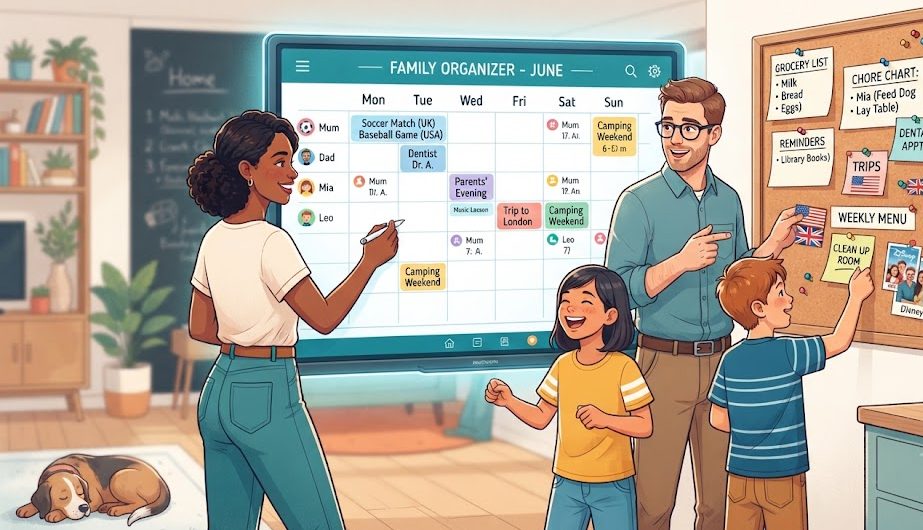
Keep appointments, school events, work commitments, birthdays, trips, and other time-sensitive activities in one shared calendar that relevant family members can access.
Household Task List
Keep recurring chores and one-time household jobs in a central list. This makes it easier to see what needs to be completed and prevents tasks from being forgotten.
Weekly Review
Spend a short amount of time each week reviewing the upcoming schedule, important errands, meals, household needs, and responsibilities.
Separate Fixed Commitments From Flexible Tasks
“`Fixed Commitments
These are activities that normally happen at a specific time, such as school, work shifts, medical appointments, meetings, classes, travel plans, or scheduled events.
Flexible Responsibilities
Flexible tasks include grocery shopping, cleaning, laundry, organizing storage, meal preparation, household maintenance, and other activities that can often be moved to another suitable time.
Keeping these two categories separate makes planning much easier. Fixed commitments should be placed on the calendar first. Flexible tasks can then be fitted around the available time instead of creating unnecessary conflicts.
Create a Weekly Family Planning Routine
A short weekly planning session can prevent many problems before they happen. It does not need to become a formal meeting. Ten or fifteen minutes may be enough for a household to review the upcoming week and identify anything unusual.
“`Divide Household Responsibilities Clearly
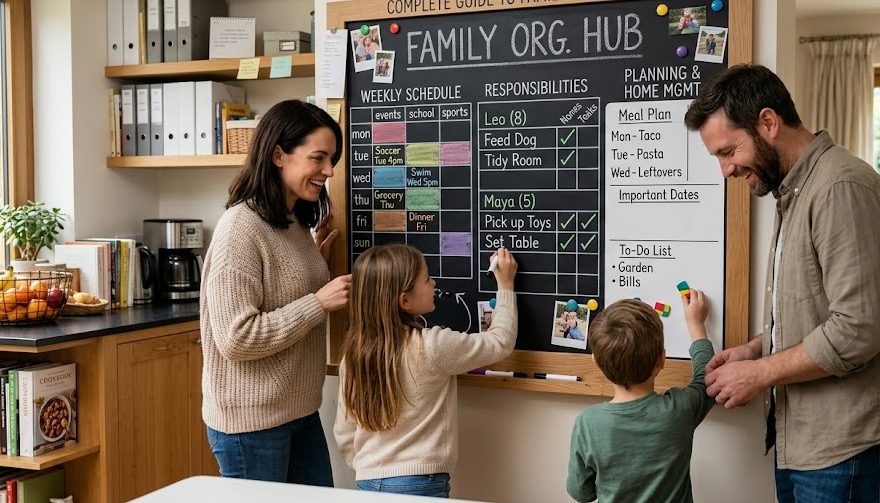
One of the most useful changes a family can make is to replace vague expectations with clear responsibilities. Saying that the house needs cleaning does not identify who will do what. A more practical system divides larger responsibilities into smaller tasks.
“`Do Not Try to Organize Everything at Once
A common mistake is creating an extremely complicated organization system that takes more effort to maintain than the original household routine. Start with the areas causing the most confusion. If missed appointments are the biggest issue, begin with a shared calendar. If chores are causing disagreements, create a responsibility system. If shopping is difficult, create one recurring household list. Small improvements are easier to maintain than a complete system introduced overnight.
Make Household Tasks Easier to Complete
Organization works best when tasks are designed around real household routines. Instead of expecting everyone to remember dozens of individual instructions, create simple habits that naturally fit into the day.
“`Keep Frequently Used Items Accessible
Everyday items should have predictable locations. Keys, school supplies, cleaning products, documents, kitchen equipment, and frequently used household items are easier to manage when everyone knows where they belong.
Group Similar Tasks Together
Completing related tasks during the same period can save time. For example, household errands can be combined into one trip when practical, while cleaning tasks can be grouped by room or area.
Use Recurring Reminders
Tasks that repeat regularly should not depend entirely on memory. Reminders can help with recurring household maintenance, bill dates, supply checks, cleaning routines, and other predictable responsibilities.
Keep Instructions Simple
A task system should be easy enough for everyone to understand. Short instructions and clear expectations usually work better than long lists of complicated household rules.
Organize the Home by Practical Zones
Physical organization can become easier when the home is divided into functional zones. Instead of trying to organize every room perfectly, focus on the areas that have the biggest effect on everyday routines.
“`Entry and Departure Zone
Keep frequently used bags, keys, shoes, umbrellas, and other departure items in predictable locations. This can reduce the amount of time spent searching for things when everyone is trying to leave.
Kitchen and Food Zone
Group commonly used ingredients and cooking equipment logically. Keep a visible shopping list so household members can add items when they notice supplies are running low.
Study and Work Zone
Keep important work and school materials together. A dedicated area can make it easier to start tasks and reduce the time spent searching for chargers, notebooks, documents, or other supplies.
Cleaning and Storage Zone
Store cleaning equipment and household supplies in consistent locations. Periodically review stored items and remove things that are no longer useful.
Include Family Time in the Schedule
Organization should not become a system that only tracks work and chores. If every available period is filled with responsibilities, family members may become organized but still feel that they rarely spend meaningful time together.
A shared meal, evening walk, game night, weekend outing, movie evening, cooking session, or simple conversation can be included in the weekly plan. It does not need to happen every day. Even one or two intentionally protected periods can give the household something enjoyable to look forward to.
Teach Children Age-Appropriate Organization Skills
Children can gradually learn household organization by taking responsibility for suitable tasks. The purpose is not simply to reduce the amount of work adults need to do. It is also to help children understand routines, time management, responsibility, and the connection between completing small tasks and maintaining a comfortable home.
Younger children may help put away toys, organize personal items, or prepare simple belongings for the next day. Older children can gradually take responsibility for laundry, school preparation, room organization, simple food preparation, or other appropriate household activities. Expectations should be clear and realistic for their age.
Review the System Every Few Weeks
A family organization system should change when the family’s circumstances change. School schedules, work hours, holidays, travel, new activities, seasonal responsibilities, and changing household needs can all affect the routine.
Every few weeks, look at what is working and what is creating unnecessary difficulty. Maybe a particular task is assigned at an inconvenient time, a calendar contains too many unnecessary reminders, or a household area repeatedly becomes disorganized. Adjust the system rather than forcing everyone to continue using a routine that no longer fits.
Frequently Asked Questions
“`What is the easiest way to organize a busy family?
Start with a shared calendar and a simple household task list. These two tools can provide a central place for schedules and responsibilities without requiring a complicated planning system.
How should household chores be divided?
Divide chores into specific responsibilities and consider each person’s age, availability, abilities, and normal schedule. Clear responsibilities are generally easier to manage than vague expectations.
Should children have household responsibilities?
Age-appropriate responsibilities can help children develop organization and practical life skills. Tasks should be suitable for their age and ability and explained clearly.
How often should a family review its schedule?
A short weekly review works well for many households. A larger review can be done occasionally when schedules, school terms, work arrangements, or other circumstances change.
What if one person still manages most household planning?
Make invisible responsibilities visible. Write down recurring tasks, appointments, shopping, planning, and maintenance responsibilities so the household can identify where the workload is concentrated and discuss practical adjustments.
A More Organized Home Starts With Simple Systems
Family organization does not require a perfect schedule, an expensive planning application, or a completely redesigned home. It starts with a few practical habits that make information, responsibilities, and household tasks easier to see.
A shared calendar can reduce scheduling confusion. A household task list can make responsibilities clearer. A weekly planning session can prepare everyone for upcoming commitments, while simple storage habits can make everyday tasks easier to complete.
Most importantly, the system should support family life rather than control it. The purpose of organization is to reduce unnecessary stress, create clearer expectations, and make more room for the people and activities that matter most.