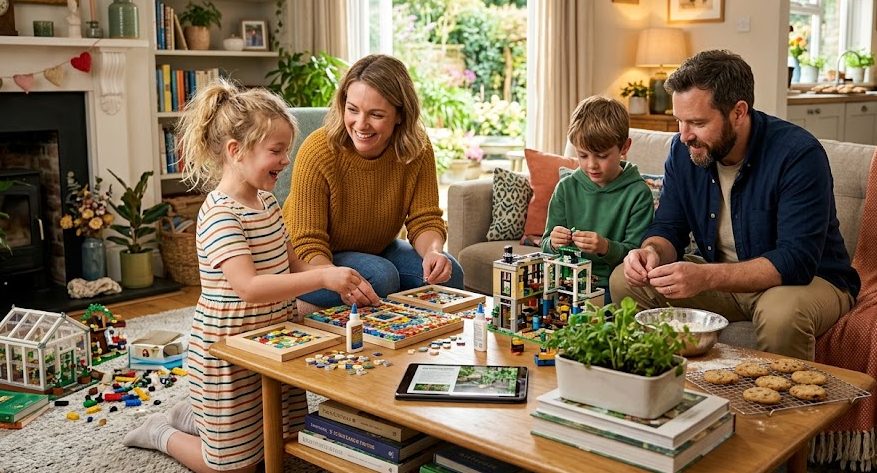
Screens can be useful for learning, communication, and entertainment, but regular screen-free activities can create more opportunities for hands-on creativity and face-to-face conversation. At home, simple materials and familiar spaces can support activities that encourage family members to share ideas, solve problems, tell stories, and work together.
Planning screen-free time does not require removing technology from every part of the day. A practical approach is to choose a few periods when the family can focus on shared experiences without digital distractions. Activities can be short, low-cost, and flexible enough to fit different ages, interests, and energy levels.
1. Choose a Realistic Screen-Free Time
Begin with a short period that fits naturally into the family’s routine. A fifteen-minute activity after dinner or a longer session on the weekend may be easier to maintain than a strict rule that applies all day.
Consider when family members are usually available and when they are most likely to enjoy participating. Keep the plan flexible during busy school or work weeks.
- Fifteen minutes after dinner
- One screen-free evening each week
- A weekend creative hour
- A short activity before bedtime
2. Create a Small Activity Area
A dedicated area can make screen-free activities easier to begin. It does not need to be a separate room. A table, floor space, or small corner can be enough.
Keep a few basic materials nearby so family members do not need to search for supplies every time.
Paper, pencils, crayons, and reusable materials.
Puzzles, cards, and simple problem-solving activities.
Books, story prompts, and family conversation cards.
3. Use Everyday Materials for Creative Projects
Creative activities do not require expensive supplies. Paper, cardboard, old magazines, clean containers, fabric pieces, and other reusable materials can support many projects.
Give family members a basic idea, then allow them to decide how to develop it. Different results can lead to interesting conversations.
- Create a family collage
- Design a handmade card
- Build a small model from reusable materials
- Make a simple decoration for a shared space
4. Use Storytelling to Encourage Conversation
Storytelling can help family members share ideas without needing a detailed activity. Begin with a simple prompt and invite each person to add a sentence, character, or event.
The story can be imaginative, humorous, or based on a family memory. There is no need to create a perfect ending.
- “One morning, the family discovered a hidden door…”
- “A small object in the house suddenly began to speak…”
- “Everyone woke up with a new and unusual talent…”
- “The family planned an adventure using only items at home…”
5. Plan Activities That Encourage Teamwork
Cooperative activities can help family members communicate and solve problems together. Choose a task with a shared goal rather than focusing only on competition.
- Complete a puzzle together
- Build a structure from household materials
- Organize one small shared area
- Create a group drawing or story
Allow different people to contribute in different ways. One person may organize, another may create, and someone else may suggest ideas.
6. Bring Nature Into the Activity
Nature-based activities can encourage observation and conversation. A home garden, balcony, window area, or nearby outdoor space may provide useful inspiration.
- Observe and draw a plant
- Care for a small household plant
- Create a simple nature journal
- Discuss changes in weather or seasons
7. Use Conversation Prompts
Some family members may find it easier to talk when there is a clear question or topic. Conversation prompts can create opportunities to share memories, interests, opinions, and future ideas.
- What was the most interesting part of your day?
- What is something you would like to learn?
- What family activity would you enjoy next week?
- What is a positive memory you would like to share?
8. Rotate Activity Choices
Family members may have different interests. A rotation allows everyone to suggest an activity and can make participation feel more balanced.
- One person chooses a creative project
- Another chooses a game or puzzle
- Someone else selects a story or conversation topic
- The family chooses one shared activity together
9. Keep Activities Simple and Flexible
Screen-free time should not become another complicated responsibility. Choose activities that can be started quickly and adjusted when family members are tired or busy.
Some days may only allow a short conversation or a few minutes of drawing. These small experiences can still support connection.
- Does the activity use materials already available?
- Can different ages participate?
- Is the time commitment realistic?
- Does the activity encourage creativity or conversation?
Conclusion
Screen-free home activities can create valuable opportunities for creativity, conversation, and shared problem-solving. Simple projects, storytelling, puzzles, nature activities, and family discussions can help people connect without requiring expensive materials or detailed preparation.
Start with a short and realistic period, keep basic materials accessible, and allow family members to suggest ideas. The goal is not to remove technology completely but to create intentional time for hands-on experiences.
With flexible planning and simple activities, screen-free time can become an enjoyable part of family life and support stronger communication at home.