Weekly household tasks can become overwhelming when one person is expected to remember every responsibility, make every decision, and complete most of the work. Cooking, cleaning, laundry, shopping, organizing, and planning can add up quickly. Even when other family members are willing to help, confusion may occur if tasks are not clearly shared.
Creating a weekly household plan can make responsibilities easier to manage. The purpose is not to build a strict schedule or assign every minute of the day. A useful plan simply helps everyone understand what needs to be done, who is responsible, and when each task should be completed.
1. List All Regular Household Tasks
Begin by writing down the tasks that keep the household running. Include daily, weekly, and occasional responsibilities. This step helps reveal how much work is involved and prevents important tasks from being forgotten.
Meals, dishes, basic tidying, and preparing for the next day.
Cleaning, laundry, shopping, and household organization.
Home maintenance, seasonal work, and larger projects.
Do not assume that only visible chores count. Planning meals, noticing supplies are low, arranging appointments, and remembering deadlines are also important household responsibilities.
2. Include Everyone in the Planning Process
A household plan is more likely to work when family members help create it. Discuss which tasks need attention and ask everyone what they can realistically manage.
Consider age, ability, work schedules, school commitments, and available time. Fairness does not always mean that every person performs the same number of tasks. It means responsibilities are shared in a reasonable way.
- Which tasks need to happen every week?
- Who has more time on certain days?
- Which responsibilities can be shared or rotated?
- Are any tasks too large for one person?
3. Assign Clear Responsibilities
General instructions can create confusion. A request such as “help clean the house” may not explain what should be done or when it is expected.
Use clear task descriptions. For example, write “vacuum the living room on Saturday” or “prepare the shopping list before Friday.” Specific responsibilities are easier to understand and complete independently.
✅ Clear: Clean the kitchen counter after dinner.
❌ Unclear: Keep the kitchen nice.
✅ Clear: Sort and put away clean laundry on Sunday.
❌ Unclear: Help with the laundry.
4. Match Tasks With Available Time
Not every household task needs to be completed on the same day. Review family schedules and assign work when people are reasonably available.
For example, a busy weekday may be better for short tasks, while larger cleaning or organizing activities can be planned for a quieter day. Avoid giving someone several major responsibilities on a day when they already have work, school, or appointments.
A realistic schedule is more useful than an ideal plan that no one can maintain.
5. Use a Simple Weekly Task Board
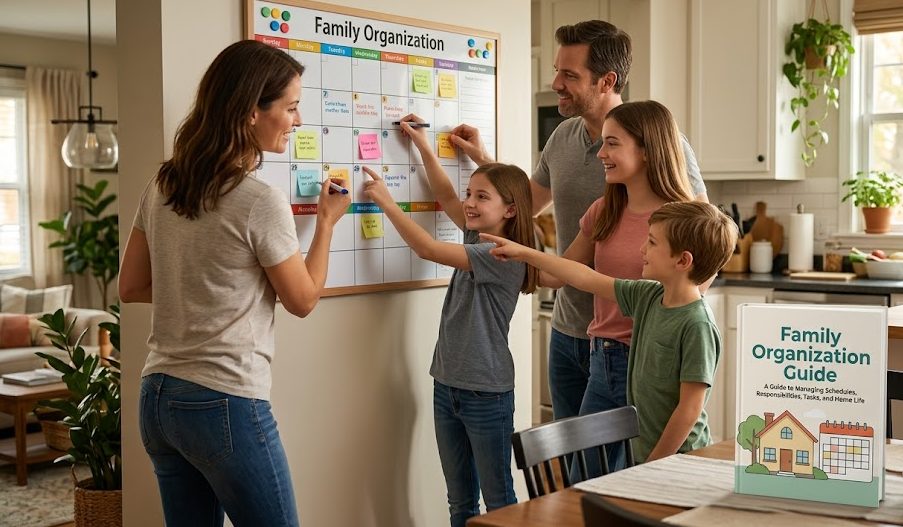
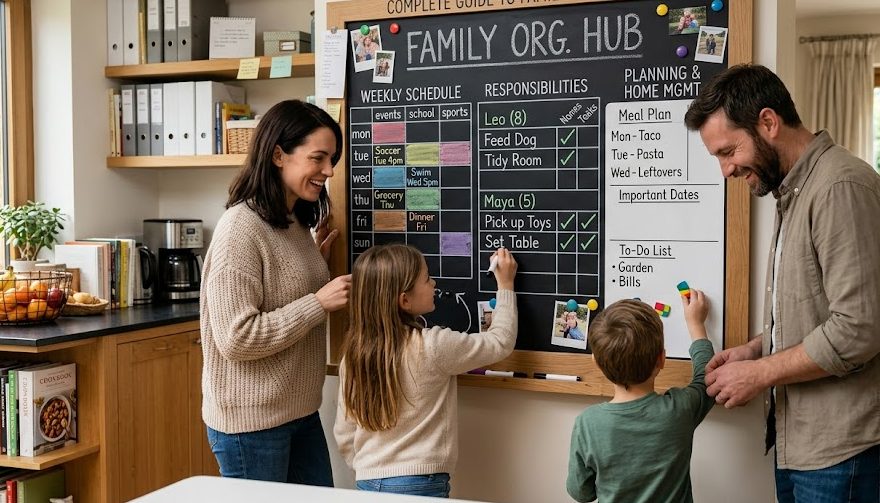
A visible task board can help everyone remember responsibilities without repeated reminders. It may be a whiteboard, printed chart, notebook, or shared digital list.
The board should be easy to read and quick to update. Avoid creating a complicated system that requires too much time to maintain.
6. Rotate Tasks When Appropriate
Some responsibilities can be rotated so the same person does not always handle them. Rotating tasks may also help family members understand the effort involved in different parts of household management.
For example, one person may handle meal preparation this week while another manages it the following week. Cleaning responsibilities can also rotate based on availability.
7. Share the Planning Work
Completing a task is only one part of household management. Someone may also need to notice when supplies are low, decide when work should be done, and remind others about the plan.
Share this planning work by assigning ownership of certain areas. One person may manage the weekly shopping list, while another checks household supplies or updates the family calendar.
When people take responsibility for an area, they can complete the planning and follow-through instead of waiting for instructions.
8. Keep the Plan Flexible
Unexpected events can affect any weekly schedule. Work may become busy, school activities may change, or someone may need extra support. A household plan should allow adjustments without making family members feel that they have failed.
If someone cannot complete a task, discuss how it can be moved, shared, or exchanged. Flexibility helps the system remain useful during busy periods.
9. Review the Plan Each Week
Spend a few minutes reviewing what worked and what needs improvement. This can be done during a short family meeting or while planning the next week.
Ask whether the workload felt balanced, whether any tasks were unclear, and whether schedules changed. Make small adjustments instead of redesigning the entire system.
- Did everyone understand their responsibilities?
- Were any tasks difficult to complete?
- Did one person carry too much of the workload?
- What should be changed next week?
Conclusion
Planning weekly household tasks can reduce stress when responsibilities are clear and shared fairly. A simple list, realistic schedule, visible task board, and regular review can help prevent one person from carrying all the work.
The best system is not the most detailed one. It is a practical plan that fits the family’s routines and can be adjusted when schedules change. By sharing both household tasks and the planning behind them, families can create a more balanced and cooperative home environment.
Start with a few important responsibilities, involve everyone in the process, and improve the plan over time. Small changes can make weekly household management feel more organized, predictable, and manageable for everyone.