Keeping a family organized can feel difficult when everyone has different schedules, responsibilities, and priorities. Parents may be managing work, household tasks, appointments, meals, and children’s activities, while other family members may simply forget what needs to be done. When one person has to repeat the same instructions every day, family organization can quickly become stressful.
A useful family organization system should not depend on one person remembering everything or constantly reminding everyone else. Instead, it should make responsibilities clear, keep important information easy to find, and create routines that feel natural. The goal is not to control every part of family life. It is to build a simple structure that helps everyone know what to do and when to do it.
Start by Understanding Your Family’s Daily Needs
Before creating a new system, take a close look at how your household currently works. Think about the activities that happen every day, every week, and every month. These may include school schedules, work hours, cooking, cleaning, shopping, bill payments, appointments, pet care, and family activities.
It can be helpful to write down the areas that create the most confusion. For example, are people often late because they do not know the schedule? Are household chores repeatedly forgotten? Does one family member answer the same questions every day? Identifying these patterns makes it easier to design a system that solves real problems.
A family organization plan does not need to manage everything at once. Start with the areas that cause the most stress, then improve the system gradually.
Create One Shared Place for Important Information
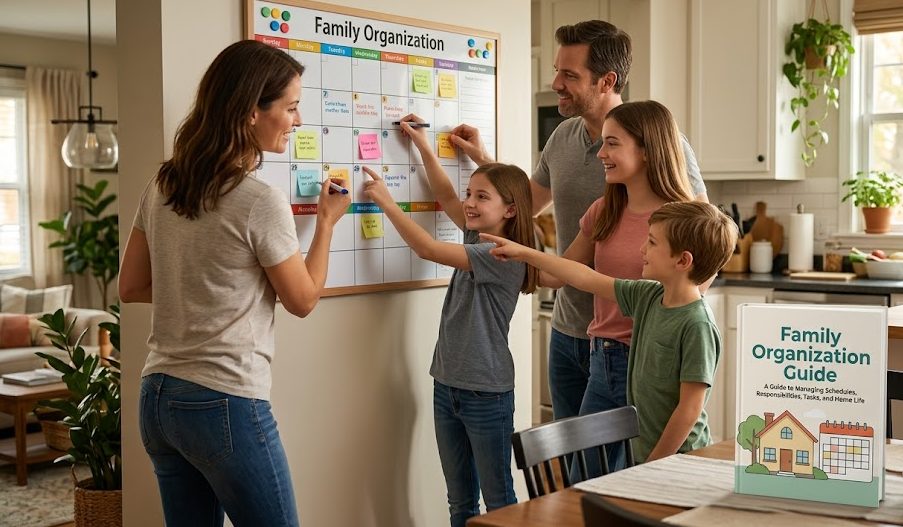
Families often become disorganized because important information is spread across notebooks, text messages, calendars, and individual memories. A shared family information center can make daily planning much easier.
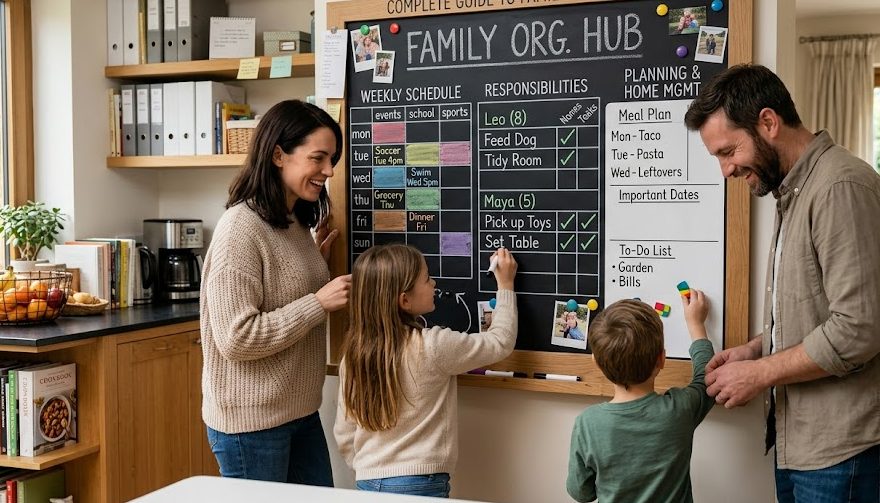
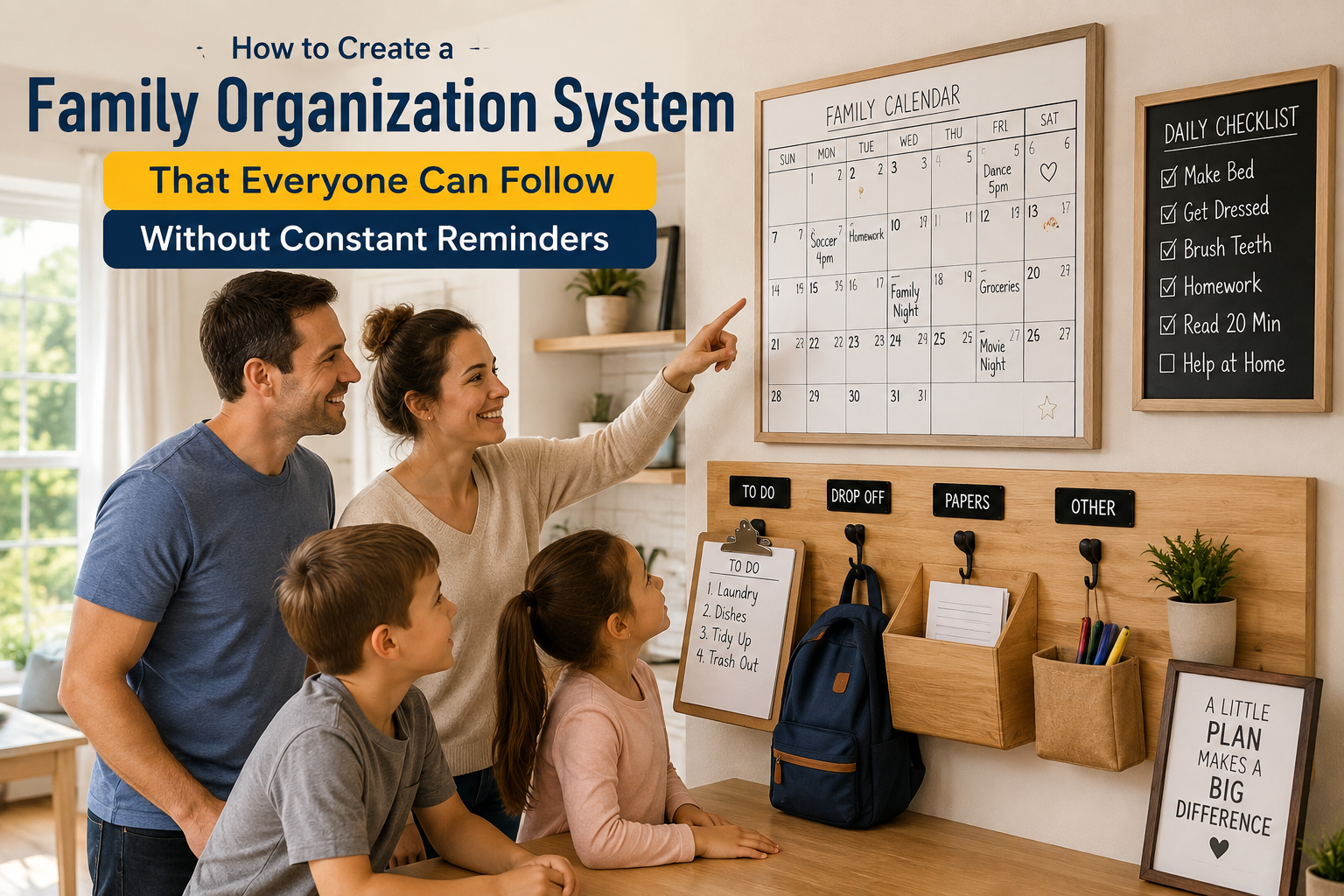
This space may be a wall calendar, a whiteboard, a notice board, a shared digital calendar, or a combination of simple tools. The best option depends on what family members are comfortable using. A physical board may work well for younger children, while a digital calendar can be useful for adults who spend much of the day outside the home.
Keep the shared space easy to see and easy to update. Include information such as:
- School, work, and activity schedules
- Important appointments and events
- Weekly meal plans
- Household tasks
- Shopping needs
- Upcoming family plans
When everyone knows where to look, fewer questions and reminders are needed.
Give Every Family Member Clear Responsibilities
A family system works better when responsibilities are shared. One person should not have to manage every task, even if that person is naturally more organized. Assigning clear responsibilities helps each family member understand how they contribute to the household.
Choose tasks based on age, ability, schedule, and experience. Younger children may put away toys, place clothes in a laundry basket, or help set the table. Older children may organize school materials, help prepare meals, or manage certain household chores. Adults can divide larger responsibilities according to availability and strengths.
Try to describe responsibilities clearly. Instead of saying, “Keep your room clean,” use a specific list such as:
- Make the bed each morning
- Put dirty clothes in the laundry basket
- Return books and supplies to their places
- Clear the floor before bedtime
Clear expectations reduce confusion and make it easier for family members to complete tasks independently.
Use Simple Routines Instead of Repeated Instructions
Routines reduce the need for reminders because they turn repeated actions into familiar habits. A consistent morning routine, after-school routine, or evening routine can help family members know what comes next without being told each time.
For example, a morning routine might include getting dressed, making the bed, eating breakfast, checking the schedule, and preparing bags before leaving. An evening routine could include putting away belongings, completing schoolwork, preparing clothes for the next day, and checking the family calendar.
Keep routines realistic. A long list with too many steps may be difficult to follow. Start with a few important actions and add more only when the routine feels comfortable.
Make Tasks Visible and Easy to Track
People are more likely to remember responsibilities when they can see them. A weekly task chart can show who is responsible for each activity and when it should be completed. The chart does not need to look complicated. A simple table with names, tasks, and days may be enough.
Some families prefer using checklists. A checklist can be placed near the front door, in a bedroom, or in a shared family area. For example, an after-school checklist might include:
- Put shoes and bags in their proper places
- Check the family schedule
- Complete homework or study time
- Prepare items needed for the next day
- Help with one household task
Checking off completed tasks can also create a sense of progress and encourage independence.
Hold a Short Family Planning Meeting
A weekly family meeting can keep everyone informed without turning organization into a daily discussion. Choose a regular time that works for most family members, such as Sunday evening or another quiet part of the week.
The meeting can be short and focused. Review upcoming events, discuss schedule changes, check household needs, and give everyone an opportunity to share concerns. It is also a good time to decide who will handle important tasks during the week.
Try to keep the conversation practical and respectful. The purpose is not to criticize people for unfinished work. It is to make plans together and improve the system when something is not working.
Use Reminders as Support, Not as the Main System
Reminders can be useful, but they should not be the only way responsibilities are remembered. If one person must repeatedly tell everyone what to do, that person may become tired or frustrated.
Instead, use reminders that are connected to the organization system. Calendar notifications, alarms, written checklists, and scheduled alerts can support independence. For example, a phone notification may remind a family member about an appointment, while a visible task chart can show regular responsibilities.
Over time, family members can learn to check the system on their own rather than waiting for someone else to remind them.
Keep the System Flexible
Family life changes regularly. Work schedules, school activities, health needs, travel plans, and unexpected events may affect routines. A system that is too strict can become difficult to maintain.
Review the organization plan from time to time. Ask simple questions such as:
- Which parts are working well?
- Which tasks are often forgotten?
- Is the schedule easy to understand?
- Does anyone need more support?
- Are there unnecessary steps that can be removed?
Small adjustments can keep the system useful without requiring a complete restart.
Encourage Responsibility Without Creating Pressure
Family organization should help people feel supported, not constantly monitored. When someone forgets a task, use the situation as an opportunity to improve the system. The task may be unclear, the schedule may be unrealistic, or the reminder may be placed where no one sees it.
Recognize effort and progress, especially when family members begin checking schedules or completing responsibilities independently. Positive feedback can encourage consistency and make shared organization feel like a team effort.
It is also important to allow room for mistakes. No family system will work perfectly every day. The goal is to reduce confusion and create dependable habits, not to achieve perfect control.
Build the System One Step at a Time
Trying to organize every part of family life in one day may feel overwhelming. Begin with one shared calendar, one daily routine, or one weekly task chart. Once that part becomes familiar, add another useful element.
A simple system that people actually use is more valuable than a detailed system that is ignored. Focus on clarity, consistency, and convenience. If a tool creates extra work, simplify it or replace it.
Conclusion
A family organization system can make everyday life calmer by giving everyone a clear view of schedules, responsibilities, and routines. When information is shared, tasks are specific, and routines are easy to follow, family members can become more independent and fewer reminders are needed.
The most effective system is not necessarily the most advanced one. It is the one that fits the family’s real lifestyle and is simple enough to use consistently. Start with a few practical tools, involve everyone in the process, and make adjustments as family needs change. With time, organization can become a shared habit rather than one person’s constant responsibility.