Family routines often work well until schedules begin to change. A new school term, different work hours, seasonal activities, travel plans, or changes in daylight can affect meal times, transportation, household responsibilities, and opportunities to spend time together. When an old routine no longer fits, trying to follow it exactly may create unnecessary pressure.
Adjusting a family routine does not require rebuilding every part of daily life. A practical approach is to identify what has changed, protect the most important habits, and update only the parts that no longer work. Small adjustments can help the household remain organized while allowing family members to adapt to new responsibilities and schedules.
Step 1 — Identify What Has Changed
Begin by listing the changes that may affect the household. A new schedule may change wake-up times, travel arrangements, meal periods, homework routines, or the availability of family members.
Focus on specific changes instead of assuming that the entire routine must be replaced. Understanding the cause of the disruption makes it easier to choose a practical solution.
New class times, activities, homework, or transportation.
Different hours, travel, projects, or remote work changes.
Weather, daylight, holidays, or seasonal responsibilities.
Step 2 — Keep the Most Helpful Habits
Not every part of the old routine needs to change. Identify the habits that continue to help the family, such as preparing items the night before, checking the shared calendar, eating together, or completing a short household reset.
Keeping familiar habits can make a new schedule easier to manage. These routines provide stability while other parts of the day are adjusted.
Step 3 — Review the Family Calendar Together
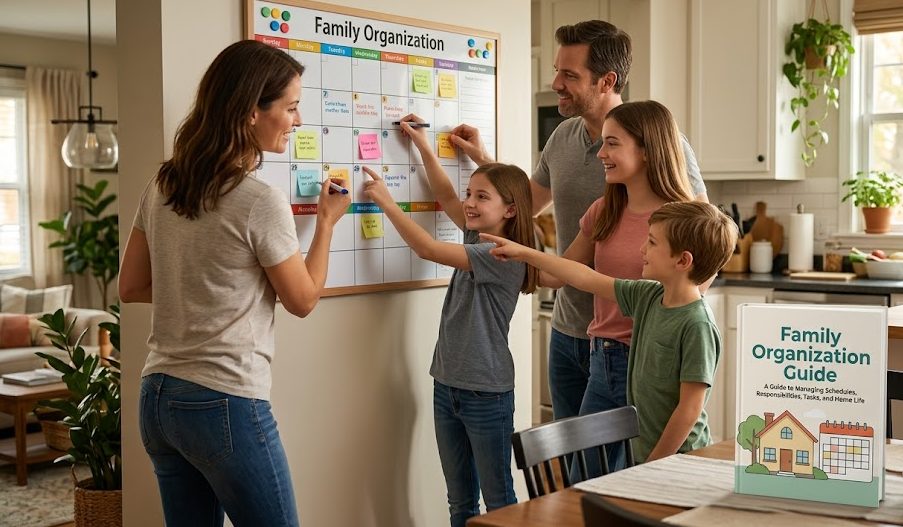
A shared calendar can help everyone understand how the new schedule affects the household. Add school events, work commitments, appointments, activities, travel plans, and important seasonal dates.
Review the calendar together so family members can identify possible conflicts early. Discuss transportation, meal timing, and responsibilities before the schedule becomes busy.
- Which days are likely to be busiest?
- When are family members available?
- Are transportation plans clear?
- Do any responsibilities overlap?
- Which tasks need to be moved?
Step 4 — Adjust Morning and Evening Routines
Schedule changes often affect the beginning and end of the day. A new school start time or work shift may require earlier preparation, different meal timing, or changes to bedtime habits.
Adjust the routine gradually. If mornings become busier, move more preparation to the evening. If evenings become crowded, simplify nonessential tasks and protect enough time for rest.
🌅 Morning adjustment: Prepare bags, clothing, and important materials before bedtime.
🌙 Evening adjustment: Use a short schedule check and household reset.
⏰ Timing adjustment: Add a small buffer for travel or unexpected delays.
Step 5 — Rebalance Household Responsibilities
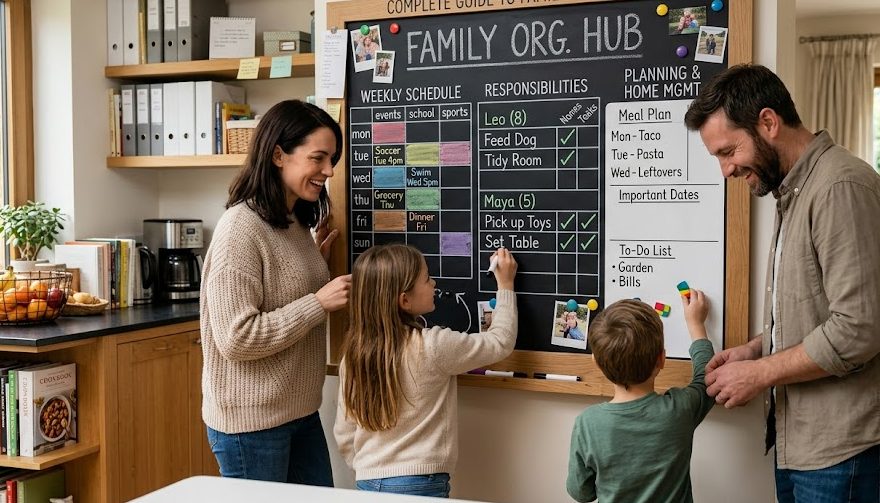
When work or school schedules change, the previous division of household tasks may no longer be practical. Review responsibilities and discuss whether any tasks should be moved, shared, or rotated.
Consider each person’s available time and current commitments. A fair plan does not always mean that everyone has the same number of tasks. It means the workload is reasonable for the family’s situation.
- Who has more time on certain days?
- Which tasks can be completed independently?
- Can any responsibilities rotate?
- Does one person need additional support?
Step 6 — Plan for Seasonal Needs
Seasonal changes may affect travel, outdoor activities, clothing, meals, household care, and daily timing. Planning ahead can make these transitions easier.
Review upcoming seasonal needs before they become urgent. Organize relevant items, update the family calendar, and adjust routines according to weather, daylight, or planned events.
- Prepare suitable clothing and frequently used items
- Review transportation and travel arrangements
- Adjust outdoor activity times
- Plan around holidays and seasonal events
- Update household tasks when routines change
Step 7 — Use Short Check-Ins During the Transition
New routines may need several weeks to become familiar. Short family check-ins can help identify problems before they become frustrating.
Ask what is working, what feels rushed, and whether any responsibilities are unclear. Keep the conversation focused on practical improvements rather than blaming individuals.
- What part of the new routine is working well?
- Where are delays happening?
- Does anyone need help?
- What should be adjusted this week?
Step 8 — Keep Some Open Time
During a schedule transition, unexpected changes are common. Avoid filling every available period with tasks. Open time can be used for delayed responsibilities, rest, or family activities.
Leaving room in the plan helps prevent one change from disrupting the entire week. It also gives family members time to adjust without feeling constantly rushed.
Step 9 — Review and Improve the Routine
After the new schedule has been in place for a few weeks, review how the routine is working. Notice which habits are useful and which steps create unnecessary pressure.
- Are mornings and evenings manageable?
- Are responsibilities balanced?
- Is the shared calendar current?
- Do family members have enough time for rest?
- What can be simplified?
Make small changes based on real experience. A routine can continue evolving as school, work, and seasonal needs change.
Conclusion
Family routines do not need to remain fixed when schedules change. By identifying new demands, keeping helpful habits, updating the calendar, and adjusting responsibilities, families can create routines that fit their current lives.
Focus on practical changes rather than rebuilding everything at once. Protect useful routines, leave room for unexpected events, and use short check-ins to improve the plan.
A flexible family routine can provide stability during busy transitions while allowing everyone to adapt to new school, work, and seasonal schedules with greater clarity and confidence.