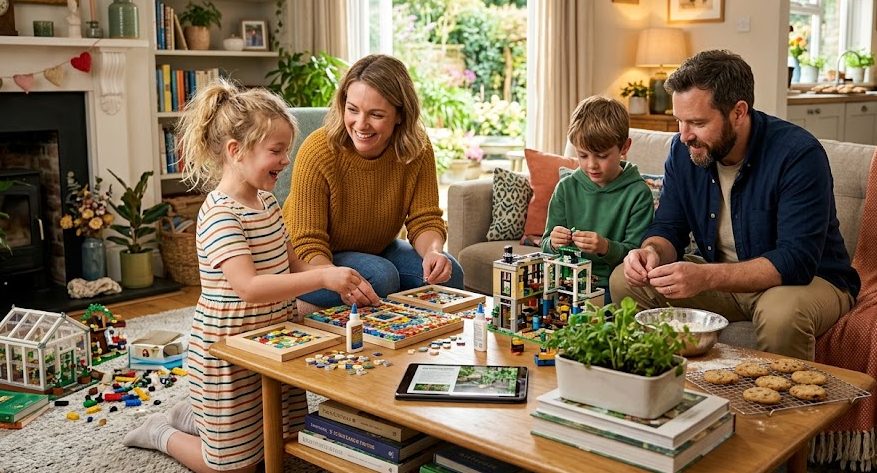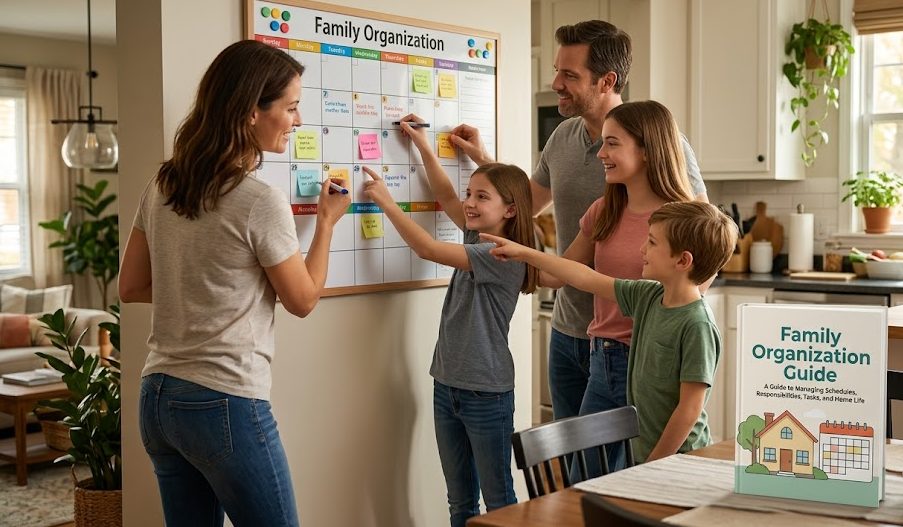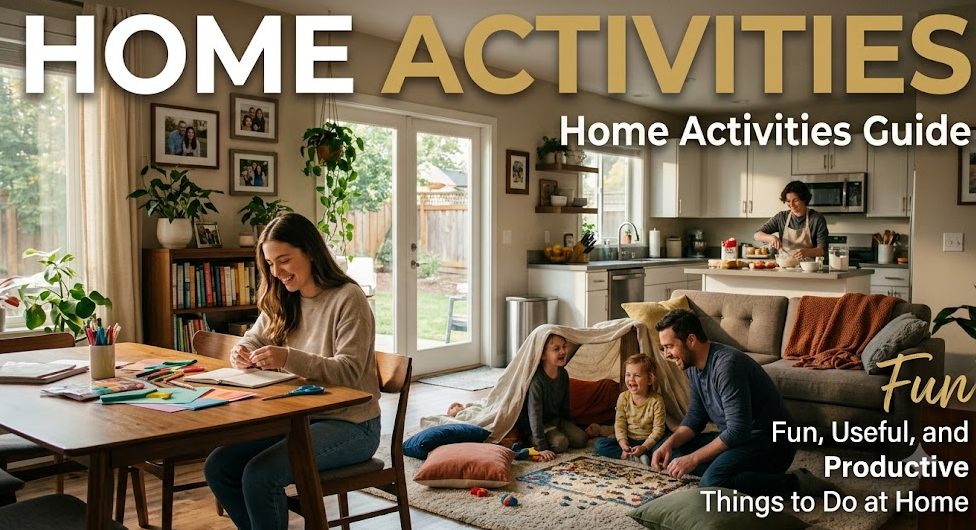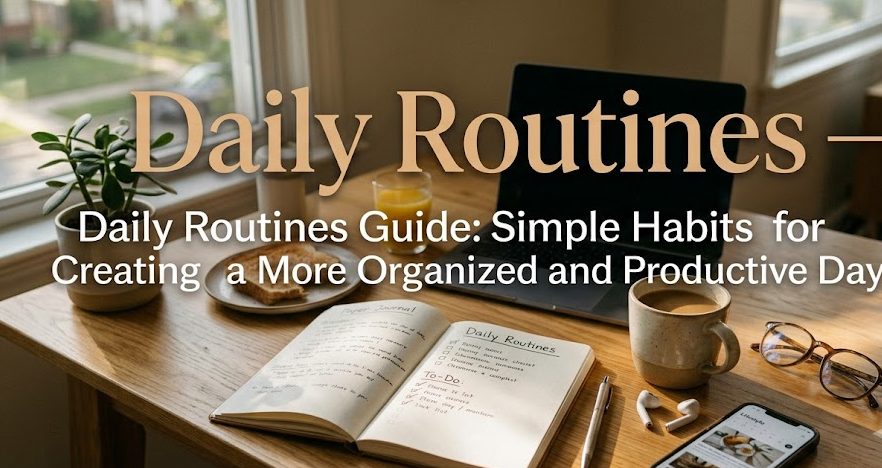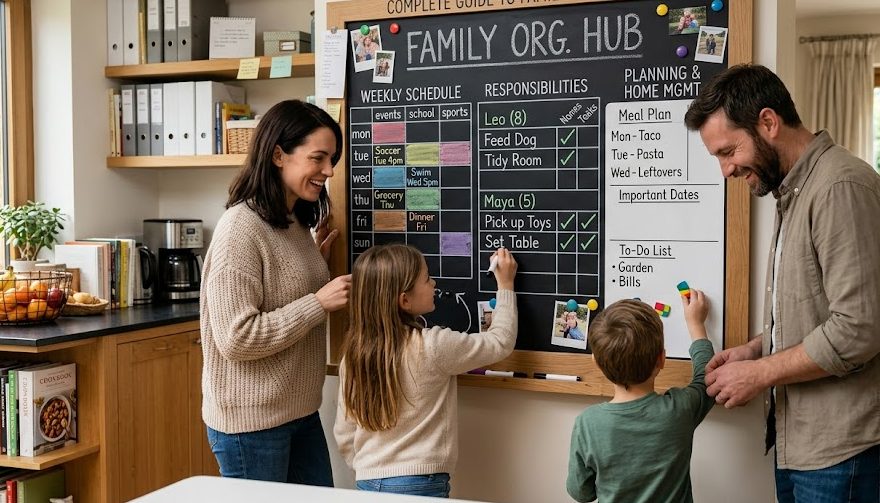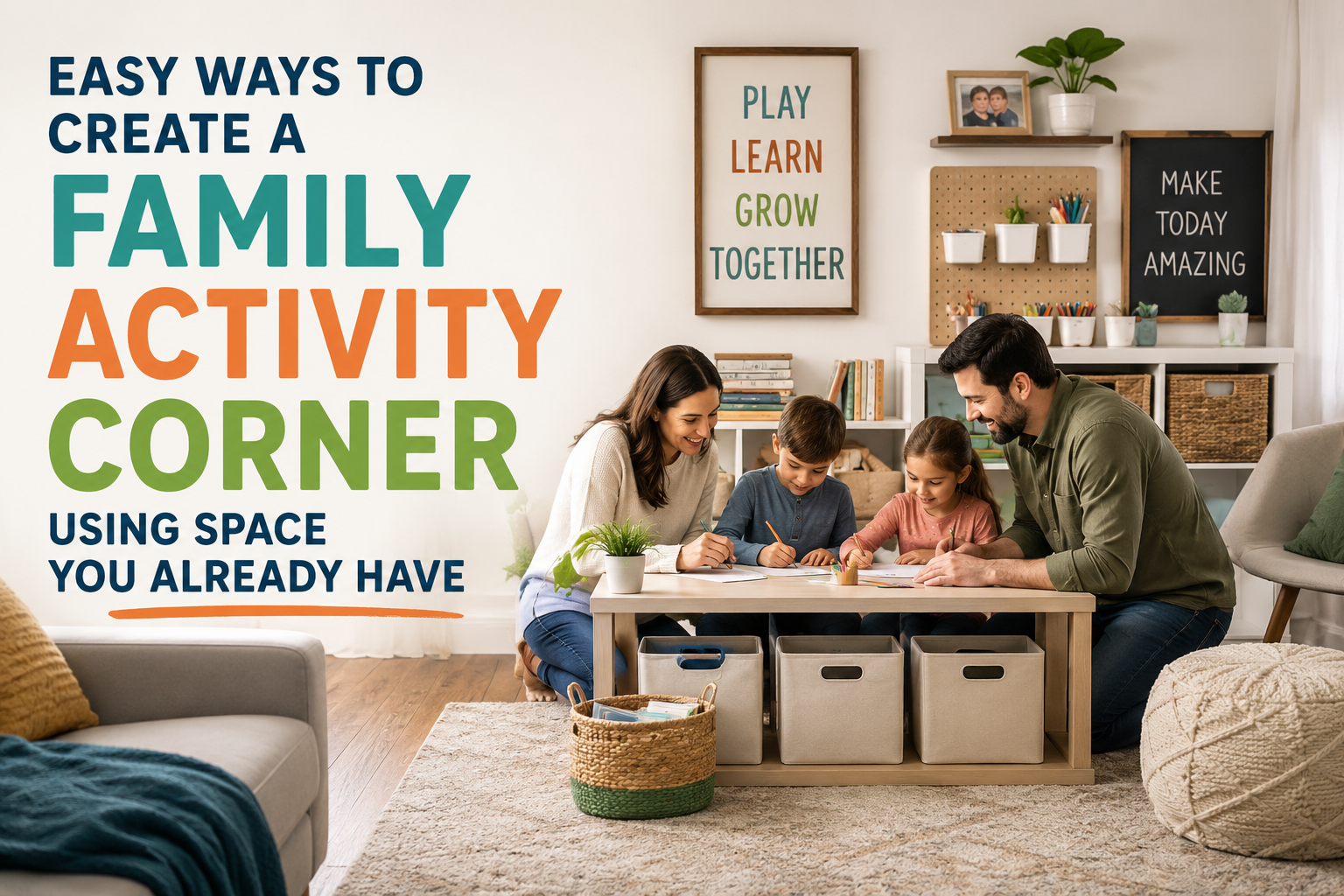
A family activity corner can make it easier to spend time together without needing a separate playroom or a major home makeover. A small area near a table, wall, window, or shared living space can become a practical place for drawing, reading, games, puzzles, crafts, and conversation.
The best activity corner is not necessarily large or highly decorated. It should be easy to reach, simple to maintain, and flexible enough to support different interests. By using furniture, storage, and materials already available, families can create a useful shared space without spending much money.
1. Look for an Underused Area
Walk through the home and notice spaces that are available but not used regularly. A family activity corner may fit beside a sofa, near a dining table, under a window, or along an open wall.
The area does not need to be large. Enough room for a small surface, a few supplies, and comfortable participation may be sufficient.
Use a small table or storage basket near shared seating.
Create a quiet reading or drawing area with good light.
Use the table for activities and store supplies nearby.
2. Decide What the Corner Will Support
Before organizing materials, choose the main activities the family is likely to use. A clear purpose can prevent the area from becoming crowded with unused items.
- Creative projects and drawing
- Reading and storytelling
- Board games and puzzles
- Homework or quiet learning
- Family planning and conversation
One corner can support several activities, but it is helpful to begin with only a few.
3. Use Furniture You Already Have
There is no need to purchase special furniture. A small table, extra chair, stool, shelf, or storage box may already be available.
Choose items that fit the space and can be used comfortably. If the area is shared with another room, use lightweight or movable pieces that can be stored when needed.
- A small table or folding surface
- Comfortable chairs or floor cushions
- An unused shelf or small cabinet
- Reusable baskets or storage containers
4. Keep Supplies Easy to Reach
Activities are easier to begin when supplies are visible and accessible. Store frequently used materials in open baskets, labeled containers, or a small tray.
Keep only useful items in the corner. Too many materials can make the space difficult to organize.
- Drawing and writing supplies
- Paper and reusable materials
- Games and puzzles
- Books and story prompts
5. Add a Comfortable Place to Sit
Comfort can encourage family members to spend more time in the activity corner. Use existing chairs, cushions, or a small floor mat.
Choose seating based on the activities. A table may work well for crafts, while cushions may be more suitable for reading and conversation.
- Add cushions from another room
- Use a small washable mat
- Place seating near natural light
- Keep enough room for safe movement
6. Create a Simple Activity Display
A small display can provide ideas without making the space feel busy. Use a section of wall, a reusable board, or a tabletop holder for current activities.
- A weekly family activity suggestion
- A conversation question
- A shared drawing or creative project
- A list of games or activities to try
Update the display occasionally to keep the corner interesting.
7. Make the Space Easy to Reset
An activity corner is more likely to remain useful when cleanup is simple. Give each group of supplies a clear storage place and encourage everyone to return items after use.
- Return supplies to their containers.
- Clear the activity surface.
- Put away unfinished projects safely.
- Choose one item to prepare for the next activity.
8. Let Family Members Add Their Ideas
Ask family members what would make the corner more useful. Someone may want more books, while another may prefer puzzles or a place to display artwork.
Involving everyone can encourage regular use and help the space reflect different interests.
- Which activities should be easy to start?
- What supplies are used most often?
- What makes the space comfortable?
- What can be removed to create more room?
9. Keep the Corner Flexible
The family’s interests may change over time. Use movable storage and simple materials so the corner can support different activities.
A creative area may become a reading space, a game corner, or a family planning area when needs change. Flexibility can make a small space useful for longer.
- Is the area easy to access?
- Are supplies organized and safe?
- Is there comfortable seating?
- Can the space be reset quickly?
- Does the corner support the family’s interests?
Conclusion
A family activity corner can be created using a small area and items already available at home. By choosing an underused space, defining a few activities, organizing supplies, and keeping cleanup simple, families can build a practical place for creativity and connection.
The corner does not need expensive furniture or extensive decoration. A comfortable seat, a useful surface, and easy access to a few materials may be enough.
Start small, invite family members to share ideas, and adjust the space as interests change. Over time, the activity corner can become a familiar part of home life and encourage more shared experiences.