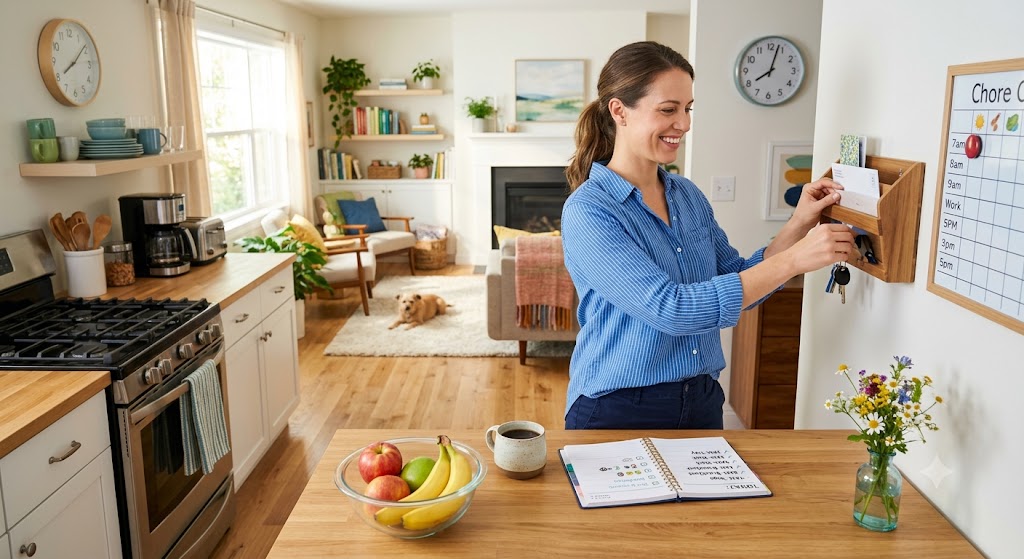
An organized home does not have to be spotless all day. A few repeatable routines can reduce clutter, simplify everyday tasks, and make the home feel easier to live in.
A peaceful home is often created through ordinary habits rather than large cleaning projects. When dishes are left for days, laundry piles up, important items are difficult to find, and small household tasks are constantly postponed, the home can begin to feel more demanding than relaxing. The problem is not always the amount of work involved. Often, it is the lack of a simple system for handling that work consistently.
Daily routines can make a meaningful difference because they prevent small responsibilities from becoming large ones. Instead of waiting for the entire house to become messy before taking action, a few minutes of attention at predictable points throughout the day can keep things under control. The result is not perfection. It is a home where everyday tasks feel manageable.
The best household routines are realistic. They should fit naturally around work, school, family responsibilities, meals, rest, and unexpected events. You do not need to clean every room every day. What matters most is creating a dependable rhythm that keeps the most important areas functional and reduces unnecessary decisions.
Reset the Space
Begin the day by putting away the items that accumulated overnight.
Handle Small Tasks
Deal with simple household jobs before they become larger chores.
Prepare Tomorrow
A short evening reset can make the following morning considerably easier.
Start the Morning With a Five-Minute Reset
Mornings can become chaotic when the first thing you see is yesterday’s clutter. A short reset can change the atmosphere without requiring a major cleaning session. Open curtains, make the bed, return obvious items to their places, and clear the main surface where the day will begin.
The purpose is not to make the entire home perfect before breakfast. Focus on the areas that influence how the home feels when you first enter them. A clear kitchen counter, a reasonably tidy living area, and an organized bedroom can provide a surprisingly strong sense of order.
Give Everyday Items a Permanent Home
Many household messes are actually storage problems. When keys, chargers, shoes, bags, paperwork, toys, or frequently used items do not have an obvious place to go, they naturally collect wherever they were last used.
Creating a simple home for common items reduces this problem. A small tray near the entrance can hold keys and everyday essentials. A designated charging area can prevent cables from spreading across different rooms. Baskets can provide quick storage for items that need to be returned later.
Keep the Kitchen Moving
The kitchen is one of the easiest places for small problems to multiply. A few dishes can quickly become a sink full of dishes, while an unorganized counter can make meal preparation feel more difficult than it needs to be.
A simple kitchen routine can include clearing food preparation areas after meals, loading or washing dishes regularly, wiping the main surfaces, and returning frequently used ingredients to their normal locations. You do not need to deep-clean the kitchen every day. The goal is simply to leave the space ready for the next use.
“`Clear dishes and food.
Put ingredients away when practical.
Leave the main counter ready.
Use Short Cleaning Sessions Instead of Waiting for a Big Mess
One of the easiest ways to make household maintenance feel less overwhelming is to work in short sessions. Set aside a small amount of time and choose the areas that are creating the most visual clutter.
You might clear the living room, put away laundry, empty a small trash bin, organize a counter, or return misplaced items. Once the time is over, stop or move on to another priority. These short resets are powerful because they prevent ordinary mess from accumulating into a project that requires an entire afternoon.
Make Laundry a Process, Not a Weekend Emergency
Laundry can become surprisingly stressful when every step is postponed until there are multiple overflowing baskets. A better approach is to create a rhythm that matches the household’s actual needs.
Some households may prefer smaller, more frequent loads, while others may find it easier to assign particular days to specific categories. The exact system matters less than consistency. Try to connect washing, drying, folding, and putting clothes away so clean laundry does not simply become another pile waiting for attention.
The same principle applies to other recurring chores. When a task has a predictable place in the routine, it requires less mental energy because you do not have to repeatedly decide when to do it.
Reduce Visual Clutter
A room can be clean but still feel chaotic when too many objects remain visible. Clear the surfaces that naturally collect things, especially tables, counters, desks, and entry areas. Store items where they are easy to find but not constantly in the way.
Use Baskets Strategically
A basket can be useful for temporary organization. Keep one in a busy area for items that belong elsewhere, then empty it during a scheduled reset. This is often more practical than repeatedly walking around the house to put away one item at a time.
Create an Evening Closing Routine
The final few minutes of the day can have a major effect on the next morning. An evening reset might include washing remaining dishes, returning loose items to their places, preparing clothes, checking tomorrow’s schedule, and clearing the main areas of the home.
This routine should remain short enough to feel achievable even after a busy day. The objective is not deep cleaning. It is to reduce tomorrow’s friction.
“`Keep the Routine Shared When You Live With Others
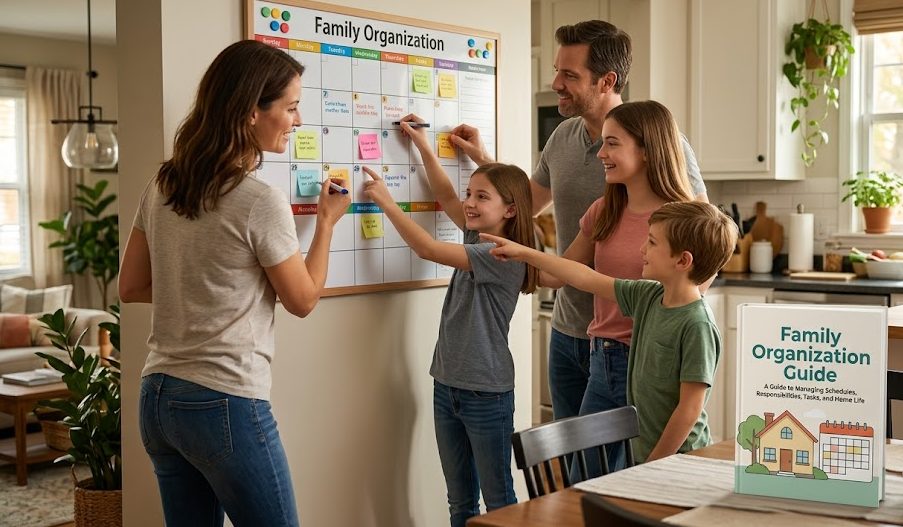
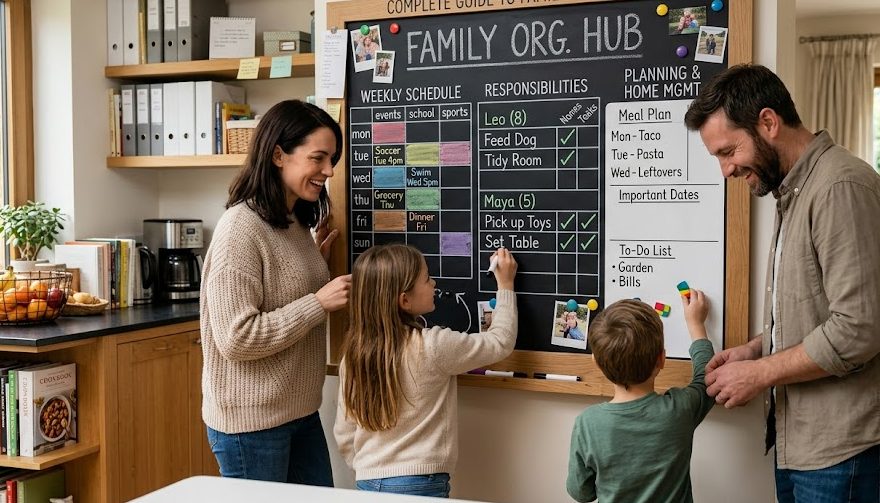
A peaceful household should not depend entirely on one person remembering every responsibility. If several people share the home, routines work better when responsibilities are visible and reasonably distributed.
This does not necessarily require a complicated chore chart. Family members can have simple recurring responsibilities that match their age, schedule, and abilities. One person might handle dishes while another manages recycling or tidies a common area. The important part is creating shared ownership rather than allowing every task to automatically return to the same person.
Do a Weekly Reset, Not a Daily Deep Clean
Daily routines are designed for maintenance. Some jobs naturally require more time and attention, so it helps to separate them from everyday tidying. During a weekly reset, you might review the refrigerator, organize paperwork, clean less frequently used surfaces, change bedding, plan meals, or check household supplies.
Separating maintenance from deeper household work prevents daily routines from becoming exhausting. You can keep everyday expectations small while still giving larger responsibilities a predictable place on the calendar.
A Simple Daily Home Rhythm
“`Avoid Turning Organization Into Perfectionism
There is an important difference between an organized home and a home that looks untouched. Real homes are used. People eat, work, relax, make messes, leave things out, and change their plans. Trying to maintain a perfect appearance at every moment can create more stress than the clutter itself.
Focus on function. Can you find what you need? Can you prepare a meal without clearing half the kitchen first? Can you sit down in the living room comfortably? Can tomorrow begin without a long list of yesterday’s unfinished chores? If the answer is generally yes, the system is doing its job.
A More Peaceful Home Starts With Repeatable Habits
An organized home is not created by one enormous cleaning session. It is built through small actions that happen often enough to prevent everyday problems from becoming overwhelming. Making the bed, clearing the kitchen, returning items to their places, managing laundry regularly, and completing a short evening reset may seem insignificant individually, but together they create a much stronger sense of order.
The most useful routine is the one you can continue when life becomes busy. Keep the expectations realistic, share responsibilities when possible, and give larger chores their own place in a weekly schedule. Most importantly, do not measure success by whether the house looks perfect every hour.
The real benefit of a good home routine is the feeling it creates. When everyday tasks have a predictable rhythm, there are fewer things to remember, fewer last-minute cleaning emergencies, and less visual clutter competing for attention. Over time, those simple habits can turn the home into something more than a place that needs constant maintenance—it can become a space that supports rest, comfort, and a calmer everyday life.