Busy family life can quickly become difficult to manage when school activities, work schedules, appointments, household tasks, and personal plans are all happening at the same time. Without one clear place to organize important information, family members may forget events, miss deadlines, or repeatedly ask what is happening during the week.
A shared family calendar can make everyday planning easier by giving everyone access to the same schedule. Instead of keeping important dates in separate notebooks, phone apps, or personal reminders, the family can use one organized calendar that shows upcoming activities in a simple and easy-to-understand format.
Why a Shared Family Calendar Can Make a Difference
When each person manages their schedule separately, important information can easily become disconnected. One family member may know about a school event while another may be unaware of it. A parent may schedule an appointment without realizing that it conflicts with another activity.
A shared calendar creates one reliable source of information. Everyone can check the same schedule before making plans, which helps reduce confusion and makes it easier to prepare for busy days.
It can also encourage family members to take more responsibility for their own schedules. Instead of waiting for someone to provide reminders, people can develop the habit of checking the calendar independently.
Choose a Calendar Format That Fits Your Family
There is no single calendar format that works for every household. Some families prefer a large wall calendar because it is visible throughout the day. Others use a shared digital calendar because family members can access it from different locations.
A physical calendar may work well when younger children are involved. It can be placed in a common area such as the kitchen, dining room, or hallway. A digital calendar may be more convenient for families with changing work schedules, frequent travel, or older children who use phones and computers.
Some households use both. A wall calendar can display the main weekly schedule, while a digital calendar can provide notifications and updates.
Add the Most Important Family Activities First
Start by adding events that affect the entire household. Avoid filling the calendar with too much information immediately. A crowded calendar may become difficult to read and less useful.
Important entries may include:
- School schedules and special events
- Work commitments and important meetings
- Medical or personal appointments
- Sports, classes, and extracurricular activities
- Family celebrations and birthdays
- Travel plans and visitors
- Household deadlines and important payments
Once the main activities are visible, smaller details can be added when they are useful to the family.
Use Colors to Make the Schedule Easier to Read
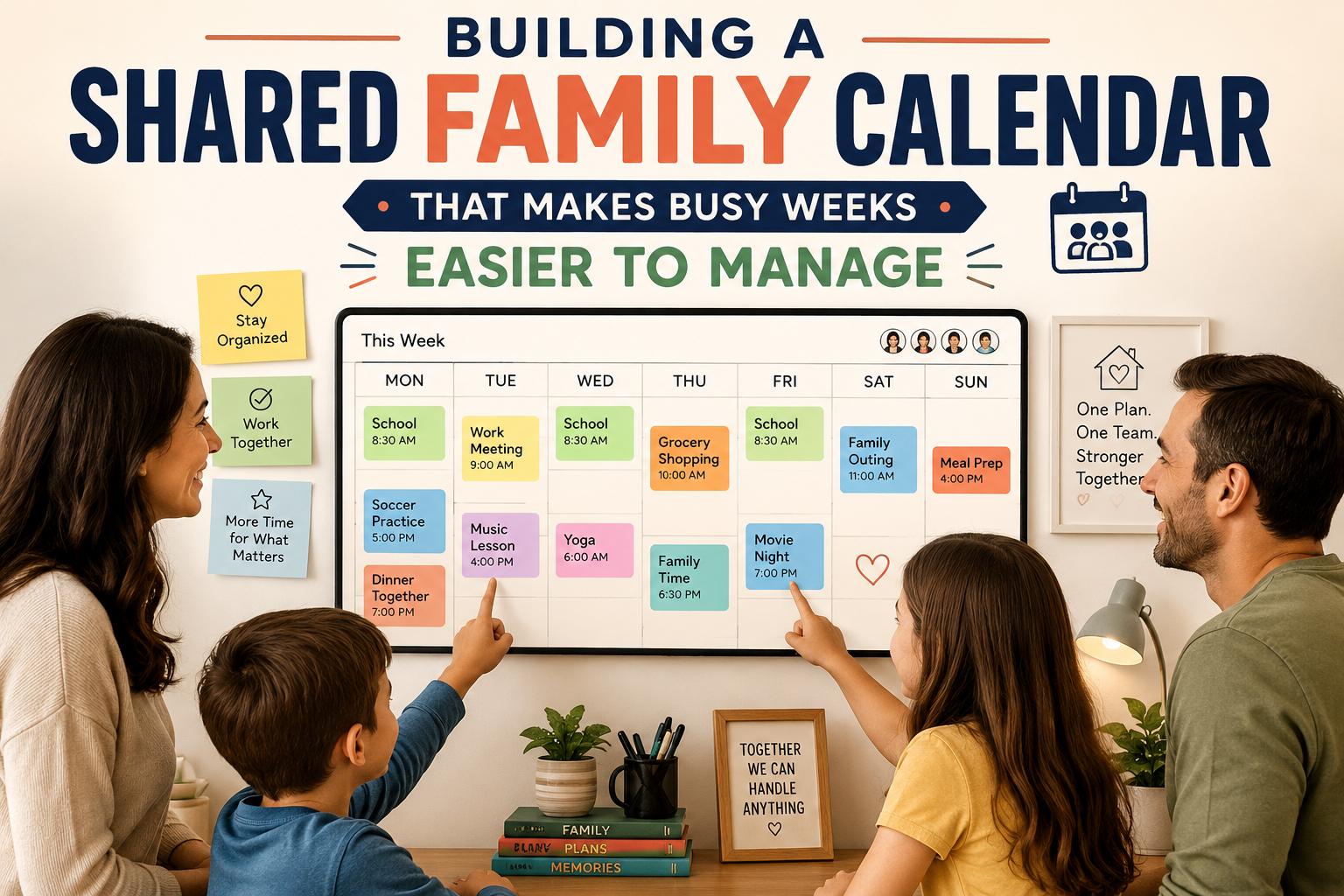
Color coding can make a shared calendar easier to understand at a glance. Each family member can have a different color, or colors can represent different types of activities.
For example, one color may be used for school events, another for work commitments, and another for family activities. The purpose is not to create a complicated design. Colors should make important information easier to identify.
Choose colors that are easy to see and keep the same color system each week. Consistency helps family members understand the calendar more quickly.
Create a Weekly Calendar Check-In
A shared calendar is most useful when everyone checks it regularly. A short family planning session can help people prepare for the week before it becomes busy.
Choose a regular time, such as Sunday evening or another convenient day. Review upcoming events, discuss schedule changes, and identify any possible conflicts. The meeting does not need to be long. Even ten minutes may be enough.
During the check-in, family members can answer simple questions:
- What important events are happening this week?
- Does anyone need transportation or support?
- Are there any schedule conflicts?
- What needs to be prepared in advance?
- Are there any changes to household responsibilities?
Regular check-ins can reduce last-minute surprises and help everyone feel more prepared.
Leave Space for Unexpected Changes
Even a well-organized schedule can change. Meetings may be moved, activities may be canceled, or unexpected responsibilities may appear. A useful calendar should be flexible enough to handle these changes.
When an event changes, update the shared calendar as soon as possible. If the calendar is digital, notifications may help inform family members. If it is physical, make updates clearly so outdated information does not cause confusion.
It may also be helpful to avoid scheduling every hour of the day. Leaving open time provides room for travel, rest, unexpected tasks, and changes in plans.
Make Responsibilities Clear
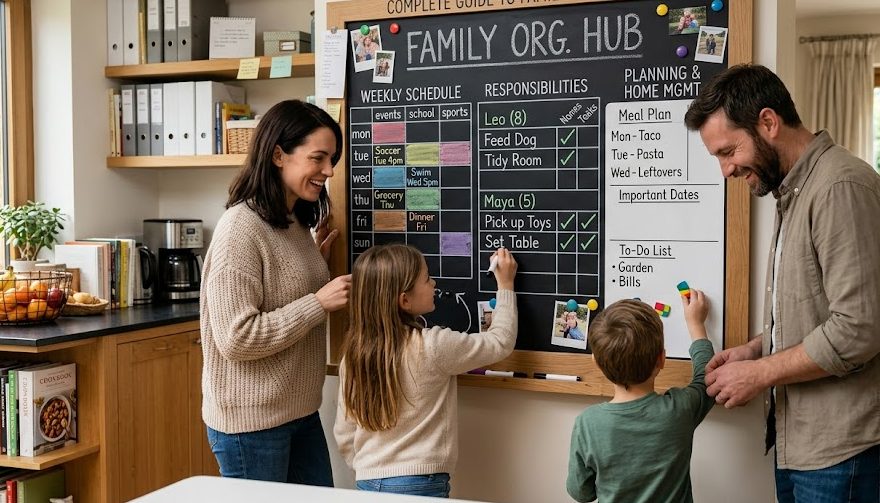
A family calendar can organize more than events. It can also show who is responsible for certain household activities. This may include meal preparation, shopping, pet care, cleaning, or transportation.
Clear responsibilities can reduce the need for repeated reminders. Instead of asking who will complete a task, family members can check the calendar and see what has already been planned.
Keep responsibilities realistic and balanced. Consider each person’s age, available time, and other commitments. A calendar should support cooperation rather than create unnecessary pressure.
Keep the Calendar Simple and Useful
Adding too many details can make a calendar difficult to use. Focus on information that helps the family plan, prepare, and communicate. If an item does not affect anyone’s schedule, it may not need to appear on the shared calendar.
Use short and clear event names. For example, write “School meeting – 4:00 PM” instead of a long description. Important details can be added separately if needed.
Review the calendar regularly and remove old events. A clean and current calendar is easier to trust and use.
Encourage Everyone to Participate
A shared calendar works best when it belongs to the whole family. Encourage each person to add important activities and update changes. Children can help by adding school events, projects, or activities appropriate for their age.
When everyone participates, the calendar becomes a shared planning tool rather than one person’s responsibility. It can also help children learn useful skills such as time management, preparation, and personal responsibility.
Family members may need time to build the habit of checking the calendar. Keep the process simple and provide support while the routine develops.
Conclusion
A shared family calendar can bring more clarity to busy weeks by keeping schedules, events, and responsibilities in one organized place. It can reduce confusion, improve communication, and help family members prepare for important activities before the last minute.
The most effective calendar is easy to access, simple to understand, and updated regularly. Start with the most important events, use clear colors, hold short weekly check-ins, and allow flexibility when plans change.
With consistent use, a shared calendar can become a helpful part of everyday family life. Instead of relying on constant reminders, everyone can check the schedule, understand what is coming next, and work together to manage busy weeks more smoothly.