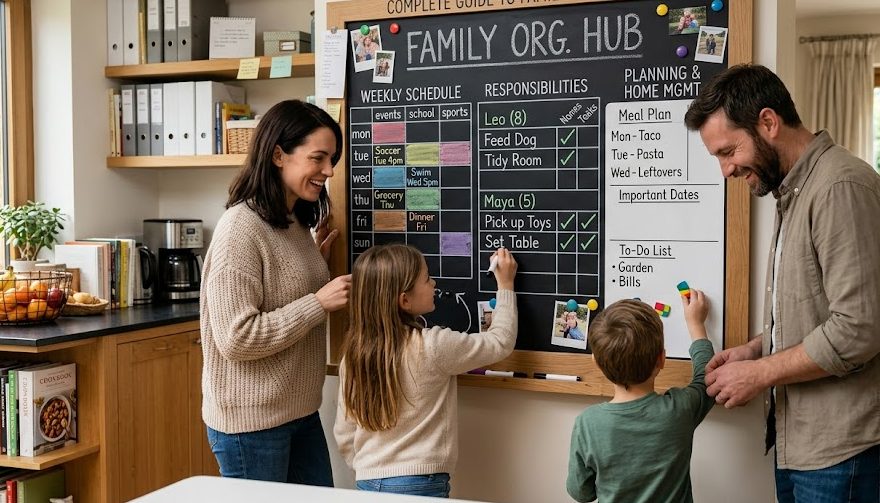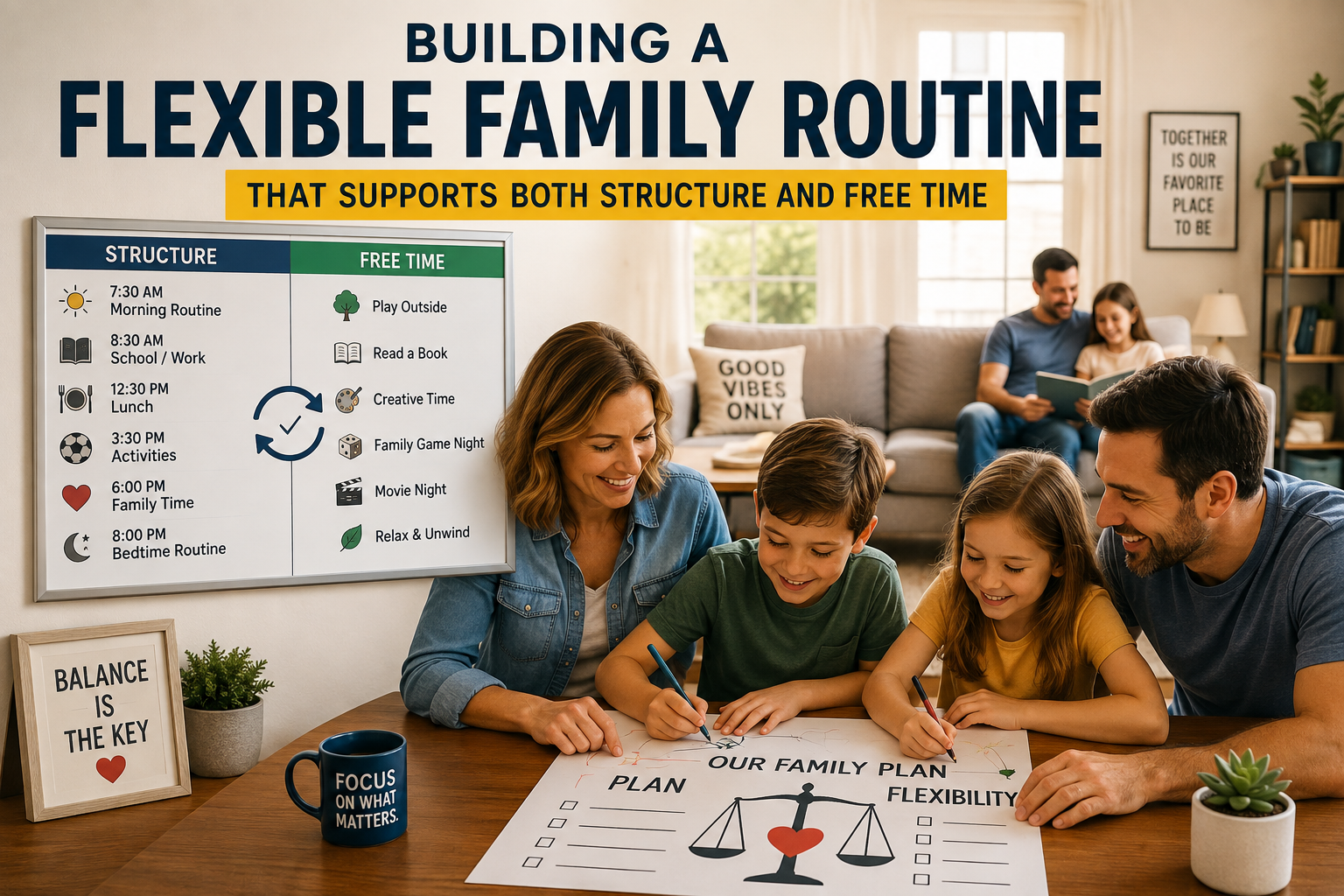
A family routine can provide useful structure, but a schedule that fills every hour may leave little room for rest, hobbies, spontaneous activities, or quiet time. On the other hand, having no predictable routine can make it difficult to manage meals, responsibilities, appointments, and daily preparation.
⚖️ Balance matters:
A flexible routine gives the family a reliable rhythm while protecting time that does not need to be planned in advance.
A balanced family routine does not control every part of the day. It identifies a few important anchors, organizes shared responsibilities, and leaves open periods for individual choices. This approach can help family members know what needs attention without making home life feel overly scheduled.
1. Understand the Difference Between Structure and Over-Scheduling
Structure creates predictable points in the day. It may include regular meal times, school or work preparation, household responsibilities, and a short planning period. These habits can reduce confusion because family members know what usually happens.
Over-scheduling happens when every available period is assigned to a task or activity. A full schedule may appear organized but can become difficult to follow when plans change.
Clear routines, shared information, and realistic responsibilities.
Little flexibility, constant deadlines, and no open time.
2. Choose a Few Daily Anchors
Daily anchors are activities that happen at roughly the same time or in the same order. They provide stability without requiring a detailed schedule.
Prepare for school, work, or planned activities.
Use meals as natural points for connection and planning.
Complete a short household reset at a convenient time.
Prepare important items and transition toward rest.
Keep the number of anchors small. A few reliable habits are often more useful than a detailed timetable.
3. Plan Important Responsibilities First
Place essential responsibilities before optional activities. These may include school or work commitments, appointments, household needs, and important family events.
Once essential activities are visible, it becomes easier to identify open periods. This prevents free time from being accidentally filled with tasks that could be completed later.
- Add fixed school, work, and appointment times.
- Include essential household responsibilities.
- Plan important family activities.
- Protect open periods for free time.
4. Protect Free Time Intentionally
Free time is easier to maintain when it is treated as a valuable part of the routine. It does not always need a specific activity. Family members may use it for hobbies, rest, reading, conversation, outdoor time, or personal interests.
Allow people to choose how they spend at least some of their free time. This can support independence and reduce the feeling that every moment is controlled.
5. Use Time Blocks Instead of Exact Minutes
Time blocks can provide direction without requiring every activity to begin at an exact time. For example, the family may use a morning preparation block, an afternoon responsibility block, and an evening wind-down block.
Within each block, family members can complete tasks in an order that works for them. This makes the routine more adaptable when one activity takes longer than expected.
☀️ Morning block: Personal preparation, breakfast, and departure.
🌤️ Afternoon block: Schoolwork, household tasks, or planned activities.
🌙 Evening block: Meals, preparation, connection, and rest.
6. Share Responsibilities Without Filling Every Hour
Household responsibilities should be clear, but they do not always need to be assigned to exact times. Give family members a reasonable time window when possible.
For example, a task may need to be completed before dinner rather than at a specific minute. This gives people more control while ensuring that important work is completed.
“Please organize your school materials before the evening routine” provides more flexibility than assigning the task to one exact time.
7. Leave Space Between Major Activities
Moving directly from one commitment to another can make the day feel rushed. Short transition periods provide time to travel, eat, rest, change activities, or handle unexpected needs.
When planning the week, avoid placing major responsibilities back to back whenever possible. Even a small amount of open time can make the routine easier to manage.
- Travel and preparation
- Short breaks
- Unexpected schedule changes
- Moving calmly between activities
8. Keep One Flexible Day or Open Period
Some weeks include unexpected appointments, school projects, work changes, or household needs. Keeping one flexible period can prevent these changes from disrupting the entire schedule.
The open period can be used for unfinished tasks, family activities, rest, or nothing at all. Its purpose is to provide room for real life.
- One open evening each week
- A less-planned weekend morning
- A short buffer after busy days
- A shared period for unfinished responsibilities
9. Review the Routine as a Family
A routine should be reviewed when schedules change or when family members feel consistently rushed. A short weekly conversation can identify what is working and what needs adjustment.
- Did the routine leave enough time for rest?
- Were household responsibilities manageable?
- Which parts of the week felt rushed?
- Was free time protected?
- What should change next week?
Make small changes rather than redesigning the entire routine. This helps the family keep useful habits while improving areas that are no longer practical.
Conclusion
A flexible family routine can provide structure without removing the freedom to rest, explore interests, or respond to unexpected changes. By choosing a few daily anchors, planning essential responsibilities, using time blocks, and protecting open periods, families can create a more balanced rhythm.
The goal is not to organize every minute. It is to make important responsibilities clear while leaving enough space for personal choices and family connection.
Start with a few useful anchors and review the routine regularly. As schedules and needs change, small adjustments can help the family maintain both organization and valuable free time.