Create a Family System That Makes Everyday Life Easier
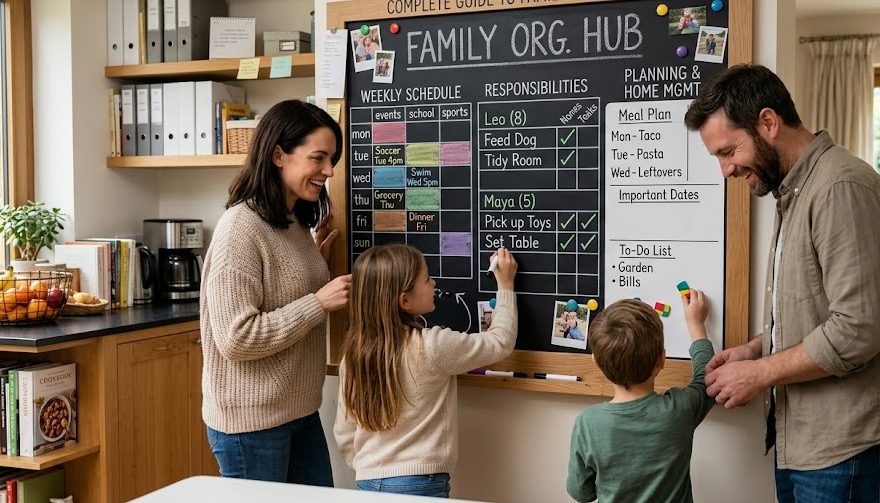
Family organization is not about controlling every minute of the day. It is about creating simple systems for schedules, responsibilities, household tasks, communication, meals, appointments, and shared priorities so everyone knows what needs attention.
Why Family Organization Matters
A household can become difficult to manage when important information is scattered between different calendars, conversations, notes, and individual memories. Someone may know about an appointment while another person does not. A household task may remain unfinished because everyone assumes someone else will handle it.
A simple family organization system reduces these problems by making responsibilities visible and creating predictable routines. The goal is not perfection. The goal is to make everyday decisions easier and reduce unnecessary confusion.
Start by Understanding What the Household Needs
Before creating schedules and task lists, identify the major areas that require regular attention. This gives the family a complete picture instead of focusing only on the most urgent problem.
Schedules
Consider work, school, appointments, activities, travel, events, and other commitments that affect the household.
Household Tasks
Identify recurring cleaning, laundry, shopping, maintenance, cooking, and organization responsibilities.
Household Planning
Include groceries, recurring bills, planned purchases, household supplies, and other regular financial responsibilities.
Keep Important Information in One Shared System
Build a Family Calendar That Everyone Can Understand
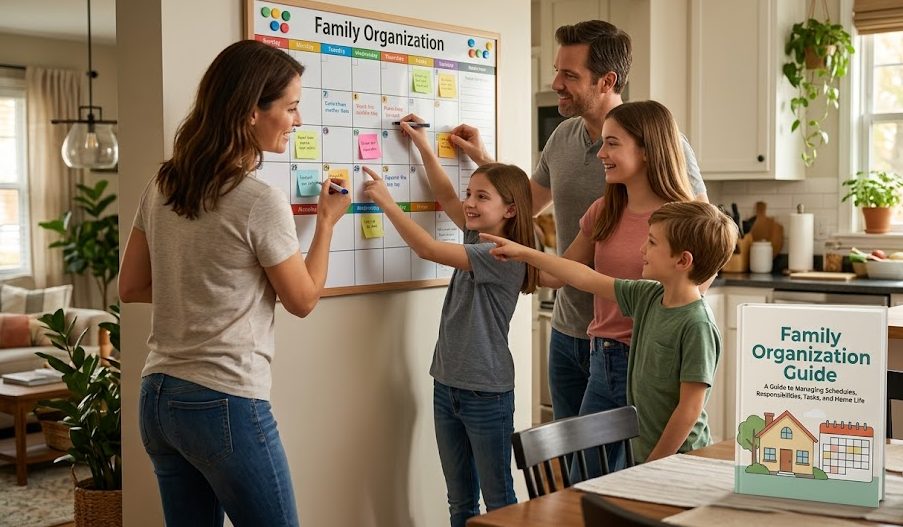
A shared calendar can prevent overlapping commitments and last-minute surprises. Whether you use a digital calendar, wall calendar, planner, or combination of tools, the system should be easy for the household to check.
Morning Responsibilities
Getting ready, breakfast, school or work preparation, and departure times.
Work & School
Record fixed commitments and any activities that affect the rest of the household.
Activities & Errands
Track appointments, shopping, classes, transportation, or other afternoon responsibilities.
Home & Meal Time
Coordinate dinner preparation, household tasks, family time, and evening plans.
Tomorrow Check
Review the next day’s schedule and prepare anything that needs to be ready.
Make Household Responsibilities Clear
Share the Work Clearly
Household tasks become easier when responsibilities are visible instead of being based on assumptions. Assign tasks according to availability, ability, age, preferences, and the practical needs of the household.
Create a Simple Weekly Family Rhythm
A weekly structure helps prevent every day from becoming a separate planning exercise. The exact schedule can change, but recurring activities can usually be attached to familiar days or time periods.
Build Repeatable Systems for Everyday Tasks
Cleaning System
Instead of waiting for the whole home to become difficult to manage, divide cleaning into small recurring responsibilities.
Laundry System
Decide when laundry is normally collected, washed, dried, folded, and returned to its usual storage areas.
Shopping System
Keep a shared list for groceries and household supplies so people can add items when they notice they are running low.
Paper & Information
Create a predictable place for important documents, receipts, school information, household records, and items that require future action.
Make Family Meal Planning Easier
Meal planning does not require creating a detailed menu for every meal. A simple framework can reduce last-minute decisions while leaving enough flexibility for changing schedules and preferences.
Create Better Family Communication Habits
Keep Important Information Visible
Family organization works best when information does not depend on one person remembering everything. Create simple communication habits that allow everyone to understand changes to schedules, responsibilities, plans, and household needs.
A short family check-in can be useful when several people have different schedules. It can also prevent minor misunderstandings from becoming recurring problems.
Organize Family Spending and Household Purchases
Family organization also includes knowing what needs to be purchased and when regular household expenses need attention. A simple overview can make planning easier without requiring complicated financial systems.
Use a Weekly Reset to Keep the System Working
A family organization system needs regular maintenance. A short weekly reset can prevent small problems from accumulating and gives everyone a chance to prepare for the next week.
Keep Important Family Information Organized
Families often accumulate school information, household records, receipts, warranties, appointment details, emergency contacts, and other useful information. Keeping these materials organized makes them easier to locate when needed.
| Information | Useful Location | Review |
|---|---|---|
| Appointments | Shared calendar | Weekly |
| Household Documents | Organized document storage | Occasionally |
| Shopping Lists | Shared digital or physical list | Before shopping |
| Home Maintenance | Maintenance record | Monthly or as needed |
| Important Contacts | Accessible contact list | When information changes |
Family Organization Problems to Avoid
A Simple Family Organization Framework
Make It Visible
Put schedules, important tasks, shopping needs, and shared responsibilities in a place where the relevant family members can easily see them.
Share Ownership
Make responsibilities clear and distribute work according to schedules, abilities, and household needs.
Review Regularly
Use a short weekly review to update schedules, unfinished tasks, shopping needs, household plans, and upcoming responsibilities.
Build a Home That Works as a Team
Family organization does not require a complicated productivity system. A shared calendar, clear responsibilities, predictable household routines, simple meal and shopping systems, and a short weekly reset can make everyday life considerably easier to manage. Start with the areas that currently create the most confusion, build one simple system around them, and improve it gradually. The goal is not to make family life rigid. It is to create enough structure that everyone has a clearer understanding of what needs to happen, who is handling it, and what is coming next.