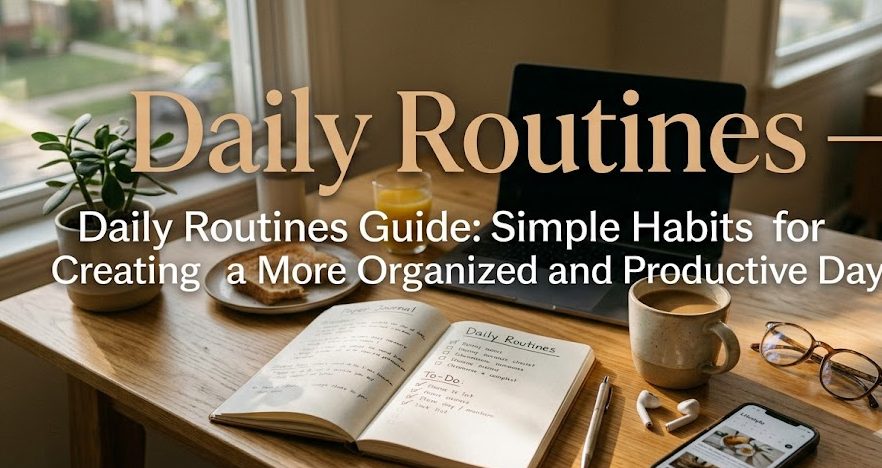
Build a Day That Feels Organized, Focused, and Manageable
A good daily routine does not require a perfect schedule. It simply creates enough structure to help you know what matters, when to do it, and how to protect time for work, rest, personal responsibilities, and preparation.
Why Daily Routines Matter
Many people think productivity means filling every hour with tasks. In reality, an effective routine is more about reducing unnecessary decisions and creating a predictable rhythm. When recurring activities have a natural place in the day, it becomes easier to focus on important work without constantly deciding what should happen next.
A useful routine should also be realistic. Work schedules, family responsibilities, travel, appointments, energy levels, and unexpected events can change from one day to another. The best system therefore gives you structure without making you feel trapped by a rigid timetable.
Start With a Simple Daily Structure
Before adding habits and productivity techniques, divide the day into a few broad periods. A simple structure is easier to maintain than a schedule containing dozens of tiny tasks.
Morning Preparation
Use the beginning of the day to wake up, get ready, review priorities, and create a calm transition into work or other responsibilities.
Main Work Period
Place important tasks into a focused block when your environment and energy are suitable for concentrated work.
Evening Reset
Finish essential tasks, prepare for tomorrow, organize your surroundings, and gradually move away from work mode.
A Balanced Daily Rhythm
Wake Up & Prepare
Get ready, drink water, organize the immediate surroundings, and avoid starting the morning with unnecessary digital distractions.
Review the Day
Check appointments, deadlines, important messages, and the three most valuable tasks for the day.
Focused Work
Start with meaningful work instead of allowing small notifications and low-value tasks to consume the most productive period.
Break & Reset
Step away from the main task, eat, move around, and give your attention a chance to recover before continuing.
Second Work Block
Handle remaining important work, communication, administration, and practical responsibilities.
Transition Away From Work
Review completed work, capture unfinished tasks, and create a clear stopping point instead of carrying every task mentally into the evening.
Prepare Tomorrow
Check the next day’s commitments, prepare essentials, tidy the workspace, and decide the first useful action for the morning.
Build Your Routine Around Priorities
A daily plan becomes much easier when you separate important work from tasks that are merely convenient. Instead of creating a huge checklist, identify a small number of outcomes that would make the day successful.
Morning Planning
5–10 MINCheck commitments
Review meetings, appointments, deadlines, and fixed responsibilities.
Select priorities
Choose the tasks that deserve attention before smaller activities.
Estimate time
Give important tasks realistic time windows instead of assuming everything will be quick.
Evening Planning
5–10 MINReview progress
Look at what was completed and identify unfinished work without overthinking it.
Move unfinished tasks
Give incomplete work a realistic future slot instead of keeping it in your head.
Choose tomorrow’s start
Decide what you will begin with when the next work period starts.
Protect Your Most Valuable Work Time
Focus improves when the number of competing decisions is reduced. During important work periods, keep the goal specific and make distractions harder to reach. You do not necessarily need a complicated productivity app. A clear task, a quiet workspace, and a defined stopping point can be enough.
Use Breaks as Part of the Routine
Breaks Are Not Wasted Time
Short breaks can make long work periods easier to manage. Instead of waiting until you feel completely exhausted, build natural pauses into your schedule.
Separate Different Types of Work
| Task Type | Examples | Best Approach |
|---|---|---|
| Deep Work | Writing, designing, coding, analysis | Schedule during your strongest focus period |
| Communication | Email, messages, calls, team updates | Group communication into planned windows |
| Administration | Files, forms, payments, scheduling | Handle together instead of scattering throughout the day |
| Maintenance | Cleaning, organizing, preparation | Attach small actions to existing daily routines |
| Planning | Reviewing goals and upcoming responsibilities | Use a short dedicated planning period |
Use Tiny Habits to Create Consistency
Large lifestyle changes can be difficult to maintain when they require too much effort. Small habits are often easier to repeat because they can fit naturally into routines that already exist.
Create a Simple Nightly Reset
The evening routine should reduce tomorrow’s friction. You do not need an elaborate system. A few predictable actions can make the next morning easier and provide a clear boundary between today’s responsibilities and tomorrow’s plans.
Improve the Routine Instead of Chasing Perfection
What Worked?
Identify routines that felt natural and helped you complete important work without creating unnecessary pressure.
What Failed?
Look for unrealistic time estimates, excessive commitments, recurring distractions, or routines that were too complicated.
What Should Change?
Adjust one or two parts of the routine rather than rebuilding your entire schedule every week.
Leave Space for Unexpected Events
A schedule that uses every available minute is difficult to maintain. Travel delays, urgent messages, family responsibilities, technical problems, unexpected meetings, and changes in energy can disrupt even a well-designed day. Leaving open space gives your routine room to recover.
Fixed Commitments
PROTECTMeetings, appointments, classes, deadlines, travel, and other activities that have a specific time should be placed first.
Flexible Tasks
MOVEABLECleaning, administration, research, minor errands, and lower-priority tasks can be moved when the day changes unexpectedly.
Routine Mistakes That Make Planning Harder
Design a Routine That Fits Your Actual Life
Consider Your Energy
Put mentally demanding work into periods when you naturally feel more alert, and reserve lower-energy periods for simpler tasks.
Respect Your Responsibilities
Build around your actual job, study, family, travel, and household commitments rather than copying someone else’s routine.
Keep It Sustainable
A routine that works reasonably well for months is more valuable than an impressive schedule that lasts only a few days.
A Simple Daily Checklist Framework
| Period | Main Question | Action |
|---|---|---|
| Morning | What matters today? | Choose priorities and review commitments |
| First Work Block | What deserves my best attention? | Complete the most valuable focused task |
| Midday | Do I need to reset? | Take a real break and reassess the remaining day |
| Afternoon | What still needs attention? | Handle important work and practical responsibilities |
| Evening | What can I finish or move? | Close open tasks and capture unfinished work |
| Night | How can tomorrow be easier? | Prepare essentials and define the next starting point |
Build a Routine You Can Actually Live With
An organized day does not require perfect discipline or a complicated productivity system. Start with a few reliable anchors: a short morning plan, a clear priority, protected focus time, useful breaks, and a simple evening reset. Once those habits become natural, you can gradually add more structure where it genuinely helps. The strongest daily routine is not the one that looks perfect on paper. It is the one that makes ordinary days easier to manage and helps you consistently make progress on the things that matter.