Build a Home That Runs More Smoothly.
A practical household planning guide for organizing daily tasks, cleaning routines, family responsibilities, spending, meals, shopping, storage, and weekly schedules without making home management unnecessarily complicated.
Household planning is about reducing daily friction.
A well-organized home does not need a complicated system. The goal is to know what needs to happen, when it needs to happen, who is responsible, and how household spending and supplies should be managed.
Start With a Household Overview
Understand what your home actually requires.
Before creating a detailed schedule, take a broad look at the household. Consider cleaning, meals, shopping, laundry, maintenance, bills, appointments, storage, and other recurring responsibilities.
The purpose of this overview is not to create a giant checklist. It is simply to identify the major areas that require regular attention so they can be organized into manageable routines.
Home Care
Cleaning, laundry, dishes, decluttering, and routine maintenance.
Money
Household bills, groceries, subscriptions, savings, and planned purchases.
Schedule
Work, school, appointments, errands, family activities, and weekly commitments.
Create a Practical Weekly Schedule
Give recurring responsibilities a predictable place.
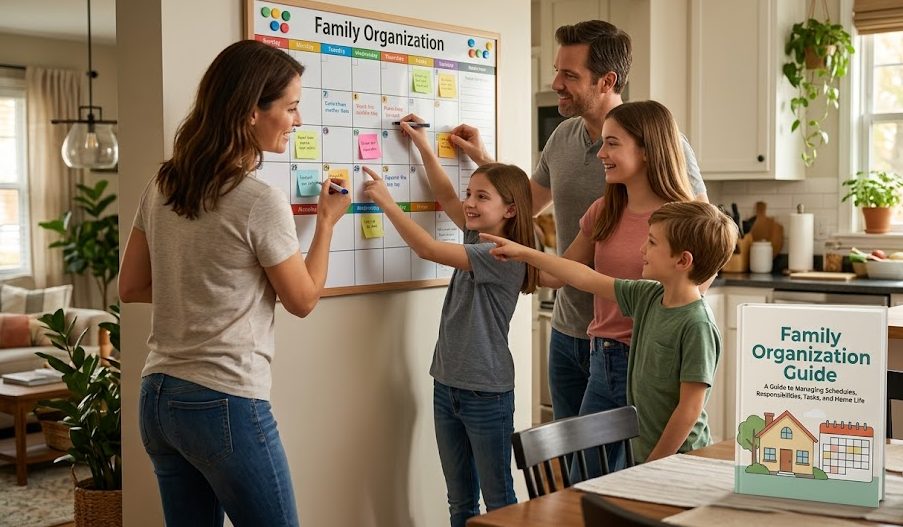
A weekly schedule can prevent household responsibilities from being handled only when they become urgent. Assign larger tasks to suitable days and leave enough flexibility for unexpected work.
Reset
Kitchen
Home
Supplies
Review
Deep Care
Prepare
Divide Household Chores
Shared responsibility makes household management easier.
Household work becomes frustrating when one person carries most of the responsibility. A clearer approach is to divide recurring chores according to availability, ability, preference, and the size of the household.
Daily Responsibilities
Weekly Responsibilities
Build a Household Budget
Give every major spending category a place.
Household budgeting becomes easier when regular expenses are separated from flexible spending and future goals. The exact categories depend on the household, but a basic structure can make money decisions clearer.
Monthly Planning
Review expected income, recurring costs, flexible expenses, and upcoming purchases before the month gets busy.
Plan Meals Before Grocery Shopping
Planning meals can make shopping more focused.
Meal planning does not require preparing every meal in advance. The main benefit is knowing what types of meals are likely to be needed so that groceries can be purchased intentionally rather than randomly.
Simple Meal
Use ingredients already available.
Quick Dinner
Choose something easy after a busy day.
Fresh Meal
Use fresh ingredients from the week’s shop.
Leftovers
Reduce unnecessary food waste.
Flexible
Leave space for changing plans.
Create a Smarter Shopping System
Keep shopping connected to actual household needs.
A shared shopping list can prevent duplicate purchases and reduce the chance of forgetting important household supplies. Keep the list in a location that everyone who shops can access.
Before Shopping
While Shopping
Organize Household Storage
Make frequently used items easy to find.
Storage works best when items have predictable homes. Instead of trying to organize every drawer at once, focus on high-use areas first and gradually improve the rest.
Schedule Home Maintenance
Small maintenance tasks are easier when they are planned.
Household maintenance can be divided into regular, seasonal, and occasional tasks. Planning these activities helps prevent them from becoming forgotten until something needs urgent attention.
Regular
Replace or clean frequently used household items, check common areas, and address small problems early.
Seasonal
Review clothing, storage, equipment, outdoor areas, and other items that change with the season.
Planned
Keep track of larger maintenance needs and schedule them according to priority and available budget.
Coordinate Family Responsibilities
Make household work visible to everyone involved.
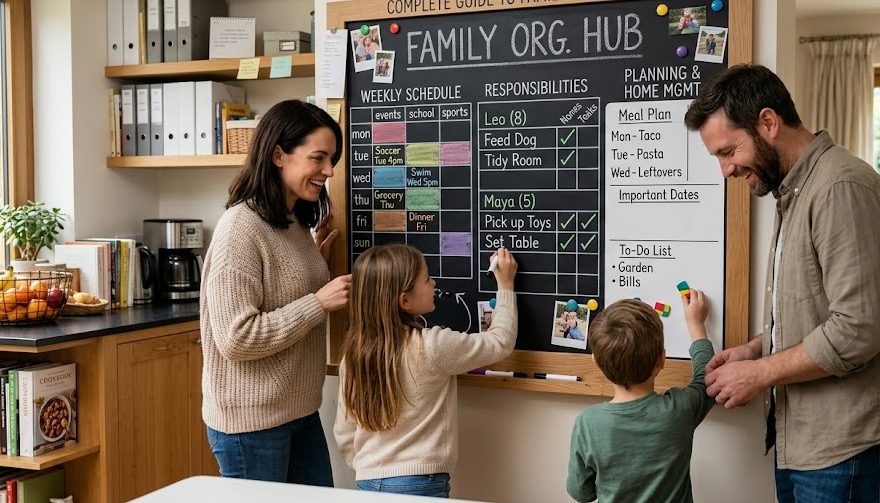
If several people share a home, household planning works better when responsibilities are visible. The goal is not to make every task equal, but to make the overall workload understandable and manageable.
Schedules
Share important appointments and commitments.
Chores
Assign recurring household responsibilities.
Shopping
Maintain one shared list for household supplies.
Budget
Keep appropriate household spending information organized.
Create a Weekly Household Reset
Use one short review to prepare for the next week.
A weekly reset gives the household an opportunity to review unfinished tasks, upcoming commitments, supplies, spending, meals, and cleaning priorities. It can be done on any convenient day.
Weekly Reset
Set aside a short block of time to look at the entire household instead of dealing with individual problems as they appear.
Keep Household Information Organized
Important information should have a predictable location.
Household administration becomes easier when important records are organized. This can include bills, warranties, receipts, maintenance records, appliance information, schedules, and other documents that may be needed later.
Documents
Keep important household records organized and easy to locate.
Maintenance
Record useful information about repairs and household equipment.
Receipts
Keep relevant purchase records according to your household needs.
Common Household Planning Mistakes
Simple systems often fail because they become unnecessarily complicated.
Keep the System Flexible
A useful household plan should adapt to real life.
A schedule is a guide, not a rule that must survive every unexpected event. Work changes, family commitments, travel, visitors, weather, repairs, and other situations can affect household plans.
When something changes, move the task to another suitable time instead of treating the entire plan as a failure. Flexibility is one of the most important parts of sustainable household organization.
Review
Check what changed and what still matters.
Reassign
Move tasks to realistic days and responsible people.
Simplify
Remove unnecessary tasks when the household is busy.
A More Organized Home Starts With a Simple System
Effective household planning does not mean filling every hour with chores. It means creating enough structure to make daily life easier. A weekly schedule, shared responsibilities, practical budget, organized shopping list, meal plan, storage system, and regular reset can reduce confusion and make household work more manageable.