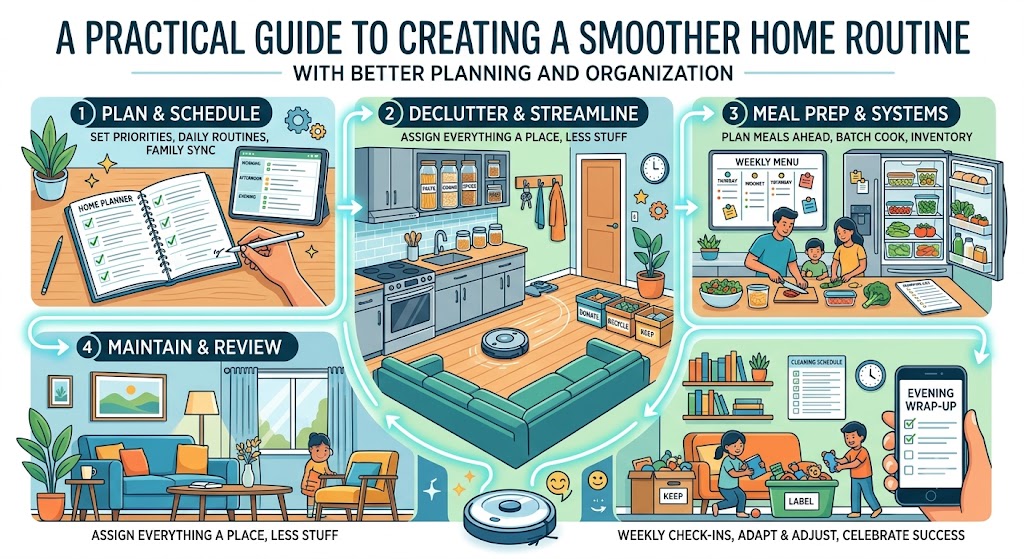
A comfortable home routine rarely happens by accident. When meals, cleaning, work, school, shopping, appointments, and personal responsibilities all compete for attention, even a normal day can feel unnecessarily complicated. A practical routine can bring more structure to these activities without making home life feel rigid. The goal is not to schedule every minute, but to create simple systems that make common responsibilities easier to manage and leave more room for rest and meaningful family time.
Every household has its own rhythm. Some people leave home early for work, others work remotely, children may have different school schedules, and weekends may look completely different from weekdays. Because of these differences, an effective home routine should be designed around the people living in the household rather than copied from someone else’s schedule.
Good organization starts with understanding what repeatedly causes delays, forgotten tasks, clutter, or unnecessary stress. Once those pressure points are identified, small changes can make daily life much smoother.
Build routines around real household needs, not around the idea of having a perfect schedule.
Start by Observing How Your Home Already Works
Before changing a routine, spend a few days observing what actually happens. Notice when mornings become rushed, when dishes accumulate, when shopping is usually needed, which chores are frequently forgotten, and which parts of the day feel unnecessarily crowded.
This simple observation can reveal problems that are easy to overlook. For example, the issue may not be that a family has too many responsibilities. It may simply be that several responsibilities are being handled at the same time.
Once you understand the existing pattern, you can make targeted changes instead of reorganizing the entire household.
Look for these common pressure points
Create a Reliable Morning Start
Mornings often influence how the rest of the day feels. When several people need breakfast, clothing, school materials, work equipment, transportation, and other items at the same time, small delays can quickly multiply.
A smoother morning usually begins the night before. Prepare frequently needed items, check the next day’s schedule, and make sure essential belongings are easy to locate.
Keep the morning routine short and predictable. The fewer unnecessary decisions people have to make immediately after waking up, the easier it can be to maintain a calm start.
A simple evening preparation routine
Give Every Household Task a Natural Place
Cleaning and household responsibilities become easier when they have a predictable place in the routine. Instead of waiting until everything becomes urgent, divide larger responsibilities into smaller recurring tasks.
For example, basic daily tidying can handle immediate messes, while deeper cleaning can be divided across different days. This prevents one large cleaning session from becoming the only solution.
The exact schedule should depend on the size of the household, available time, and how quickly different areas become untidy.
Think in three layers
Quick resets and essential chores.
Larger cleaning and organization tasks.
Deep cleaning and seasonal projects.
Use a Weekly Planning Reset
A weekly reset can help prevent small household responsibilities from becoming scattered across different days. Choose a convenient time to look at the upcoming week and identify important appointments, activities, shopping needs, meals, chores, and unusual commitments.
The planning session does not need to be long. The objective is simply to understand the shape of the week before it begins.
Your weekly reset can cover:
Plan Around Busy and Quiet Days
One common mistake is giving every day the same workload. In reality, some days naturally contain more demands than others. Trying to complete major household projects on an already crowded day can make the entire routine feel difficult.
Instead, identify your busiest days and keep household expectations lighter during those periods. More time-consuming tasks can be moved to quieter days.
Only essential tasks.
Regular routine.
Larger projects if needed.
Make Household Storage Easier to Maintain
Organization is not only about calendars and schedules. The physical arrangement of a home can also affect how quickly daily tasks are completed. When commonly used items have predictable storage locations, people spend less time searching for them.
Keep frequently used objects accessible and avoid creating complicated storage systems that are difficult to maintain. Every item does not need a perfect location, but important everyday items should have a logical home.
Periodically remove items that are broken, outdated, unused, or no longer appropriate for the household. Less unnecessary clutter can make routine cleaning easier.
The easy-storage test
If something is difficult to put away, the storage system may need improvement.
Choose storage locations that are practical for the people who regularly use the items.
“`Create a Simple Meal Planning Habit
Food planning can remove a surprising amount of daily decision-making. Instead of asking what everyone will eat at the last moment, choose a few meal ideas ahead of time.
You do not necessarily need a detailed seven-day menu. Some households may prefer to plan only the busiest evenings and leave the remaining meals flexible.
Keep commonly used ingredients available and adjust meal choices according to the week’s schedule.
A flexible meal-planning approach
🥗 Choose a few easy meals for busy days.
🍲 Reserve more involved recipes for relaxed days.
🥪 Keep simple backup options available.
🛒 Build the shopping list from the planned meals.
“`Use Short Home Reset Sessions
A home does not need to be perfectly clean at every moment. A short reset period can be more realistic than expecting everyone to keep every room completely organized throughout the day.
Choose a convenient time and spend a limited amount of time returning commonly used items to their places, clearing surfaces, handling dishes, or preparing rooms for the next part of the day.
Keeping the session short makes it easier to repeat consistently.
A quick evening reset
Shared surfaces.
Items to their places.
Tomorrow’s essentials.
Keep Important Information in One Place
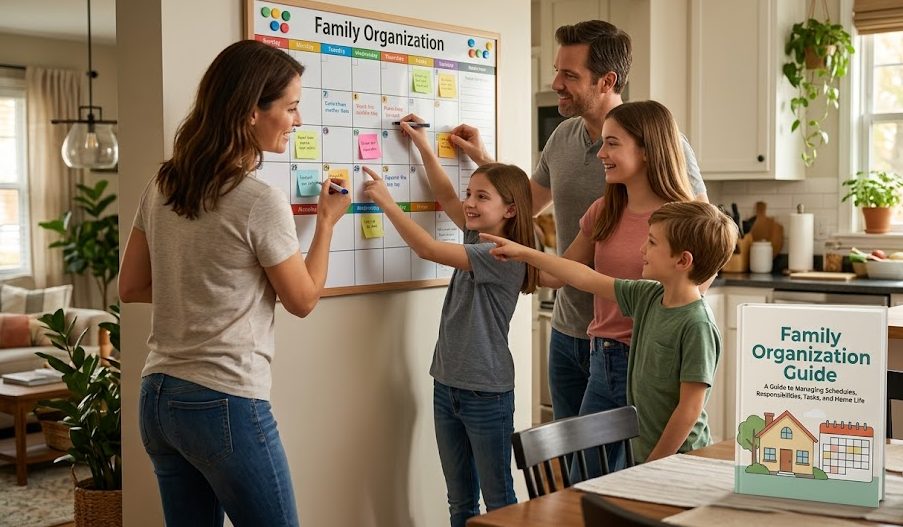
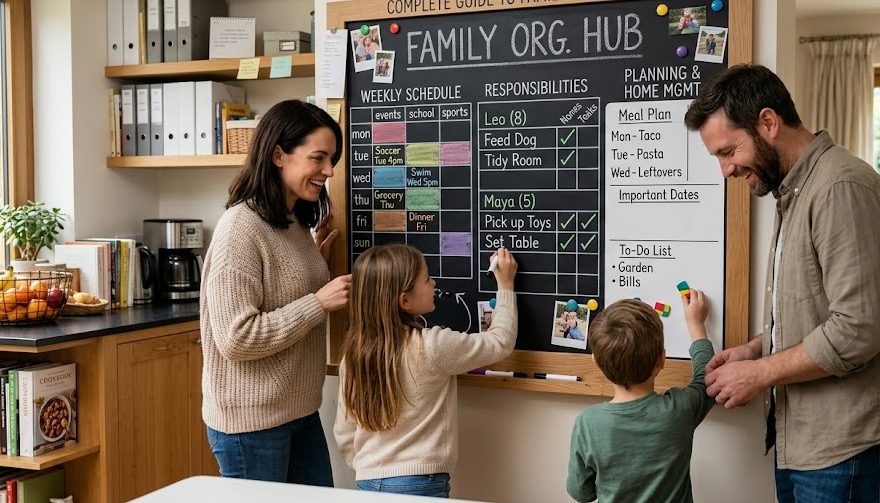
Families often waste time searching for information that should be easy to find. A shared calendar, household notebook, notice board, or digital system can provide a central location for general schedules and reminders.
Keep the system simple. If people need to check five different places to understand what is happening, the organization system may be creating more work than it removes.
Sensitive information such as passwords, financial credentials, identity documents, or private records should never be displayed in an open household planning area.
One place for everyday information
Share Responsibilities Instead of Sharing Reminders
One of the biggest sources of mental pressure in a household is having one person remember every task. A smoother routine distributes responsibility according to availability and ability.
Adults can divide recurring responsibilities, while children can gradually participate in age-appropriate household tasks. The objective is not to make everyone do exactly the same amount of work every day. Instead, it is to create a reasonable sense of shared responsibility.
Clear ownership also reduces repeated reminders because people know what they are expected to handle.
From “Who will do it?” to “Who owns it?”
For recurring tasks, decide who normally notices the need, completes the task, or coordinates it. Responsibilities can be changed whenever schedules or circumstances change.
“`Avoid Building an Overly Complicated Routine
It is tempting to create detailed schedules when trying to become more organized. However, a system with too many rules, lists, reminders, and categories can quickly become difficult to maintain.
Start with the smallest system that solves the biggest problem. If mornings are chaotic, focus on morning preparation. If shopping is inconsistent, create one shared list. If chores are unclear, assign recurring responsibilities.
Once the basic routine becomes natural, additional improvements can be introduced when they are genuinely useful.
The simplicity test
Ask yourself:
✓ Can everyone understand the system?
✓ Does it save more time than it requires?
✓ Can it continue during a busy week?
✓ Is it flexible when plans change?
“`Leave Space for Rest and Unexpected Events
A productive home routine should not fill every available moment with tasks. Rest, hobbies, family conversations, quiet time, and unexpected events are all normal parts of life.
Leave some flexibility between responsibilities when possible. If a schedule has no spare room, even a small delay can create a chain of problems.
A practical routine therefore includes both structure and breathing room.
A well-planned day should have room for real life.
“`Review What Works and Change What Does Not
No routine needs to remain unchanged forever. Work schedules change, children grow, seasons change, household responsibilities increase or decrease, and personal priorities evolve.
Every few weeks or months, take a quick look at the routine. Identify which parts are genuinely useful and which parts have become unnecessary.
Do not be afraid to remove a routine that no longer serves its purpose. Good organization is about usefulness, not about following a system simply because it was created.
A quick routine review
A Simple Home Routine Framework
Check tomorrow and prepare important items in advance.
Identify the responsibilities that genuinely need attention.
Divide household responsibilities instead of keeping them with one person.
Use short daily or evening sessions to restore common areas.
Adjust the routine when household circumstances change.
Build a Routine That Makes Home Life Easier
A smoother home routine does not require a perfectly organized house or a complicated scheduling system. The most useful improvements are often small and practical. Preparing for the next day, keeping important information in one place, dividing responsibilities, planning around busy periods, and maintaining short reset habits can make everyday life considerably easier to manage.
The most important step is to design the routine around the people who actually live in the home. A schedule that looks impressive on paper may fail if it requires more time and attention than the household can realistically provide.
Start with one recurring problem. If mornings are stressful, prepare the night before. If meals become a daily decision, create a flexible meal plan. If clutter keeps returning, give frequently used items practical storage locations. If chores are being forgotten, establish clear responsibility rather than relying on repeated reminders.
Remember that flexibility is part of good organization. Unexpected appointments, changes in work schedules, tired days, and family events will happen. A routine should provide direction without becoming another source of pressure.
Over time, these small systems can become natural habits. The home becomes easier to reset, important tasks are less likely to be forgotten, and family members have a clearer understanding of what needs attention.
Ultimately, the purpose of planning and organization is simple: make everyday life more manageable while protecting time for rest, relationships, and the things that matter. Start small, keep the system practical, involve the household, and improve it whenever life changes. A routine does not have to be perfect to make a meaningful difference.
“`