Busy family schedules become easier when everyday information, responsibilities, and household essentials have a clear place.
Family life can become complicated surprisingly quickly. School schedules, work commitments, appointments, meals, errands, activities, household chores, and unexpected changes can all compete for attention during the same week. When important information exists in several different places, it becomes easy to forget a deadline, search for an item at the last minute, or realize that two responsibilities were accidentally scheduled at the same time.
Good family organization is not about controlling every minute of the day. It is about reducing unnecessary decisions and creating systems that make ordinary responsibilities easier to manage. When everyone knows where schedules are kept, where frequently used items belong, and who is responsible for recurring tasks, the household can operate with less friction.
The most useful systems are usually simple enough for everyone to understand. A shared calendar, an organized entryway, a weekly planning session, prepared meal ideas, and clearly divided responsibilities can make a noticeable difference. These habits do not eliminate busy days, but they can make those days feel much more manageable.
One Family Calendar
Keep important schedules visible in one reliable place.
Shared Responsibilities
Make recurring household tasks easier to divide.
Ready-to-Go Spaces
Keep everyday essentials where they can be found quickly.
Create One Shared Family Calendar
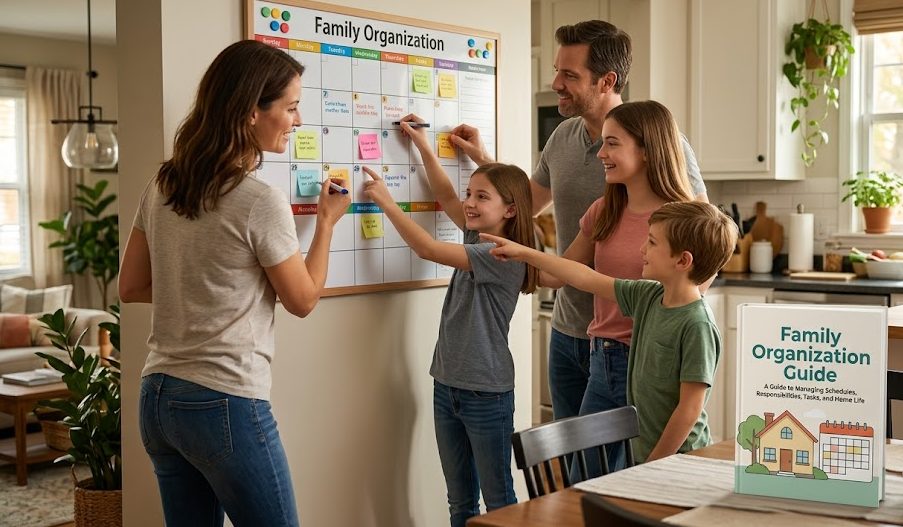
One of the simplest ways to reduce scheduling confusion is to keep important family commitments in one shared location. This could be a digital calendar, a physical wall calendar, or a combination that works for the household. The exact format matters less than having one dependable place where everyone can check upcoming commitments.
Include school events, appointments, work-related commitments that affect the household, activities, travel plans, important deadlines, and other events that require preparation. If something changes, update the shared calendar rather than relying on a verbal reminder that may be forgotten later.
Build a Family Command Center
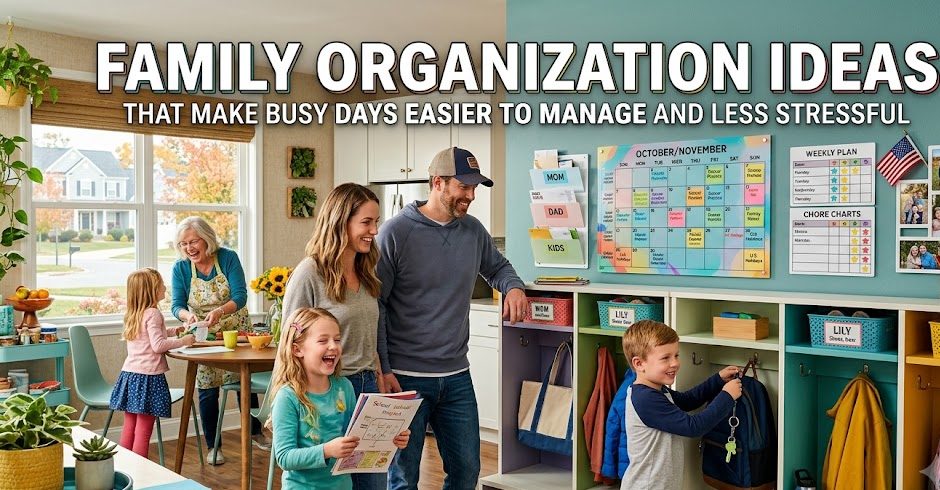
A small area near a frequently used entrance can become a central location for household information. It does not need to look like an elaborate office. A simple combination of a calendar, notes, folders, hooks, baskets, or a small shelf can make a busy household easier to manage.
The purpose is to reduce the number of places people need to search. School papers, permission forms, keys, bags, reusable shopping items, and other everyday essentials can each have an obvious location. When everyone knows where things belong, the question “Where did that go?” becomes less common.
Make the Entryway Work Harder
The entrance of a home often becomes a collection point for everything people carry during the day. Shoes, coats, backpacks, keys, packages, umbrellas, and bags can quickly create clutter if there is no system.
Give frequently used items designated spots. Hooks can hold bags and jackets, baskets can collect smaller belongings, and a tray can keep keys together. If children use the area, keep their storage locations low enough for them to access independently. Organization works best when the system matches how people actually use the space.
“`For bags, coats, and frequently used items.
For loose belongings that need a quick home.
For keys, cards, and small essentials.
Spend a Few Minutes Planning the Week Together
A short weekly planning session can prevent many of the small surprises that make weekdays stressful. Choose a consistent time and review the upcoming schedule, meals, appointments, activities, transportation needs, and household responsibilities.
Keep the conversation practical. Identify which days will be especially busy and decide what can be prepared ahead of time. If everyone understands what is coming, there is less need to make the same decisions repeatedly during the week.
Plan Meals Before Hunger Makes the Decision
Meal planning does not have to mean preparing seven elaborate meals in advance. A practical system can be much simpler. Choose a handful of meals that work well for the household, identify a few easy options for particularly busy evenings, and keep commonly used ingredients available.
It can also help to assign a general theme to different days. For example, one evening might be leftovers, another could be a quick meal, and another could be a family cooking night. The goal is to reduce the daily question of what everyone is going to eat while leaving enough flexibility for changes.
“`When the day becomes unexpectedly busy, having a few simple options prevents dinner from becoming another stressful decision.
Divide Responsibilities Clearly
Household organization becomes much easier when responsibilities are not carried by one person’s memory. Every member of the household can contribute in an age-appropriate and practical way.
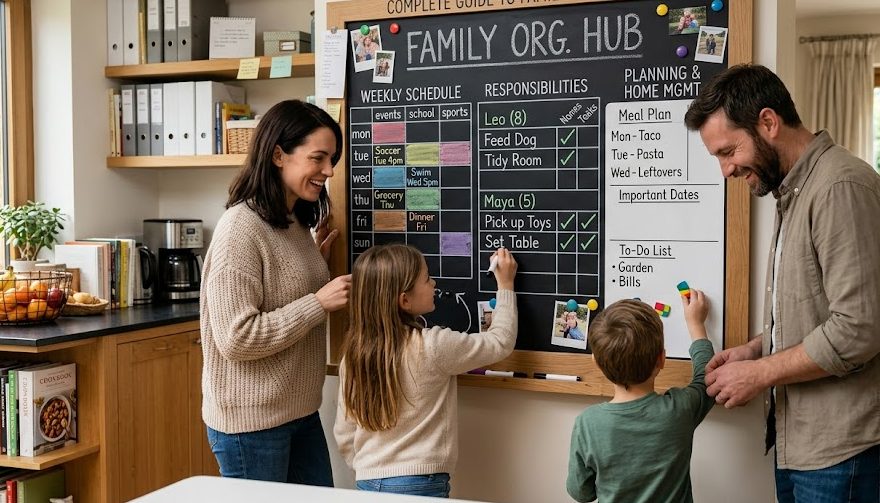
Instead of saying that everyone should “help more,” assign specific recurring responsibilities. One person may manage dishes, another may take care of recycling, another may organize school items, and another may handle a particular household task. Clear ownership makes it easier to know what needs to happen without repeatedly asking.
“`Use a simple checklist, calendar, or shared task system for recurring responsibilities.
Responsibilities should match people’s schedules, abilities, and available time.
Adjust the system when schedules or household needs change.
Create Simple Morning and Evening Checklists
Checklists are especially useful for busy routines because they remove the need to remember every small step. Keep them short. A morning checklist might include getting dressed, packing essentials, checking the day’s schedule, and preparing items needed before leaving.
An evening checklist might include preparing bags, checking tomorrow’s appointments, setting out necessary items, handling a few dishes, and resetting the main living areas. The objective is not to create a rigid routine. It is to make the most commonly forgotten tasks easier to remember.
Use “Ready Zones” for Busy Mornings
When mornings are rushed, searching for everyday items can create unnecessary frustration. Create a small ready zone where things needed the next day can be gathered in advance. This might include school bags, work bags, keys, shoes, documents, water bottles, or other frequently needed items.
The idea is simple: prepare the things that can be prepared ahead of time. A few minutes in the evening can save several small decisions during the busiest part of the morning.
A Practical Family Organization Routine
“`Organize Around Real Life, Not an Ideal Schedule
A family organization system can look excellent on paper and still fail in everyday use. The reason is often that the system is too complicated. If updating the calendar takes too long, people stop using it. If storage locations are inconvenient, items end up somewhere else. If a chore list contains dozens of tasks, it can quickly become overwhelming.
The best system is usually the one that requires the least effort to maintain. Watch how the household naturally moves through the day, identify where problems repeatedly occur, and make small changes around those patterns. Organization should reduce friction rather than add another layer of work.
Reduce the Number of Decisions Everyone Has to Make
Much of the stress in a busy household comes from repeated small decisions. Where are the keys? Who is picking someone up? What is for dinner? When is the appointment? Has the laundry been done? Where is the permission form?
A good organization system answers as many of these questions as possible before they become urgent. A shared calendar answers scheduling questions. Designated storage answers location questions. A meal plan answers dinner questions. A responsibility system answers ownership questions. The fewer things everyone has to figure out from scratch, the calmer the household can feel.
A More Organized Family Life Starts With Small Systems
Family organization does not require a perfectly controlled schedule or an elaborate collection of apps and storage products. It starts with a few reliable systems that solve the problems your household experiences most often.
Keep important events in one shared calendar. Give everyday items obvious homes. Prepare for busy mornings the night before. Plan a few meals ahead. Divide recurring responsibilities clearly. Spend a few minutes each week reviewing what worked and what created unnecessary stress.
Most importantly, allow the system to evolve. Family schedules change, children grow, work responsibilities shift, and household needs are rarely identical from one month to the next. A useful system is not one that never changes; it is one that can change without falling apart.
When organization becomes part of everyday life rather than a project that must be constantly rebuilt, busy days become easier to navigate. There may still be unexpected problems and hectic mornings, but the household has a dependable foundation underneath them. That is the real purpose of family organization: not to make life perfectly predictable, but to make everyday life easier, clearer, and less stressful for everyone sharing the home.