Family life rarely follows a perfectly predictable schedule. A morning can begin with someone looking for a missing shoe, another person trying to find a school assignment, and someone else realizing that breakfast has not been planned. By evening, the same household may be dealing with dishes, laundry, homework, work responsibilities, and tomorrow’s schedule.
These moments are normal, but they can become exhausting when they happen every day. The solution is not necessarily to create a stricter schedule. In many cases, a few small systems can remove repeated decisions and make common routines easier.
A household system is simply a repeatable way of handling something. It might be a place where keys are always kept, a routine for preparing school bags, a shared family calendar, or a short evening reset.
The best systems are not complicated. They fit naturally into the way your household already works and make everyday responsibilities easier to repeat.
Make Repeated Tasks Easier, Not Perfect
When a task happens every day, even a small improvement can save time and reduce frustration. Focus on systems that remove unnecessary decisions from your routine.
1. Build a Simple Morning Launch Pad
Mornings become difficult when everyone is searching for things at the same time.
A morning launch pad is a designated area where frequently needed items can be placed before the day begins. It might be near the front door, in a hallway, or wherever your household naturally leaves the house.
Use it for items such as backpacks, work bags, keys, shoes, jackets, lunch containers, or other essentials.
The goal is not to make the area look like a showroom. The goal is to make it obvious where important items should be before everyone heads out.
Keep everyday bags together.
Choose one reliable location.
Keep frequently worn pairs accessible.
2. Prepare Tomorrow Before Bed
One of the easiest ways to make mornings calmer is to move a few decisions into the evening.
Before going to bed, take a few minutes to check what the next day requires. Look at the family calendar, check school or work commitments, and identify anything unusual.
Clothes can be selected, bags can be packed, lunch items can be prepared, and important documents or equipment can be placed where they will be easy to find.
This does not mean spending an hour preparing for tomorrow. Even five or ten minutes can remove several small tasks from the busiest part of the morning.
Check • Prepare • Place
Check tomorrow’s schedule, prepare anything that can be handled early, and place essential items where they can be found quickly in the morning.
3. Give Every Family Member a Simple Morning Role
Morning routines become easier when everyone knows what they are expected to do.
Instead of one person trying to manage the entire household, divide age-appropriate responsibilities among family members.
One person might be responsible for feeding a pet, another for putting dishes in the dishwasher, while children may be responsible for getting dressed, making their beds, or gathering their school supplies.
The exact responsibilities will depend on the household. What matters is that the expectations are clear and repeatable.
When responsibilities become familiar, fewer reminders may be necessary over time.
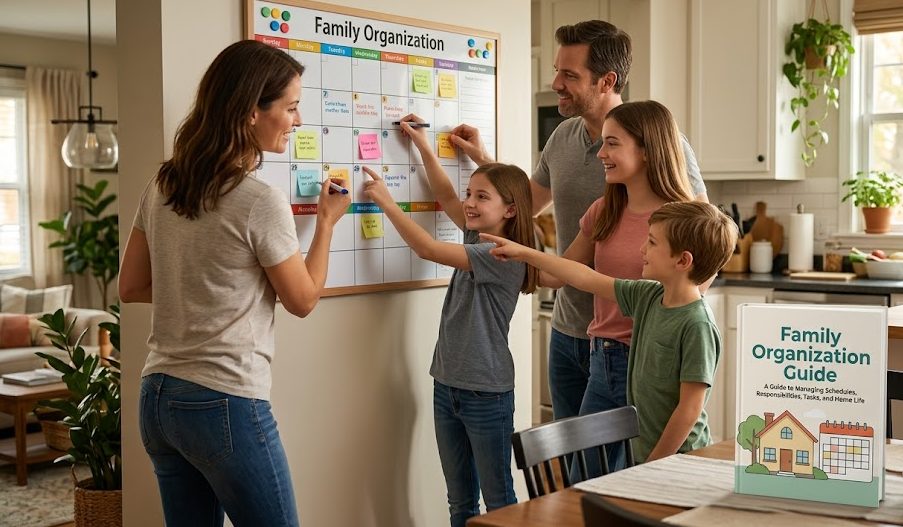
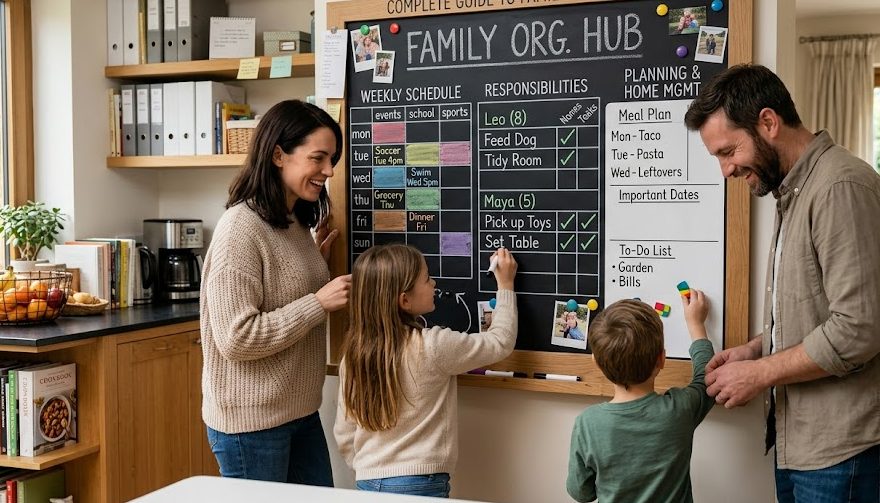
4. Use a Shared Family Calendar
A shared calendar can prevent a surprising amount of confusion.
Keep track of appointments, school events, work commitments, activities, birthdays, travel plans, and other important dates in one central place.
Some households prefer a physical calendar in a common area. Others use a digital calendar that family members can access from their phones.
Choose the option that people will actually use.
Keep the Calendar Useful
• Add important commitments as soon as they are known.
• Review the calendar once each evening.
• Look ahead during a weekly planning session.
• Avoid filling it with unnecessary information.
5. Create a Simple After-School and After-Work Routine
The transition from school or work into home life can be surprisingly chaotic.
People arrive with bags, paperwork, clothing, food containers, and responsibilities that still need attention.
A short arrival routine can make this transition smoother.
For example, bags can go to a designated location, shoes can be put away, lunch containers can be emptied, and important papers can be placed in one specific spot.
Adults can follow a similar routine by putting work materials away and taking a few minutes to transition before moving into household responsibilities.
Create a “Home Again” Routine
Give everyone a few predictable steps to follow after arriving home. A consistent transition can keep bags, shoes, paperwork, and other belongings from spreading throughout the house.
6. Make Dinner Easier With a Flexible Meal Plan
Dinner can become stressful when the household reaches the end of the day without a plan.
A flexible meal system can help without requiring elaborate meal preparation.
Keep a list of reliable meals that your family already enjoys. Include several quick options for busy evenings and a few meals that can use leftovers.
You can also keep basic ingredients available for simple combinations. This gives you options when the day does not go according to plan.
The objective is not to cook a complicated meal every night. It is to reduce the amount of time spent asking what everyone is going to eat.
7. Keep a Shared Grocery List
A shared grocery list prevents one person from having to remember every household need.
Whenever someone notices that an item is running low, it can be added immediately.
The list can be physical or digital. Organizing it by categories such as produce, pantry, household supplies, and personal care can make shopping quicker.
This small system can also reduce duplicate purchases and forgotten essentials.
See what is running low.
Put it on the shared list.
Buy what the household actually needs.
8. Establish a Ten-Minute Evening Reset
The end of the day is often a good time for a short household reset.
Rather than trying to clean the entire house, focus on the areas that affect tomorrow.
Clear the kitchen counter, return items to their normal locations, collect dishes, put away obvious clutter, and prepare frequently used items for the morning.
If several family members participate, the work can be completed quickly.
Most importantly, keep the reset short enough that it does not feel like another major chore.
The 10-Minute Reset
1. Put misplaced items away.
2. Clear the main shared surfaces.
3. Handle obvious dishes.
4. Check tomorrow’s calendar.
5. Prepare important morning items.
9. Create a Laundry Rhythm
Laundry can become overwhelming when it is treated as one enormous weekly project.
A more manageable approach is to create a rhythm that fits the household’s needs.
Some families may prefer smaller loads throughout the week, while others may designate specific days for particular types of laundry.
Whatever approach you choose, keep the system predictable.
Separate hampers can also help if they genuinely make sorting easier. However, there is no need to add extra containers if they simply create more work.
10. Create a Home for Important Papers
School forms, bills, appointment information, receipts, mail, and other paperwork can quickly create clutter.
Choose one location for papers that need attention.
Within that location, use simple categories such as “Needs Action,” “Keep,” and “Recycle.”
This makes it easier to identify what requires attention instead of allowing every paper to become part of one large pile.
Do Not Let Important Papers Become Invisible
A designated location keeps paperwork visible enough to process while preventing it from spreading across kitchen counters, desks, and other shared surfaces.
11. Give Everyone a Personal Reset Zone
Family members naturally accumulate different belongings throughout the day.
A small personal storage area can help contain this clutter.
Depending on the home, this might be a basket, shelf, drawer, cubby, or small section of a closet.
The idea is simple: personal items have somewhere to go without taking over shared spaces.
This can be particularly helpful in homes where multiple people use the same kitchen, living room, entryway, or bathroom.
12. Use a Weekly Household Check-In
A short weekly conversation can prevent small problems from becoming bigger ones.
Choose a convenient time to review the upcoming week together.
Talk about appointments, activities, transportation needs, meals, errands, and anything unusual.
This also gives family members an opportunity to mention something they need help with or something that may affect the household schedule.
Keep the conversation practical and brief. It should help everyone understand the week rather than become another lengthy meeting.
13. Protect a Little Quiet Time in the Evening
Organization is not only about completing tasks.
A household can be technically organized and still feel exhausting if every minute is filled with responsibilities.
Whenever possible, create a small period in the evening where household activity begins to slow down.
This might mean dimming lights, putting away work materials, reducing unnecessary notifications, reading, talking with family members, or simply sitting quietly.
There is no universal definition of a peaceful evening. The important part is creating some separation between the busy part of the day and bedtime.
Not Every Evening Needs to Be Productive
A comfortable family routine should leave room for rest, conversation, hobbies, and downtime. The goal is a smoother household, not a schedule packed from morning to night.
14. Make the Next Morning Easier With Small Visual Cues
Visual reminders can be useful when several responsibilities need to happen in a specific order.
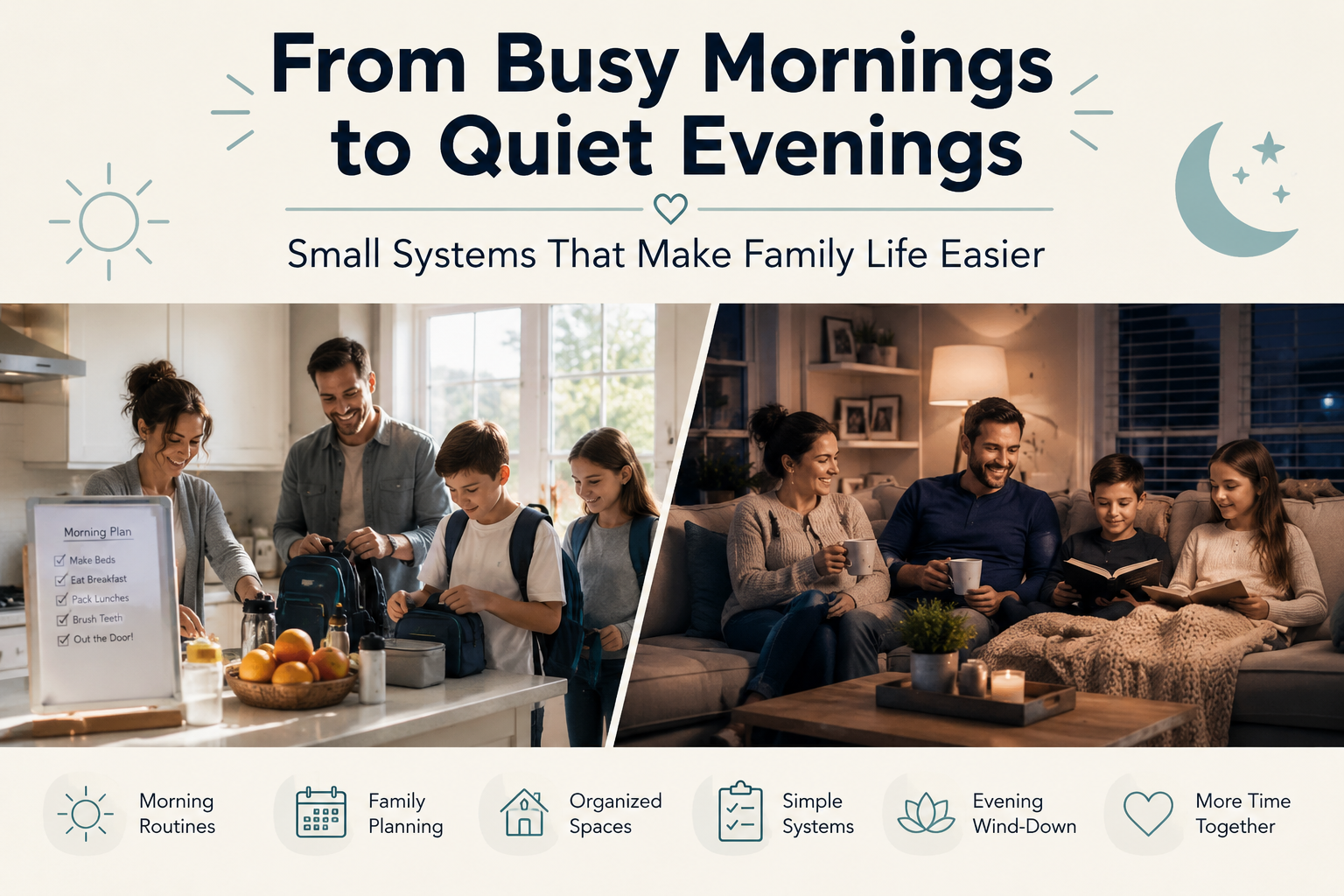
A small checklist near the door can remind family members to grab their bags, lunch, keys, and other essentials.
Children may benefit from simple picture-based or written routines depending on their age.
The purpose is not to create a long list of instructions. It is to make frequently forgotten steps easier to remember.
15. Keep the Systems Flexible
The most important household system is one that can survive real life.
There will be days when someone gets home late, plans change, a child has an unexpected activity, work becomes busy, or the family simply needs a break.
Do not treat these interruptions as failures.
A flexible system allows you to return to the normal routine when circumstances settle down.
If a system repeatedly fails, that may be useful information. Perhaps it is too complicated, takes too long, or does not fit the household’s actual habits.
Change the system rather than blaming yourself or your family for not following it.
When a Routine Is Not Working, Ask:
Is it too complicated? Remove unnecessary steps.
Is the location inconvenient? Move the system closer to where the task happens.
Does everyone understand it? Make expectations clearer.
Does it save time? If not, simplify it or replace it.
A Simple Daily Family Rhythm
| Time | Simple System | Main Benefit |
|---|---|---|
| Morning | Use the launch pad and morning checklist | Less searching and rushing |
| After Arrival | Put bags, shoes, and papers away | Less clutter |
| Afternoon | Review responsibilities and plans | Better coordination |
| Evening | Use the ten-minute reset | Easier tomorrow |
| Before Bed | Check calendar and prepare essentials | Calmer morning |
Frequently Asked Questions
How can I make busy mornings easier?
Prepare as much as possible the night before. Check the next day’s schedule, prepare bags and clothing, keep important items in one location, and give family members clear morning responsibilities.
What is a good evening routine for families?
A practical evening routine can include a short household reset, checking tomorrow’s calendar, preparing essential items, handling a few basic chores, and leaving enough time for relaxation.
How many family routines should we create?
Start with one or two routines that solve a real problem. Once they become familiar, add another if needed. Too many new systems at once can become difficult to maintain.
Should everyone in the family participate?
Whenever practical, yes. Age-appropriate responsibilities can help distribute household work and make routines more predictable. Adults can adjust responsibilities based on schedules and abilities.
How can we keep our home peaceful without constantly cleaning?
Focus on small resets rather than constant cleaning. Returning items to their homes, keeping shared surfaces clear, and handling small amounts of clutter regularly can make the home easier to maintain.
Small Systems Can Change the Feel of a Home
Family organization does not need to be complicated. A launch pad near the door, a shared calendar, a simple meal plan, a short evening reset, and a few minutes of preparation can remove many small sources of daily stress.
Start with the part of your day that feels most difficult. Build one simple system around it, give your family time to get used to it, and adjust it when necessary. Over time, these small habits can turn busy mornings and hectic evenings into routines that feel much more manageable.