Spending more time together sounds simple, but finding activities everyone actually enjoys can sometimes be surprisingly difficult. Different schedules, different interests, tired evenings, and the temptation to reach for a phone or television can easily turn shared time into separate time in the same room.
The good news is that quality time does not have to be complicated. Some of the most enjoyable household memories can come from ordinary activities that give everyone a reason to participate, talk, laugh, or work toward something together.
Whether you are looking for a relaxed weekend activity, something to do after dinner, or a way to make a rainy afternoon more interesting, there are plenty of possibilities that do not require a major budget or extensive preparation.
The key is choosing activities that encourage interaction rather than simply putting everyone in front of separate screens.
Choose Connection Over Complexity
The best at-home activities are often the ones that make it easy for everyone to participate, talk, laugh, and enjoy the moment without worrying about making everything perfect.
1. Have a Family Game Night
A classic game night can turn an ordinary evening into something everyone looks forward to.
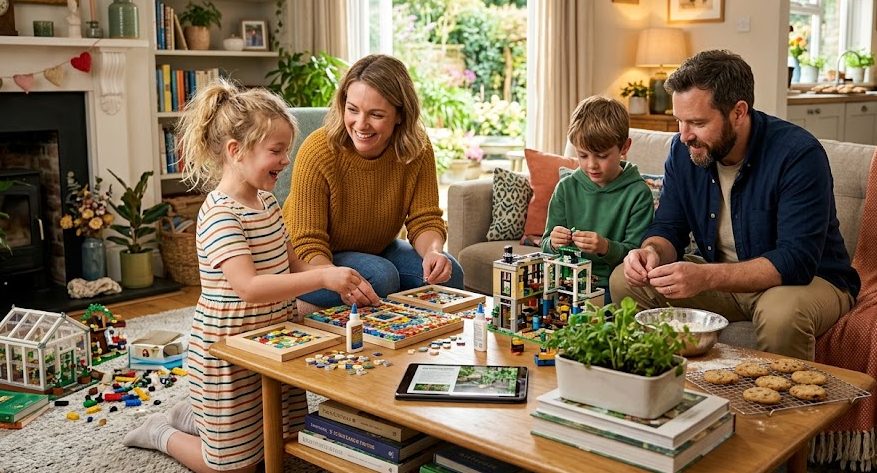
Choose board games, card games, puzzles, trivia, or simple games that match the ages and interests of the people playing. You do not need a large collection. Even one familiar favorite can create plenty of conversation and laughter.
For a fun twist, let a different person choose the game each time. This gives everyone a chance to introduce something they enjoy.
You can also create a relaxed tournament over several weeks, keeping track of points just for fun. The goal is not serious competition. It is having a reason to sit together and interact.
Pick a favorite or try something new.
Easy to start and great for conversation.
Create questions around everyone’s interests.
2. Cook a Meal Together
Cooking together turns an everyday responsibility into a shared activity.
Choose a recipe that is simple enough for everyone to contribute. One person can prepare ingredients while another handles mixing, setting the table, or organizing the kitchen.
For families with children, age-appropriate tasks can make them feel involved without turning the kitchen into a stressful environment.
You can also create themed dinner nights. Try a homemade pizza night, taco night, breakfast-for-dinner evening, or a meal inspired by a different region.
The food does not need to be perfect. The fun often comes from preparing it together.
Create a “Everyone Helps” Dinner
Give each person one small responsibility, then sit down together to enjoy the finished meal. The preparation becomes part of the experience rather than something one person has to handle alone.
3. Build a Cozy Movie Night
You do not need to leave the house to create a special movie-night experience.
Let everyone vote on a movie, prepare a few snacks, turn down the lights, and make the living room comfortable.
You can make the activity more interactive by creating a theme. A family-friendly adventure night, classic movie evening, animated movie marathon, or comedy night can give the evening a little more personality.
For younger children, allowing them to help create homemade movie tickets or decorate a snack table can turn a regular movie into a small event.
Turn a Normal Evening Into an Event
Small details such as themed snacks, comfortable blankets, homemade tickets, or letting someone choose the movie can make a familiar activity feel different.
4. Try a Creative Art Night
Creative activities can be a great way to spend time together because there does not have to be a single “correct” result.
Set out paper, pencils, markers, paint, clay, or whatever basic supplies you already have. Then choose a simple theme.
Everyone could draw the same object in their own style, create a picture of a dream vacation, design imaginary houses, or make handmade cards for friends and relatives.
The activity is less about artistic ability and more about enjoying the process.
For adults, creative projects can also provide a welcome break from work and everyday responsibilities.
5. Create an Indoor Treasure Hunt
A treasure hunt can turn familiar rooms into an adventure.
Hide small objects around the house and create clues that lead participants from one location to the next. The clues can be simple enough for younger players or more challenging for older children and adults.
You do not need expensive prizes. The final reward could be choosing dessert, selecting the next movie, or simply discovering a funny surprise.
You can also reverse the activity by having each person create a short treasure hunt for everyone else.
Place simple clues around the home.
Work together to solve the clues.
Enjoy the final surprise together.
6. Have a DIY Pizza Night
Pizza is naturally suited to customization, which makes it a fun group activity.
Prepare the dough or use a convenient base, then set out different toppings. Everyone can create their own combination.
Try giving the pizzas funny names or creating a friendly “most creative pizza” challenge.
This works particularly well when people have different food preferences because everyone can personalize their own portion.
Keep food safety in mind when handling ingredients, especially when children are participating. Adults should handle hot ovens and other equipment that could cause burns.
7. Start a Family Reading Hour
Shared reading can be surprisingly enjoyable, especially when everyone has a chance to choose something.
Pick a comfortable place, put phones aside, and spend some time reading. Younger children can listen to a story while older family members read their own books.
Another option is reading the same short book or story and discussing it afterward.
You can ask simple questions such as what everyone liked, which character was most interesting, or what they think might happen next.
Make Reading Social
• Let different people choose the reading material.
• Create a comfortable reading corner.
• Talk about interesting parts afterward.
• Let children create drawings about the story.
8. Have a No-Phone Hour
Sometimes the activity is simply being fully present.
Choose an hour when everyone puts their phones and other personal screens aside, assuming there are no important responsibilities requiring them.
Use that time for conversation, a walk around the neighborhood if appropriate, a game, cooking, drawing, or simply sitting together.
For households where everyone is accustomed to constant screen use, starting with thirty minutes may feel more realistic than immediately attempting a long screen-free evening.
The goal is not to make technology the enemy. It is simply to create regular opportunities for direct interaction.
Try One Screen-Free Hour
Choose an activity before the hour begins so nobody has to decide what to do once the screens are put away.
9. Host a Living Room Talent Show
A homemade talent show can be funny, creative, and memorable without requiring any special equipment.
Participants can sing, tell jokes, perform a short skit, demonstrate a hobby, show a magic trick, or simply create something silly.
Make participation optional so nobody feels pressured. The emphasis should be on having fun rather than judging performance.
You can even create simple categories such as funniest performance, most creative idea, best teamwork, or biggest surprise.
10. Make a Home Photo Challenge
A photo challenge can encourage everyone to look at familiar surroundings differently.
Create a list of simple themes such as something red, a funny expression, an interesting shadow, a favorite corner, something tiny, or the most unusual object you can find.
Everyone can take pictures using a phone or camera and compare their interpretations afterward.
If you prefer to keep screens out of the activity, use the themes as drawing prompts instead.
11. Build a Blanket Fort
A blanket fort may sound like a children’s activity, but adults can enjoy the nostalgia too.
Use blankets, pillows, cushions, and furniture to create a comfortable indoor space. Once it is ready, use the fort as the setting for reading, storytelling, snacks, or a movie.
For younger children, the building process can be just as entertaining as what happens afterward.
Make sure the structure is stable and does not block exits, create a tripping hazard, or involve unsafe climbing.
12. Try a Homemade Trivia Night
Trivia is easy to customize because the questions can be about almost anything.
Create categories based on movies, sports, food, music, history, geography, hobbies, or funny household memories.
Everyone can contribute questions, which makes the preparation part of the activity.
You can keep score if everyone enjoys competition, or skip scoring entirely and simply see how many questions the group can answer.
| Activity | Preparation | Best For |
|---|---|---|
| Game Night | Low | Friendly competition |
| Cooking Together | Medium | Shared projects |
| Movie Night | Low | Relaxed evenings |
| Art Night | Low | Creative households |
| Treasure Hunt | Medium | Active play |
| Reading Hour | Very Low | Quiet connection |
13. Create a Family Memory Jar
Place a container somewhere accessible and keep small pieces of paper nearby.
Whenever something funny, surprising, meaningful, or memorable happens, write it down and place it in the jar.
At the end of a month, season, or year, open the jar and read the notes together.
This activity does not require much effort, but over time it can create a collection of small memories that might otherwise be forgotten.
14. Have a Family Challenge Night
Choose a collection of small challenges that everyone can attempt.
You might have a drawing challenge, puzzle challenge, paper-airplane challenge, trivia round, cooking challenge, or storytelling contest.
Keep the rules simple and allow creativity. The challenge should create laughter and conversation rather than pressure to win.
For younger children, choose activities that are age-appropriate and avoid challenges involving unsafe objects or risky physical behavior.
15. Tell Stories From Your Life
Sometimes the most meaningful activity does not require any supplies.
Take turns telling stories about childhood memories, funny vacations, first jobs, favorite traditions, memorable mistakes, or experiences from growing up.
Children often enjoy discovering that parents and grandparents had lives full of adventures, challenges, friendships, and funny moments long before they were born.
You can also ask simple questions that encourage storytelling, such as “What was your favorite thing to do during summer?” or “What is a place you would love to visit again?”
Sometimes Conversation Is the Activity
You do not always need entertainment. Sharing stories, asking questions, and listening carefully can create some of the most meaningful time together.
Make the Activity Fit the Mood
Not every day calls for a high-energy activity.
If everyone is tired, choose something relaxing such as reading, watching a movie, listening to music, doing a puzzle, or talking over a snack.
On weekends or days when everyone has more energy, you can choose cooking projects, treasure hunts, creative challenges, or games.
Matching the activity to the household’s energy level makes participation more enjoyable.
Let Everyone Have a Turn Choosing
If one person always chooses the activity, others may eventually lose interest.
Create a simple rotation where everyone gets a chance to decide what the household does.
One person might choose a game, another might choose a meal, and someone else might choose a movie or creative project.
This small change makes shared time feel more inclusive and gives everyone a reason to look forward to their turn.
A Simple Rotation
Week 1: One person chooses the activity.
Week 2: Someone else makes the choice.
Week 3: Try a group decision.
Week 4: Repeat the favorite or try something completely new.
Do Not Worry About Making Every Moment Special
There is a difference between spending time together and constantly entertaining each other.
You do not need to organize an elaborate activity every evening. Sometimes sitting together over dinner, folding laundry while talking, or sharing a short conversation can be meaningful.
The goal is to create opportunities for connection, not to turn family time into another project that requires planning and effort.
Keep the expectations realistic. Some activities will be more successful than others, and that is completely normal.
Create Your Own At-Home Tradition
One of the best ways to make shared time consistent is to create a small tradition.
It could be Friday game night, Sunday breakfast together, a monthly movie marathon, a seasonal baking day, or a regular family trivia evening.
Traditions give everyone something predictable to look forward to.
They also become part of the household’s identity. Years later, the activity itself may not seem important, but the memories connected to it can become meaningful.
Small Traditions Can Become Big Memories
Choose one simple activity that everyone enjoys and repeat it regularly. Consistency can turn an ordinary evening into something the household genuinely looks forward to.
Frequently Asked Questions
What are some easy things to do together at home?
Game nights, cooking together, movie nights, puzzles, creative projects, reading, trivia, storytelling, and simple indoor treasure hunts are all easy options that can be adapted to different ages and interests.
How can families spend more time together without spending much money?
Use activities you already have materials for, such as board games, drawing, cooking, storytelling, reading, homemade trivia, or a movie night. Meaningful time together does not require expensive entertainment.
What can we do at home when everyone has different interests?
Rotate who chooses the activity, look for activities that combine different interests, or create short activities where everyone gets a turn. A shared experience does not have to be everyone’s favorite hobby.
How often should we plan family activities?
There is no required schedule. Even one regular shared activity each week can provide a useful opportunity to reconnect. On other days, informal conversation and everyday activities can also create quality time.
What if nobody wants to participate?
Keep the activity low-pressure and choose something short. Sometimes participation improves when people are given choices rather than being told exactly what they must do. It can also help to ask what everyone would genuinely enjoy.
Make More Room for the Moments That Matter
Spending more time together at home does not require an elaborate plan. A game, shared meal, movie, creative project, treasure hunt, conversation, or simple tradition can provide a reason to put distractions aside and enjoy one another’s company.
Choose activities that fit your household’s personality and energy level. Keep them simple, let everyone participate in choosing, and focus more on connection than perfection.