Every household has its own version of a busy day. There may be work schedules, school responsibilities, appointments, meals, errands, laundry, cleaning, shopping, and countless small decisions that need attention. When several responsibilities overlap, even ordinary tasks can begin to feel exhausting.
The answer is not always doing more. In many cases, the biggest improvement comes from creating simple routines that reduce the number of decisions you have to make.
A routine gives a familiar task a familiar place in your day. Instead of repeatedly asking when something should be done, you create a general rhythm that makes the task easier to remember and complete.
That does not mean every minute needs to be scheduled. In fact, overly strict schedules can make a busy home feel even more stressful. A useful routine should provide structure while leaving enough flexibility for unexpected changes.
Build Rhythm, Not a Perfect Schedule
The purpose of a household routine is to make everyday responsibilities easier to handle, not to create another list of rules that must be followed perfectly.
1. Start the Morning With a Small Reset
Busy mornings can become chaotic when everyone starts moving in different directions without a basic plan.
A short morning reset can create a more organized starting point. Open curtains, put away anything left out from the previous evening, check the day’s schedule, and identify the most important things that need to happen.
This does not need to take more than a few minutes. The purpose is simply to transition from waking up into the day’s responsibilities with a little more awareness.
If several people share the household, a quick look at appointments, school activities, work commitments, or errands can prevent surprises later in the day.
Check what the day contains.
Identify what truly matters.
Start without unnecessary rushing.
2. Give Frequently Used Items a Home
One of the easiest ways to reduce everyday frustration is to make frequently used items easy to find.
Keys, wallets, bags, chargers, shoes, mail, school supplies, and other daily essentials tend to create clutter when they do not have a predictable location.
Choose simple storage spots based on how the household actually moves through the home. A small basket near the entrance may work for keys and everyday items. A drawer near the main workspace may be better for chargers and electronics.
The goal is convenience. If putting something away is difficult, people are less likely to do it consistently.
Make Organization Easy to Repeat
A storage system works best when it matches real habits. The easiest place to put something away is often the place where it naturally gets used.
3. Use a Short Evening Reset
The end of the day is an excellent opportunity to prepare the home for tomorrow.
A short evening reset might include clearing the kitchen counter, putting dishes away, returning misplaced items, preparing bags, and checking whether anything needs to be ready for the next morning.
You do not need to clean the entire house. Focus on the areas that affect the next day most.
For many households, the kitchen and entrance are especially useful areas to reset because they are often involved in the morning routine.
Prepare Tomorrow Before Today Ends
A few minutes of preparation can remove several small decisions from a busy morning.
4. Create a Simple Meal Routine
Deciding what to eat every day can become one of those small responsibilities that quietly consumes a lot of mental energy.
A simple meal routine can help. Rather than planning every meal in detail, create a flexible list of meals that your household already enjoys.
You might keep a few quick weekday options, a couple of meals that can be prepared ahead, and some easy choices for especially busy evenings.
Before grocery shopping, look at the upcoming schedule. If one evening is packed with appointments, choose a meal that requires less preparation.
This approach keeps meal planning practical without making it another complicated project.
5. Keep a Running Household List
Instead of trying to remember every household need, keep one running list.
Whenever something is almost finished, add it. When a repair is needed, record it. If someone mentions an upcoming errand, put it on the list.
The list can be digital or physical. What matters is that everyone knows where it is and that the household actually checks it.
This simple system helps separate remembering from doing. You can capture a task now and decide when to handle it later.
Write the task down immediately.
Check the list during planning time.
Handle tasks when they fit the schedule.
6. Break Cleaning Into Smaller Sessions
A busy home does not necessarily need a massive cleaning day every week.
Breaking cleaning into smaller sessions can make it easier to maintain the home without spending an entire day catching up.
For example, one day could focus on bathrooms, another on floors, while everyday routines handle dishes and frequently used surfaces.
The exact schedule depends on the size of your household and how quickly different areas become messy.
The key is consistency rather than intensity. Small regular efforts can prevent clutter and dirt from becoming a much larger job.
7. Establish a Laundry Rhythm
Laundry can become surprisingly overwhelming when it is allowed to pile up without a routine.
Instead of waiting until every basket is full, consider establishing a general rhythm based on your household’s needs.
Some homes may benefit from doing laundry on specific days, while others may prefer smaller loads throughout the week.
Try to include the full process in the routine. Washing clothes is only one part; drying, folding, and putting everything away are also necessary.
A routine that includes the entire cycle is easier to maintain than repeatedly creating piles of clean laundry that still need to be handled.
Finish the Task, Not Just the First Step
Whenever possible, design routines that include the final step. Clean clothes are not truly finished until they are back where they belong.
8. Use a Weekly Household Check-In
Daily routines handle immediate responsibilities, but a weekly check-in helps with the bigger picture.
Choose a convenient time to look at the week ahead. Review appointments, work schedules, school activities, grocery needs, household errands, bills, and anything unusual coming up.
This is also a good time to decide which household tasks should happen during the week.
Keep the process short. The goal is awareness and preparation, not creating a complicated family operations manual.
| Area | Quick Check | Why It Helps |
|---|---|---|
| Calendar | Review upcoming commitments | Prevents schedule surprises |
| Meals | Consider busy evenings | Makes dinner decisions easier |
| Groceries | Check household supplies | Reduces forgotten items |
| Cleaning | Choose priority areas | Keeps work manageable |
| Errands | Group nearby tasks | Saves time and effort |
9. Prepare for Tomorrow at Night
One of the most effective household routines happens before bedtime.
Take a few minutes to think about tomorrow. Check whether clothes, bags, lunches, work materials, or other essentials need to be prepared.
If the household has an early start, completing a few small preparations at night can make the morning considerably calmer.
This routine also helps you identify potential problems before they become morning emergencies.
A Five-Minute Tomorrow Check
• What time does everyone need to leave?
• Is anything needed for work, school, or appointments?
• Are there meals or groceries that need attention?
• Is there anything unusual happening tomorrow?
10. Create a “Reset Point” for the Home
Some households benefit from having one predictable point during the day when everyone helps restore order.
This could happen after dinner, before bedtime, or at another time that fits naturally into the schedule.
The reset might include returning items, clearing surfaces, putting dishes away, checking the entryway, and preparing commonly used spaces for the next day.
When everyone participates, the responsibility does not fall entirely on one person.
The objective is not perfection. It is simply to prevent small amounts of clutter from becoming a large weekend project.
Do Not Overload Your Routine
One common mistake is trying to introduce too many routines at once.
If you suddenly create a detailed morning schedule, cleaning calendar, meal plan, laundry timetable, shopping system, decluttering routine, and household meeting, the system itself can become exhausting.
Start with one or two changes.
For example, begin with an evening reset and a weekly planning session. Once those become natural, add another routine if you genuinely need it.
A routine should become easier with repetition. If it consistently feels like another major task, it may need to be simplified.
Consistency Beats Complexity
A five-minute routine that actually happens is more useful than an impressive system that becomes too difficult to maintain.
Make Routines Flexible
A routine should guide your household, not control it.
There will be days when work runs late, someone gets sick, plans change, or an unexpected problem takes priority. On those days, it is perfectly reasonable to reduce the routine to its essentials.
Think of routines as default settings. They provide a normal pattern when life is predictable, but they can be adjusted when circumstances change.
This mindset is especially useful for busy households because it removes the idea that missing one routine means the entire system has failed.
Make Household Responsibilities Visible
If multiple people share a home, visibility can make a major difference.
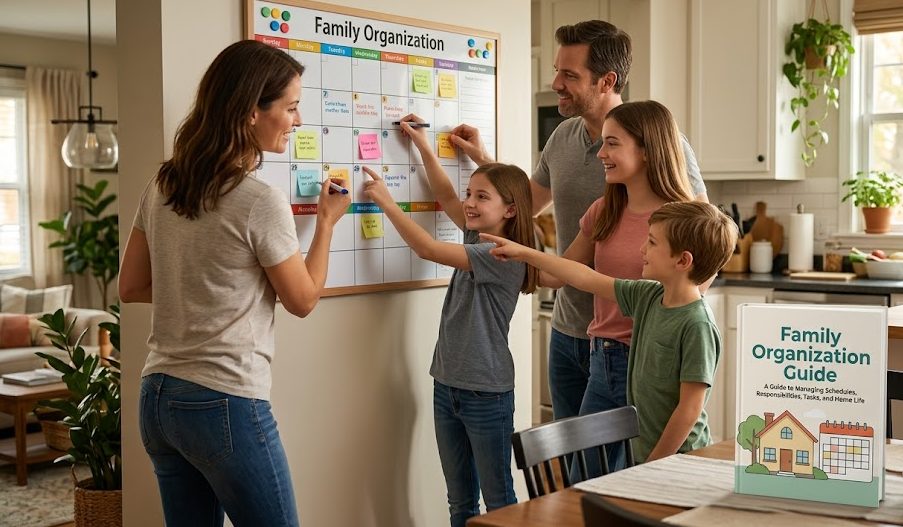
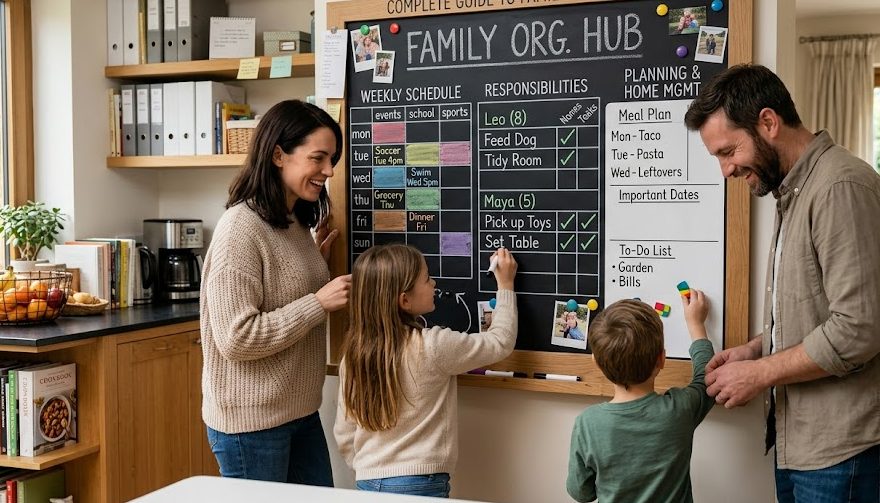
A shared calendar, household task list, or weekly board can show important responsibilities without requiring one person to constantly remind everyone.
When assigning tasks, consider each person’s schedule and abilities. The goal is not necessarily a perfectly equal division every single day. It is creating a system where responsibilities are understood and shared reasonably.
Clear communication can prevent repeated questions and reduce the chance that important tasks are forgotten.
The Difference Between Busy and Disorganized
A household can be genuinely busy without being disorganized.
Busy means there are many responsibilities competing for time. Disorganization often happens when those responsibilities have no clear place or process.
Simple routines cannot remove a demanding schedule, but they can reduce unnecessary decision-making around that schedule.
When groceries have a routine, laundry has a rhythm, appointments are visible, frequently used items have homes, and tomorrow is prepared tonight, everyday life becomes more predictable.
That predictability can make a busy household feel much easier to manage.
Routines Give Busy Days a Reliable Backbone
You cannot control everything that happens in a household, but you can create simple defaults that make ordinary days easier to navigate.
A Simple Daily Home Rhythm
Check the day and reset key spaces.
Handle tasks according to the schedule.
Reset frequently used household areas.
Prepare essentials for tomorrow.
Frequently Asked Questions
What are the most useful household routines?
Morning and evening resets, a weekly planning session, regular grocery planning, laundry routines, and a shared household task list are useful starting points for many busy homes.
How can I keep a busy home organized without spending all day cleaning?
Use short, repeatable cleaning sessions and focus on frequently used areas first. Regular small resets can reduce the need for large catch-up cleaning sessions.
Should household routines be scheduled at exact times?
Not necessarily. For many households, flexible time windows work better. The routine should provide a general rhythm without making normal schedule changes feel like failures.
How can multiple people share household responsibilities?
Use a shared calendar or task list and make responsibilities visible. Discuss who handles recurring tasks and adjust assignments when schedules change.
What if I cannot follow my routine every day?
That is normal. Treat the routine as a flexible framework rather than a strict rule. On difficult days, focus on the most important tasks and return to the normal routine when your schedule allows.
Let Simple Routines Carry Some of the Mental Load
A busy household will always have unexpected moments, but simple routines can make ordinary days easier to manage. Start with a morning reset, a running household list, regular cleaning and laundry rhythms, a weekly check-in, and a short evening preparation routine.
Keep the system flexible and realistic. The goal is not to make every day perfect. It is to create enough structure that everyone knows what needs attention and the home can keep moving forward without constant stress.