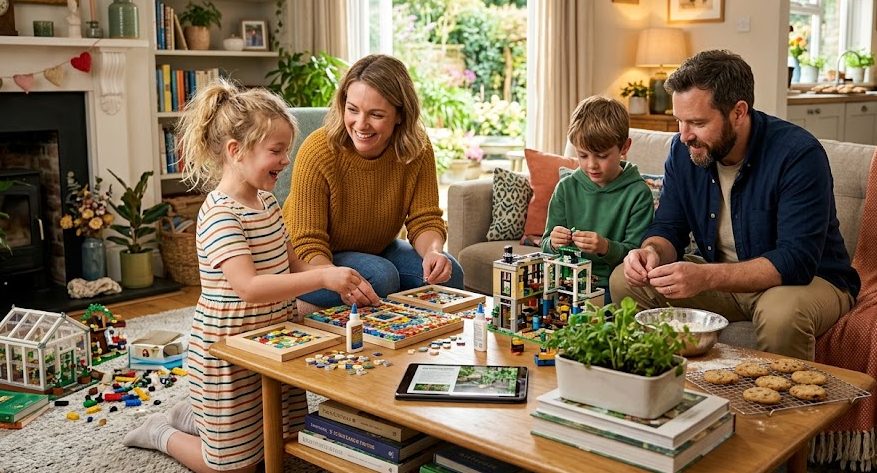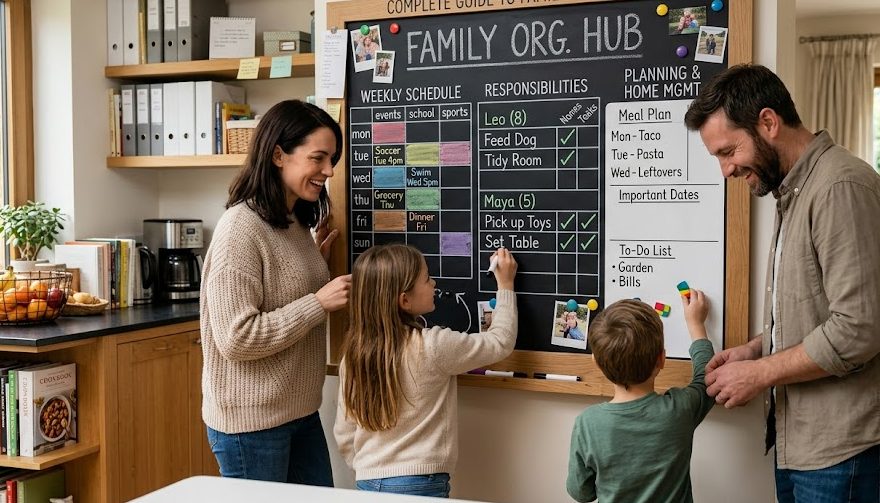
Meaningful family time does not have to involve expensive outings, large purchases, or detailed plans. Many enjoyable activities can happen at home using familiar spaces, everyday materials, and the interests family members already share. The value often comes from spending time together, participating in a shared experience, and creating opportunities for conversation.
Low-cost family activities can also be flexible. Some may take only fifteen minutes, while others can fill an afternoon or become a regular weekly tradition. The goal is not to keep everyone entertained every moment. It is to create simple opportunities for connection that fit the family’s schedule and budget.
1. Start With What the Family Already Enjoys
Before searching for new activities, think about what family members already like to do. Some may enjoy drawing, cooking, music, stories, games, gardening, or building things.
Choose activities that allow different ages and abilities to participate. The experience does not need to be identical for everyone. One person may lead, another may help, and someone else may add ideas.
Drawing, crafts, storytelling, or simple projects.
Board games, card games, puzzles, or home challenges.
Cooking, organizing, gardening, or building together.
Reading, sharing stories, or listening to music.
2. Create a Weekly Family Activity Time
A regular activity time can make connection easier to maintain. Choose a period that usually works for the household, such as a weekend afternoon or one evening each week.
The activity does not need to last for several hours. A short and enjoyable session may be easier to continue. Keep the plan flexible when work, school, or other responsibilities change.
- Week One: Family game or puzzle
- Week Two: Cooking or food preparation
- Week Three: Creative activity
- Week Four: Story, music, or conversation evening
3. Cook or Prepare Something Together
Cooking can become a shared activity rather than only a household responsibility. Choose a simple recipe or familiar meal and divide the work into small steps.
Family members can help with planning, measuring, mixing, arranging, or cleaning. The focus can remain on cooperation and conversation rather than creating a perfect result.
- Create a family snack plate
- Prepare homemade sandwiches or wraps
- Make a simple fruit or vegetable dish
- Choose a familiar family recipe
4. Use Everyday Materials for Creative Projects
Creative activities do not always require special supplies. Paper, cardboard, old magazines, reusable containers, pencils, and other household materials can support simple projects.
Try drawing a shared picture, making a family collage, creating a storybook, or designing something useful for the home.
5. Turn Household Tasks Into Shared Activities
Some household tasks can become more enjoyable when they are completed together. Organizing a shelf, caring for plants, arranging a room, or preparing a shared space can create opportunities for teamwork.
Choose a small project with a clear ending. Avoid turning family activity time into a long list of chores.
- Organize a family photo area
- Create a simple reading corner
- Refresh a shared room using items already available
- Sort and label a small storage space
6. Plan a Family Game or Challenge
Games can encourage laughter, cooperation, and friendly problem-solving. Use games already available at home or create simple challenges without buying new materials.
Work together on a puzzle or logic challenge.
Create a simple clue-based activity using safe household areas.
Take turns adding one sentence to a shared story.
7. Share Stories and Family Memories
Conversation can be one of the most meaningful low-cost activities. Invite family members to share stories about childhood experiences, favorite moments, traditions, or lessons they learned.
Use old photos, familiar objects, or simple questions to begin the conversation. Allow everyone to participate without pressure.
- What is a memory that makes you smile?
- What did you enjoy when you were younger?
- What family tradition would you like to continue?
- What is something new you would like to try together?
8. Create Small Family Traditions
A tradition does not need to be elaborate. It can be a regular activity that family members look forward to.
Examples may include a weekly game, a shared meal, a monthly creative project, or a regular evening for stories and conversation. Repetition can make a simple activity feel special over time.
9. Keep Activities Inclusive and Flexible
Family members may have different interests, energy levels, and available time. Rotate activity choices so different people have opportunities to suggest ideas.
Allow participation to be flexible. Someone may prefer a quiet role, while another may enjoy leading the activity. The goal is connection, not competition.
- Can everyone participate in some way?
- Does the activity use materials already available?
- Is the time commitment realistic?
- Can the plan be adjusted if the schedule changes?
Conclusion
Meaningful family activities do not need a large budget. Simple experiences such as cooking, creating, playing games, completing a small project, or sharing stories can strengthen connection at home.
Choose activities that fit the family’s interests, use familiar materials, and allow everyone to participate. A short weekly activity or simple tradition can be easier to maintain than an elaborate plan.
By focusing on shared time rather than cost, families can create enjoyable experiences that support communication, cooperation, and lasting memories.