Family life can feel rushed when many small decisions, responsibilities, and activities compete for attention. Mornings may involve preparing for school or work, afternoons may include appointments and household tasks, and evenings may become busy with meals, planning, and preparation for the next day. When every activity depends on memory or last-minute decisions, even ordinary days can feel more demanding than they need to be.
Simple daily habits can create useful structure without making family life feel overly scheduled. A habit is a small action that becomes easier through regular repetition. When family members know what usually happens at certain points of the day, they can prepare independently and spend less time asking questions, searching for items, or deciding what to do next.
01. Start With One Busy Part of the Day
Trying to change the entire household routine at once can make new habits difficult to maintain. Begin by choosing one part of the day that regularly feels rushed.
This may be the morning before leaving home, the period after everyone returns, or the evening before bedtime. Observe what causes delays and identify one small action that could make the routine easier.
- When does the household feel most rushed?
- Which tasks are repeated every day?
- What causes frequent searching or reminders?
- Which small change could save time?
02. Prepare Important Things Before They Are Needed
Preparation can reduce pressure during busy periods. A few minutes spent preparing in advance may prevent many small delays later.
Pack school, work, or activity bags before the morning.
Prepare clothing and personal items in advance.
Review the next day’s important plans.
Preparation does not need to be extensive. Focus on the items that are most likely to create delays if they are left until the last minute.
03. Give Frequently Used Items a Consistent Place
Searching for keys, bags, shoes, chargers, or important papers can make a normal day feel rushed. Giving commonly used items a regular location makes them easier to find and return.
- Entry station: Keys, bags, shoes, and items needed when leaving
- Study station: Books, supplies, and school materials
- Charging station: Devices and commonly used chargers
- Family information area: Calendars, notices, and important reminders
The system should be easy to use. If a storage location is inconvenient, family members may stop returning items to it.
04. Create a Short Daily Reset
A daily reset is a brief period for returning items, clearing common spaces, and preparing the home for the next part of the day. It is not a full cleaning routine.
Each family member can complete one small responsibility. This spreads the work and prevents clutter from becoming a larger project.
- Return personal belongings to their usual places
- Clear shared tables and common surfaces
- Put away frequently used household items
- Prepare the entry area for the next day
05. Use Simple Meal Planning Habits
Deciding what to prepare at the last minute can add pressure to busy days. A basic meal routine can reduce repeated decisions without requiring a strict menu.
Choose a few familiar meal ideas, keep a shared shopping list, and review available ingredients before planning the next meal. The plan can remain flexible when schedules or preferences change.
06. Make Family Information Easy to See
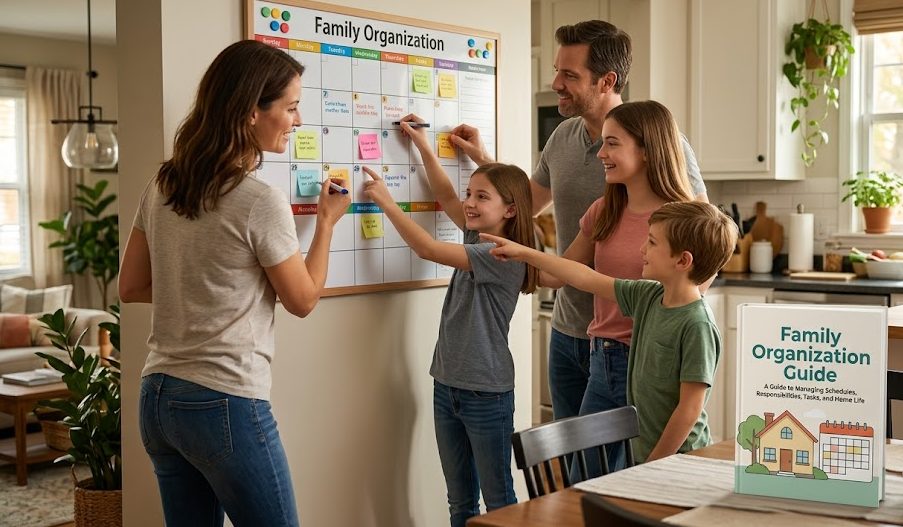
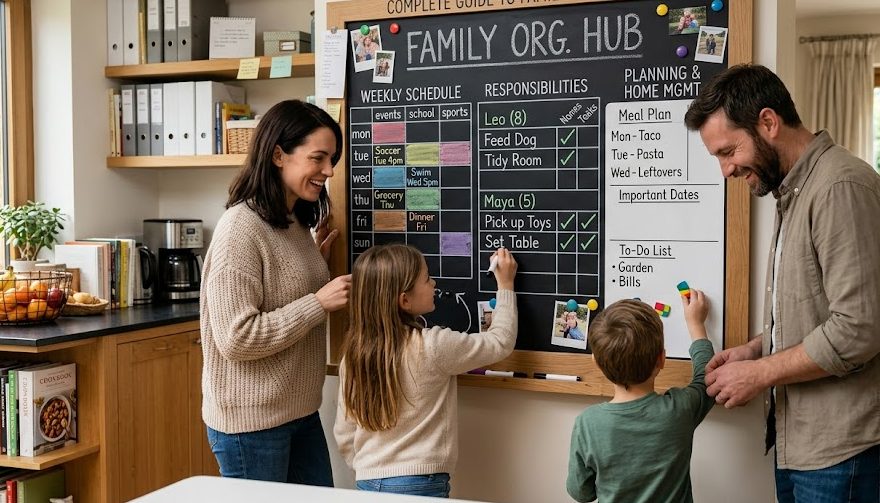
Important information is easier to follow when it is kept in one shared place. A wall calendar, family planner, notice board, or shared digital calendar can help everyone stay informed.
Include appointments, school activities, work commitments, transportation plans, and household events that affect more than one person.
- Update changes as soon as possible
- Remove outdated notes
- Use clear and short descriptions
- Review upcoming plans regularly
07. Build Small Habits Around Natural Moments
New habits are often easier to remember when they are connected to an activity that already happens every day. This creates a natural reminder without adding another complicated schedule.
☕ After breakfast: Check the day’s schedule.
🚪 After returning home: Place bags and important items in their usual locations.
🍽️ After dinner: Complete a short household reset.
🌙 Before bedtime: Prepare important items for tomorrow.
Choose habits that fit naturally into the family’s existing routine. A useful habit should feel practical rather than forced.
08. Share Small Responsibilities
Daily habits work better when one person is not expected to remember or manage everything. Give family members clear responsibilities that match their age, ability, and available time.
One person may update the calendar, another may check the entry area, and each family member may prepare their own belongings. Shared responsibility can reduce repeated reminders and support independence.
09. Keep the Routine Flexible
Some days will be busier than others. Appointments may change, unexpected tasks may appear, or family members may need extra time.
A flexible routine includes a few essential habits while allowing less important tasks to move. If the full routine cannot be completed, focus on the steps that will make the next part of the day easier.
Flexibility helps the system support family life instead of becoming another source of pressure.
10. Review What Works and Simplify
After using the habits for several weeks, review whether they are helping. Keep the steps that save time and remove or adjust the ones that feel unnecessary.
- Which habits make the day easier?
- Where does the household still feel rushed?
- Are responsibilities clear and balanced?
- What can be shortened or simplified?
Small improvements can make a routine more useful without requiring a complete redesign.
Conclusion
Simple daily habits can make family life feel less rushed by reducing repeated decisions, keeping important items organized, and creating clear moments for preparation. The goal is not to schedule every part of the day. It is to make common responsibilities easier to manage.
Start with one busy area, add a small practical habit, and allow time for the family to adjust. Preparing important items, completing a short daily reset, sharing responsibilities, and reviewing the schedule can gradually create a calmer rhythm.
When routines are simple and flexible, they can support a more organized home while leaving more time for rest, connection, and the activities that matter most.