Evenings can become busy when family members return home with unfinished work, school responsibilities, meals to prepare, and plans to organize for the next day. Without a simple routine, important items may be forgotten, mornings may become rushed, and one person may end up managing most of the preparation.
An effective evening routine helps the whole family complete a few useful steps before the day ends. It does not need to fill the entire evening or follow a strict schedule. The purpose is to create a calm transition, prepare important items, share responsibilities, and reduce the number of decisions that must be made the next morning.
1. Choose a Consistent Time to Begin
A routine is easier to follow when it begins around the same part of the evening. The exact time may vary depending on work, school, meals, and family activities.
Instead of choosing a strict clock time, use a natural event as the starting point. For example, the routine may begin after dinner, after everyone returns home, or before the family starts relaxing for the night.
- After the evening meal
- After kitchen cleanup
- Before screen or leisure time
- One hour before bedtime preparation
2. Review Tomorrow’s Schedule Together
A short schedule check can prevent surprises. Review important appointments, school activities, work commitments, transportation plans, and family events.
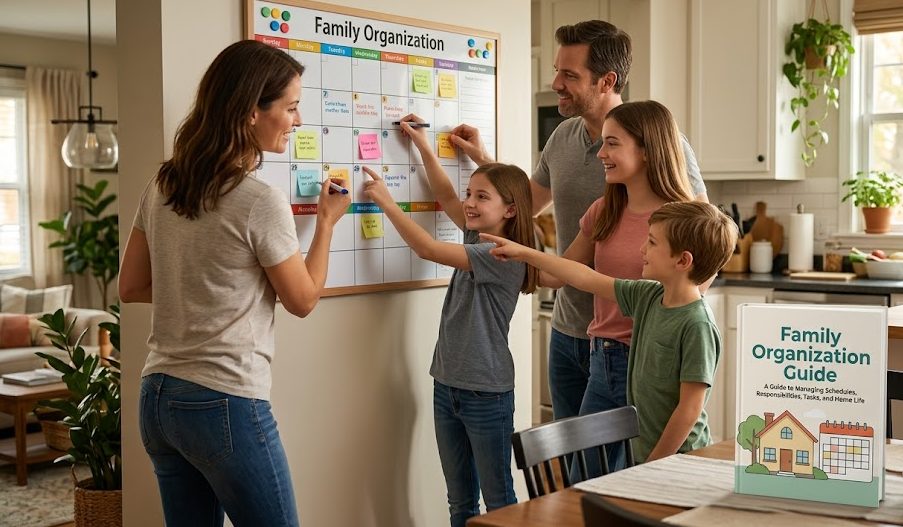
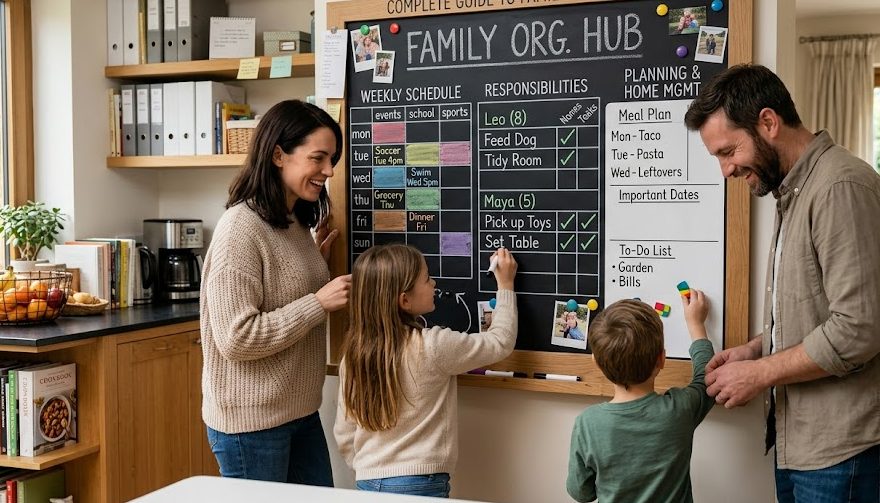
Use one shared calendar or family information area so everyone can see the same details. Discuss changes early enough to prepare for them.
- What is the most important event tomorrow?
- Does anyone need to leave at a different time?
- Are special items or documents required?
- Has any plan changed?
3. Prepare Bags, Materials, and Important Items
Preparing essential items in the evening can reduce morning searching. Family members can pack school or work bags, organize documents, charge devices, and place needed belongings in a consistent location.
Pack books, documents, work materials, or activity items.
Place important documents where they are easy to find.
Charge necessary devices in a safe, organized area.
Encourage each person to prepare their own belongings when possible. Shared systems should support independence rather than create more work for one family member.
4. Choose Clothes and Personal Items in Advance
Choosing clothes during a busy morning can create unnecessary decisions. Preparing clothing the night before can make the next day easier.
Check the expected activities and select suitable items. Place clothing and needed personal belongings together so they are ready when the day begins.
- Choose clothing for planned activities
- Prepare shoes and outerwear
- Gather personal items
- Place everything in one easy-to-reach location
5. Complete a Short Household Reset
A brief household reset can make the home feel more organized before the next day. This does not mean completing a full cleaning session. Focus on returning frequently used items, clearing common surfaces, and preparing important spaces.
Family members can each complete one small task. Shared effort prevents one person from carrying the entire responsibility.
- Return belongings to their usual places
- Clear the dining or living area
- Prepare the kitchen for the next morning
- Check the entryway for important items
6. Plan Simple Meals and Household Needs
A short evening review can make meal preparation easier. Check what ingredients are available and decide whether anything needs to be prepared or added to the shopping list.
The plan does not need to include every detail. A general meal idea can reduce next-day decisions while leaving room for changes.
7. Share Responsibilities Clearly
An evening routine works better when everyone understands their role. Avoid assigning all preparation and household work to one person.
Give family members responsibilities that match their age, ability, and schedule. One person may update the calendar, another may organize shared spaces, and others may prepare their own bags and clothing.
Clear responsibilities reduce repeated reminders and help the routine become a shared habit.
8. Protect Time for Rest and Connection
Preparation should not take over the entire evening. After important tasks are complete, leave time for conversation, hobbies, reading, relaxation, or quiet activities.
A balanced evening routine supports both organization and well-being. Keeping the preparation period short can make it easier to maintain.
9. Use a Short Final Check Before Bed
A final check can confirm that important preparations are complete. This may take only a few minutes.
- Tomorrow’s schedule has been reviewed
- Bags and important materials are ready
- Clothing and personal items are prepared
- Necessary devices are charged
- Common areas are reasonably organized
Conclusion
An evening routine can help the whole family prepare for tomorrow without creating a strict or exhausting schedule. By reviewing plans, preparing important items, completing a short household reset, and sharing responsibilities, families can reduce morning pressure.
The most useful routine is simple, realistic, and flexible. It should fit naturally into the household’s evening and leave enough time for rest.
Start with a few important steps and adjust the routine as family schedules change. Over time, evening preparation can become a reliable habit that supports calmer mornings, clearer communication, and a more organized home.