Daily life at home involves many small responsibilities. Meals need to be planned, important items need to be found, schedules need to be followed, household tasks need attention, and family members need clear information. When these activities depend only on memory or one person’s effort, everyday routines can become confusing and stressful.
A household system creates simple and repeatable ways to manage common responsibilities. It does not need to control every part of family life. Instead, it provides useful structure so people know where things belong, what needs to happen, and how important information should be shared. A practical system can reduce repeated questions and make daily routines easier to manage.
1. Identify the Parts of Daily Life That Need More Structure
Begin by observing where confusion or delays happen most often. Common examples include busy mornings, misplaced belongings, meal decisions, laundry, household cleaning, and changing schedules.
Look for repeated patterns rather than isolated problems. If family members regularly search for keys, ask about upcoming plans, or forget household responsibilities, these areas may benefit from a simple system.
- Which tasks require frequent reminders?
- What information is difficult to find?
- Where do family members experience delays?
- Which responsibilities are unclear?
- What creates unnecessary stress during the week?
Choose one or two areas to improve first. Small changes are easier to test and maintain.
2. Give Important Items a Consistent Home
Many daily delays occur because frequently used items are placed in different locations. Keys, bags, shoes, chargers, school materials, and household documents are easier to manage when they have clear storage spaces.
Create simple drop zones near the places where items are used. An entryway basket may hold bags, a small tray may keep keys together, and labeled storage can help family members return items after use.
Keys, bags, shoes, and items needed when leaving home.
Books, school materials, and frequently used supplies.
Devices, chargers, and small electronic accessories.
Keep storage locations easy to reach. A system is more likely to be used when it fits naturally into daily routines.
3. Create Simple Morning and Evening Routines
Routines reduce the number of decisions that family members need to make. A consistent morning plan can make preparation easier, while an evening routine can reduce pressure before the next day.
A morning routine may include getting ready, eating breakfast, checking the schedule, preparing bags, and gathering important items. An evening routine may include returning belongings, reviewing the next day, preparing clothes, and completing a small household task.
- Prepare personal items
- Check the family schedule
- Pack school or work materials
- Place important items near the exit
- Return items to their proper places
- Review the next day
- Prepare clothes and necessary materials
- Complete a short household task
4. Use One Shared Place for Family Information
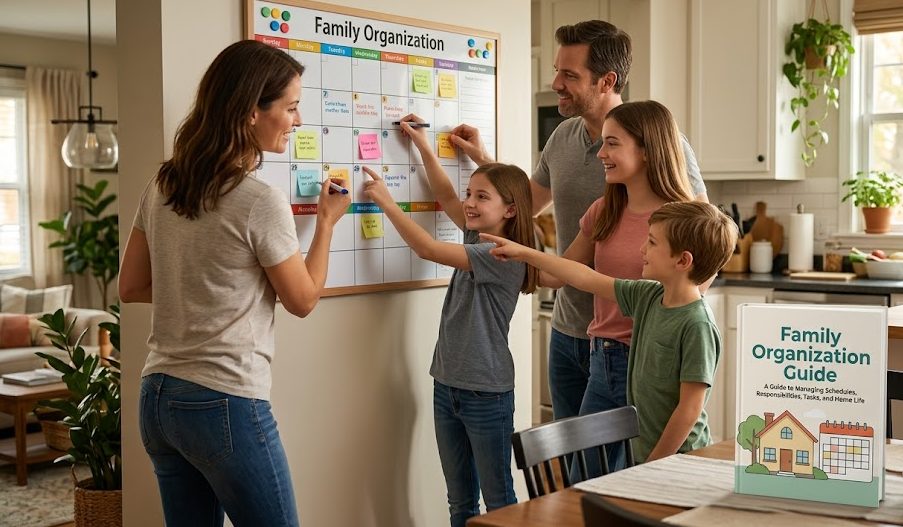
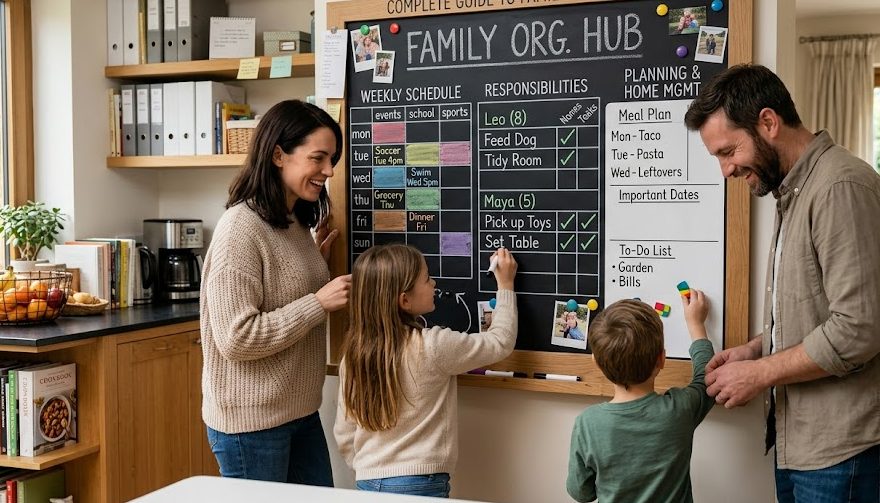
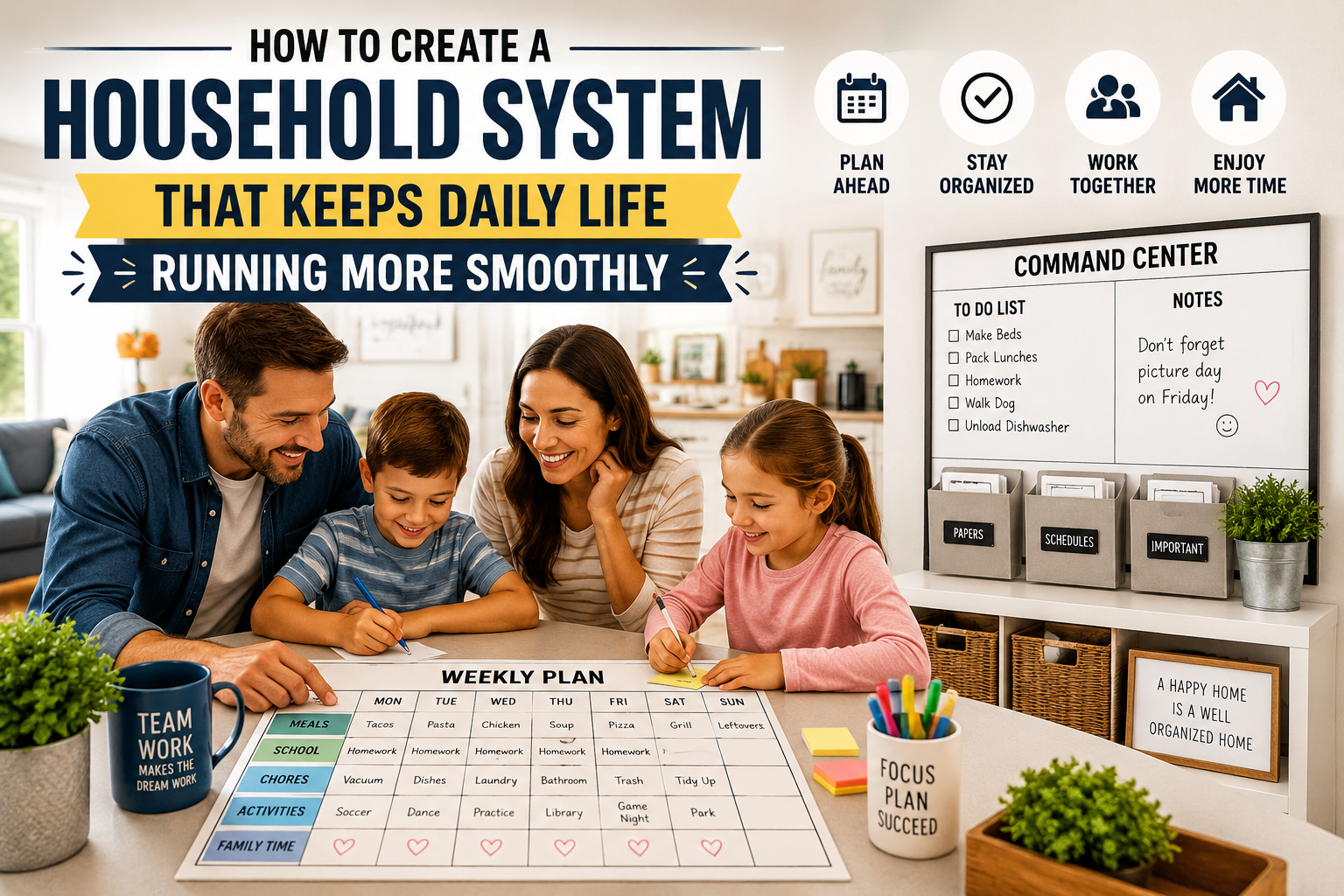
A shared information area can keep important details from becoming scattered across messages, notebooks, and individual devices. Use a wall calendar, whiteboard, planner, or shared digital calendar.
Include information that affects more than one person, such as appointments, school activities, work commitments, family events, and important household tasks.
📅 Calendar: Important dates and upcoming events
📝 Weekly priorities: Main tasks that need attention
🛒 Shopping list: Items that need to be purchased
🏠 Household notes: Useful reminders and updates
Review the information regularly and remove outdated notes to keep the area useful.
5. Make Household Responsibilities Clear
General instructions can create uncertainty. A request such as “help around the house” may not explain what needs to be done or when.
Use clear task descriptions and assign responsibilities based on age, ability, and availability. A visible task list can help family members remember without relying on repeated reminders.
6. Create Simple Systems for Meals and Supplies
Meal decisions can take time when no plan is available. A simple weekly meal outline can reduce daily uncertainty and make shopping easier.
Keep a shared shopping list in a convenient location. Family members can add items when supplies begin to run low. Organize the list into categories such as food, household supplies, and personal care items.
The meal plan does not need to be strict. It can include general ideas while allowing room for changes.
7. Use Checklists for Repeated Activities
Checklists can support independence when the same steps happen regularly. They are useful for school preparation, cleaning routines, travel planning, shopping, and home maintenance.
Keep checklists short and place them where they will be used. A morning checklist may be placed near the door, while a cleaning list may be stored with household supplies.
- Check the schedule
- Prepare needed items
- Return belongings to their places
- Complete one assigned task
8. Prepare for the Next Day
Small preparation habits can reduce pressure during busy mornings. Spend a few minutes each evening checking the next day’s schedule and gathering important items.
Prepare bags, clothes, documents, or materials in advance when possible. This can reduce last-minute searching and make departures more organized.
Keep the preparation routine short so it remains easy to follow.
9. Review and Adjust the System
Household needs change, so the system should be reviewed regularly. If a routine is ignored or a storage area becomes crowded, consider simplifying it or changing the location.
- Which parts of the system save time?
- What still causes confusion?
- Are responsibilities balanced?
- Is the shared information current?
- What can be simplified?
Small adjustments can keep the system useful without requiring a complete redesign.
Conclusion
A household system can make daily life run more smoothly by creating clear places for important items, simple routines, shared information, and understandable responsibilities. The goal is not to control every part of the day. It is to reduce unnecessary confusion and make common tasks easier.
Start with one area that creates repeated stress, such as busy mornings, misplaced belongings, or household planning. Add a practical routine or tool, then adjust it based on what works for the family.
Over time, small systems can become reliable habits that help family members stay organized, communicate clearly, and manage daily responsibilities with greater confidence.