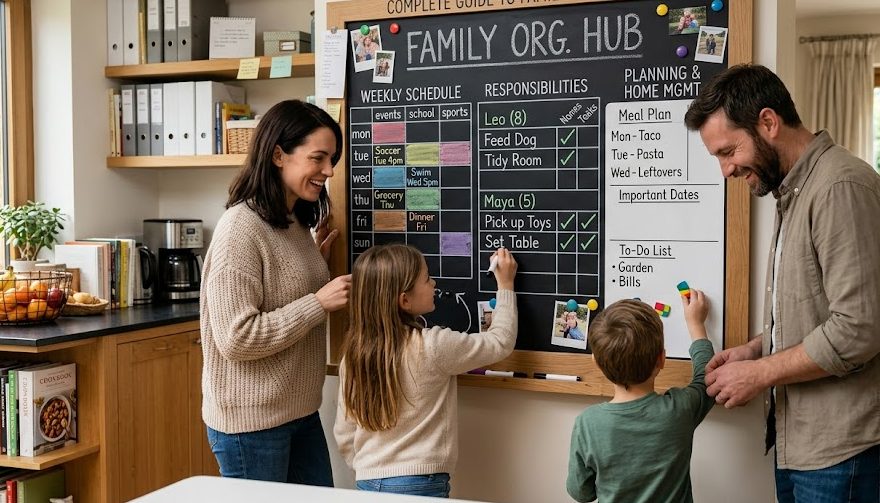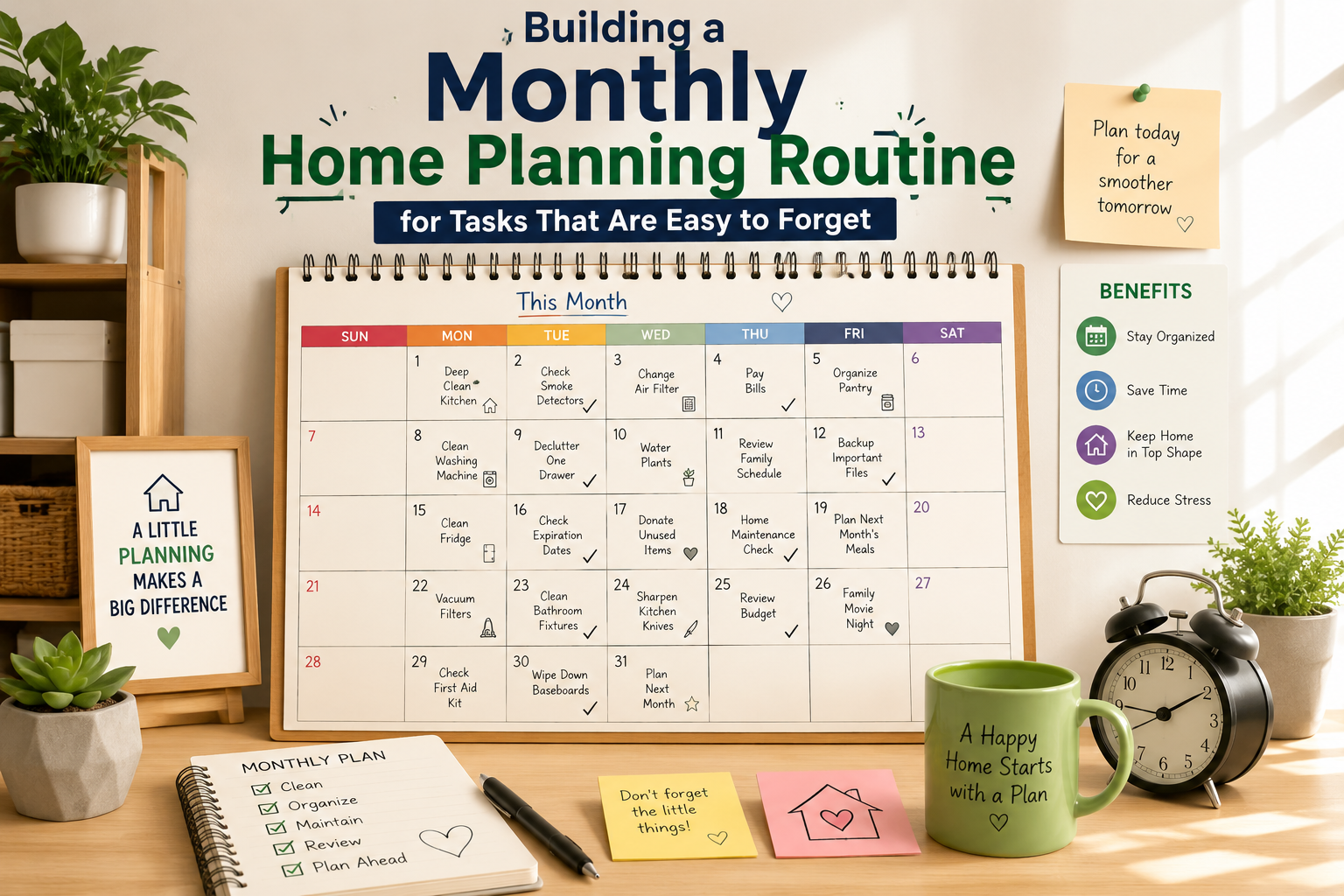
Many household responsibilities happen less often than daily chores, which makes them easier to forget. Tasks such as checking home supplies, reviewing important documents, organizing storage, cleaning certain areas, or planning upcoming needs may not appear on a weekly schedule. When these jobs are left only to memory, they can be delayed until they become stressful or require extra time.
A monthly home planning routine creates a simple way to review these responsibilities before they are overlooked. Instead of trying to remember everything throughout the month, families can use one regular planning session to check important areas, update household information, and prepare for upcoming needs.
1. Choose One Consistent Planning Day
A regular planning day makes the routine easier to remember. Choose a time that is usually calm and convenient, such as the first weekend of the month or the final Sunday evening.
The session does not need to take several hours. A focused review of twenty to thirty minutes may be enough to check household needs and create a practical plan.
Try to use the same time each month. Consistency helps the routine become a familiar habit instead of another task that must be remembered.
- Review the previous month
- Check upcoming events and responsibilities
- Inspect important household areas
- Create a short priority list
- Assign or schedule the most important tasks
2. Create a Monthly Household Checklist
A checklist reduces the need to remember every occasional task. Begin with a small list and add items only when they are genuinely useful.
Check storage spaces, common rooms, and areas that collect clutter.
Review important papers, schedules, and household information.
Check essential household items and prepare a shopping list.
Notice small home issues that may need attention.
The checklist should support the household rather than create pressure. If an item does not need attention, simply mark it for a later review.
3. Review Important Dates and Upcoming Plans
Monthly planning is a useful time to look beyond the current week. Review school schedules, work commitments, appointments, family events, travel plans, and important deadlines.
Adding major events to a shared calendar early can help family members prepare and avoid conflicts. Consider transportation, household responsibilities, and any items that may need to be arranged in advance.
4. Check Household Supplies Before They Run Low
Some household items are easy to overlook because they are used gradually. A monthly supply review can help prevent unexpected shortages.
Check frequently used items and note what needs to be replaced. Organize the list into categories such as cleaning supplies, kitchen essentials, personal care products, and basic household items.
There is no need to purchase everything immediately. The goal is to know what is running low and include important items in the next shopping plan.
5. Review Household Records and Information
Important household information can become outdated over time. Use the monthly routine to check whether contact details, schedules, service information, or household records need updates.
Keep private information secure and avoid placing sensitive documents in open areas. Use clearly labeled folders so important records can be found without searching through unrelated papers.
- Check important contact details
- Update family schedules
- Organize recent household documents
- Remove outdated notices
- Store important records securely
6. Notice Small Home Maintenance Needs
Small household issues may become more difficult when they are ignored for several months. A monthly review provides an opportunity to notice concerns before they become urgent.
Walk through common areas and look for items that need cleaning, adjustment, repair, or professional attention. Record the issue and decide whether it should be handled now or scheduled for later.
Do not attempt repairs that require professional knowledge or create safety risks. When appropriate, contact a qualified service provider.
7. Organize One Small Area Each Month
Trying to organize the entire home in one session can feel overwhelming. Choose one small area each month, such as a drawer, shelf, cabinet, storage box, or household folder.
Remove items that are no longer useful, return misplaced belongings, and create a clear location for frequently used items.
Small, consistent efforts can keep clutter from building up without requiring large cleaning projects.
- Month One: Kitchen storage
- Month Two: Entryway organization
- Month Three: Household documents
- Month Four: Bathroom storage
8. Turn the Review Into a Short Action Plan
After checking the household, choose a small number of priorities. Avoid creating a long list that cannot realistically be completed.
Mark each item as essential, important, or optional. Add urgent responsibilities to the calendar and leave flexible tasks for open periods.
When responsibilities affect more than one family member, discuss who will manage them. Clear ownership reduces the need for repeated reminders.
9. Review What Worked and Improve the Routine
At the end of the month, take a few minutes to review the plan. Notice which tasks were completed, which were delayed, and whether the checklist was useful.
- Which tasks were easy to complete?
- What was forgotten or delayed?
- Was the checklist too long?
- Did household responsibilities feel balanced?
- What should be adjusted next month?
Use the answers to simplify the next planning session. A routine should improve over time rather than remain fixed.
Conclusion
A monthly home planning routine can make occasional household responsibilities easier to remember and manage. By choosing one regular planning day, using a practical checklist, reviewing upcoming events, and checking important household areas, families can reduce the chance that small tasks will be overlooked.
The routine does not need to be long or detailed. A short review followed by a realistic action plan can provide enough structure to keep the home organized.
Start with a few useful categories, focus on the most important needs, and adjust the checklist as routines change. Over time, monthly planning can become a simple habit that supports a more prepared, organized, and manageable home.