A household runs more smoothly when everyone understands what needs to be done and who is responsible for each task. Without a clear system, important jobs may be forgotten, completed twice, or left for one person to manage. Over time, unclear responsibilities can create frustration and make everyday home life feel more difficult than necessary.
Organizing household responsibilities does not require a strict schedule or a complicated chart. A practical system should make tasks easy to understand, fair to share, and simple to adjust when family routines change. The goal is to create clarity while allowing enough flexibility for work, school, appointments, and unexpected events.
1. Make a Complete List of Household Responsibilities
Start by listing the activities that keep the home running. Include visible chores as well as the planning work that happens in the background.
Cleaning, organizing, laundry, and basic maintenance.
Planning, shopping, cooking, and kitchen cleanup.
Appointments, schedules, reminders, and family events.
Supplies, services, records, and regular home tasks.
A complete list makes it easier to see how responsibilities are currently shared. It may also reveal tasks that one person manages without others noticing.
2. Group Tasks by How Often They Are Needed
Not every household responsibility needs the same level of attention. Grouping tasks by frequency helps create a realistic plan.
☀️ Daily: Meals, dishes, basic tidying, pet care, and preparing for the next day.
📆 Weekly: Laundry, grocery shopping, cleaning, and household planning.
🗓️ Monthly: Organizing storage, checking supplies, reviewing records, and basic maintenance.
🔧 Occasional: Seasonal cleaning, repairs, and larger home projects.
This structure prevents the weekly plan from becoming crowded with tasks that do not need frequent attention.
3. Assign Responsibilities Clearly
General requests may create confusion because different people may understand them differently. Use clear descriptions that explain what needs to be completed.
❌ Unclear: Help with the kitchen.
✅ Clear: Load the dishwasher and wipe the counter after dinner.
❌ Unclear: Take care of the laundry.
✅ Clear: Sort and put away clean clothes on Sunday afternoon.
When responsibilities are specific, family members can complete them independently without waiting for repeated instructions.
4. Consider Time, Ability, and Availability
A fair system does not always mean that every person receives the same number of tasks. Consider each family member’s age, abilities, work hours, school schedule, and available time.
Someone with a busy week may take on fewer time-consuming responsibilities, while another person may manage tasks that fit more easily into their schedule. The plan can be adjusted as routines change.
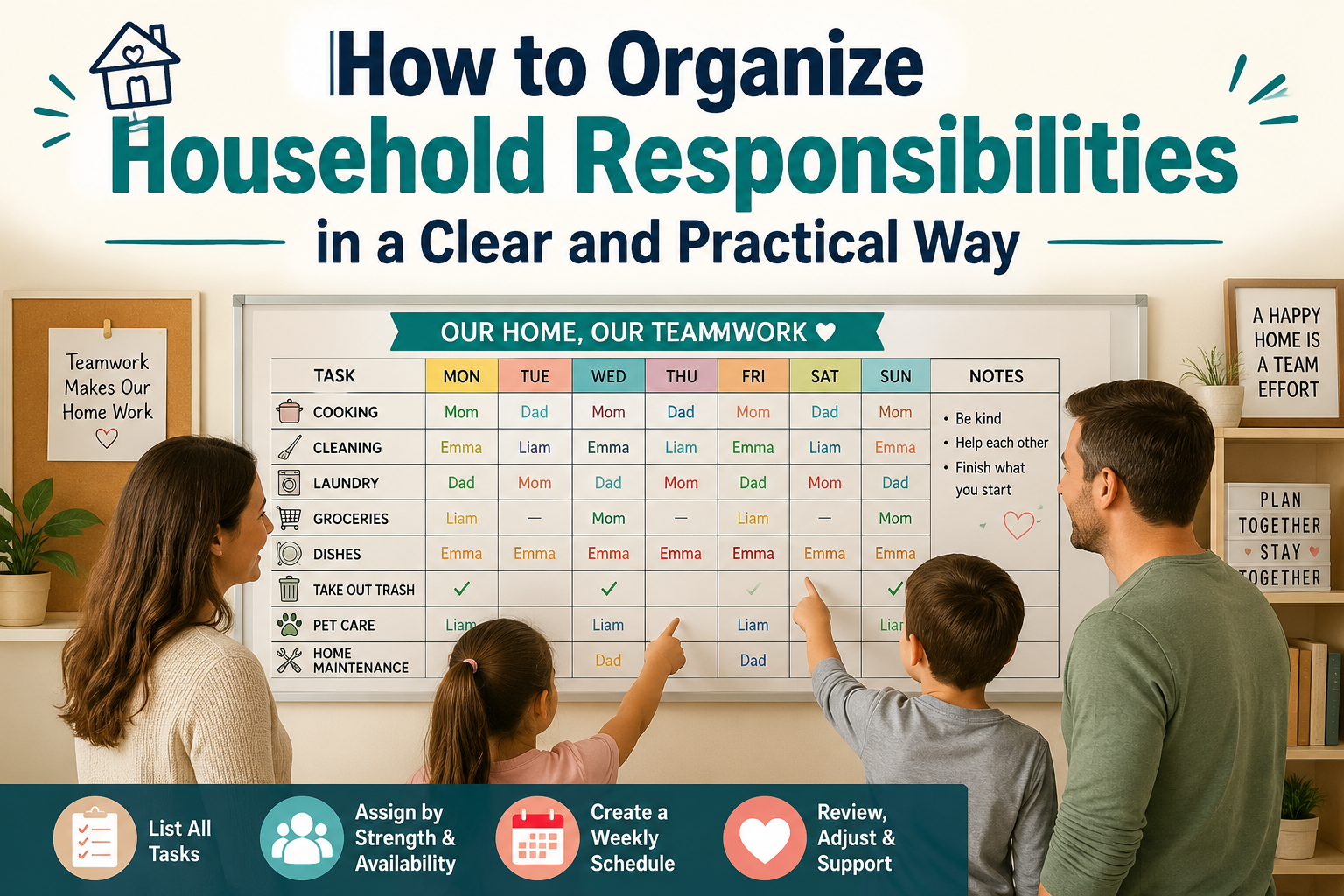
5. Use a Visible Responsibility Chart
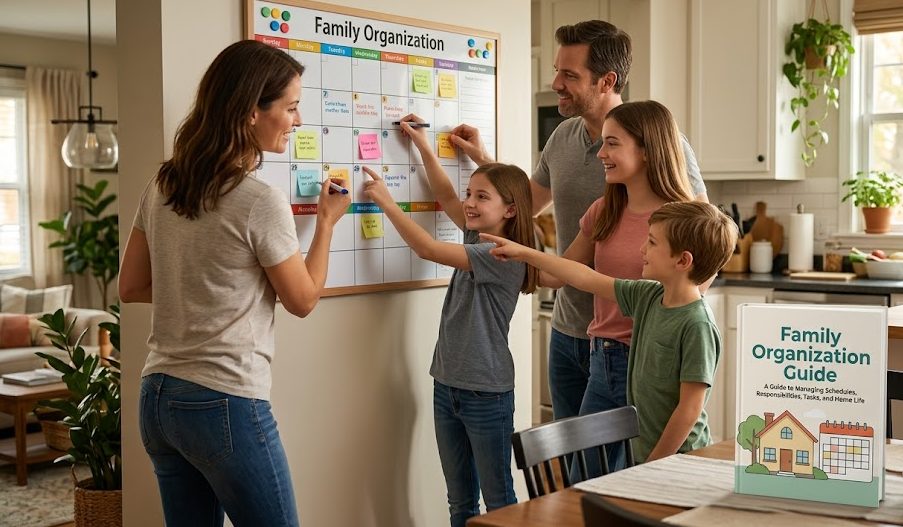
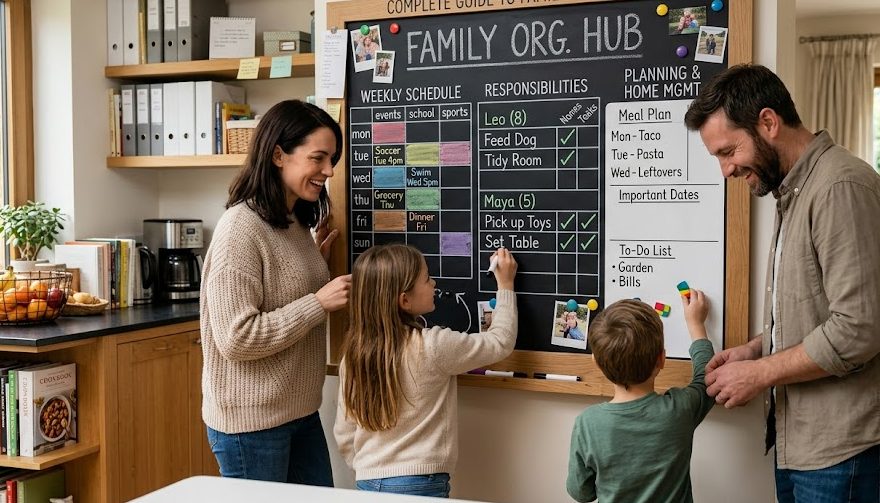
A shared chart can make household responsibilities easier to remember. It may be displayed on a whiteboard, printed planner, family notice area, or shared digital tool.
Keep the chart simple enough to understand at a glance. A detailed system that is difficult to update may be ignored.
6. Share the Planning and Mental Work
Household responsibilities include more than completing chores. Someone may also need to notice when supplies are low, plan meals, schedule services, remember appointments, and follow up on unfinished tasks.
Share this planning work by giving family members ownership of specific areas. For example, one person may manage the shopping list, while another keeps track of household maintenance.
Ownership means handling the full process when possible, including noticing what is needed, planning the task, and completing or arranging it.
7. Rotate Tasks When It Makes Sense
Some responsibilities can be rotated to prevent one person from handling the same task every week. Rotation may also help family members understand the time and effort involved in different parts of home management.
For example, meal preparation, kitchen cleanup, or common-area cleaning can rotate based on availability. Keep the rotation predictable so everyone knows what to expect.
- Week One: Family member A manages kitchen cleanup.
- Week Two: Family member B manages kitchen cleanup.
- Week Three: Family member C manages kitchen cleanup.
8. Build Flexibility Into the Plan
Unexpected events may affect household routines. Work may become busy, school activities may change, or a family member may need extra support.
Allow tasks to be moved, exchanged, or shared when necessary. If a responsibility cannot be completed, focus on finding a practical solution rather than placing blame.
Flexible planning helps the household continue functioning during busy or unusual weeks.
9. Review Responsibilities Regularly
Family schedules and needs change over time. A responsibility plan should be reviewed regularly to make sure it remains fair and useful.
- Are responsibilities clear?
- Is one person managing too much?
- Are any tasks regularly forgotten?
- Have schedules changed?
- Should responsibilities be adjusted or rotated?
A short weekly or monthly review can prevent small problems from becoming long-term frustration.
Conclusion
Organizing household responsibilities in a clear and practical way can reduce confusion and create a more balanced home environment. A complete task list, clear assignments, realistic scheduling, and shared planning can help everyone understand how they contribute.
The best household system is simple enough to use and flexible enough to adjust. It should support cooperation without requiring one person to remember or manage everything.
Start with a few important responsibilities, make expectations clear, and review the plan regularly. Over time, shared household organization can become a natural part of family life and make everyday routines easier for everyone.