Family life often involves many small decisions, repeated tasks, changing schedules, and shared responsibilities. When household information is unclear or everyday tasks do not have a regular process, simple activities can create unnecessary confusion. Family members may ask the same questions, forget where items belong, or wait for someone else to explain what needs to be done.
Simple home systems can make daily life easier by creating clear routines and predictable ways to handle common tasks. These systems do not need to be strict or complicated. They are practical habits, shared tools, and organized spaces that help family members understand what to do without relying on constant reminders.
Identify the Areas That Create the Most Confusion
Before creating new routines, observe the parts of daily life that regularly cause delays or misunderstandings. These may include busy mornings, school preparation, meal planning, household chores, laundry, misplaced items, or evening routines.
Look for repeated problems instead of focusing on one unusual day. If family members often search for keys, forget appointments, or ask what is planned for dinner, those patterns may show where a simple system could help.
Write down a few questions:
- Which tasks require frequent reminders?
- What information do family members ask about repeatedly?
- Which parts of the day feel rushed?
- What items are often misplaced?
- Where do responsibilities become unclear?
Choose one or two areas to improve first. Trying to organize the entire home at once may make the process difficult to maintain.
Create a Clear Place for Everyday Items
Many household delays happen because important items do not have a consistent home. Keys, bags, school supplies, chargers, shoes, and documents may be placed in different locations each day.
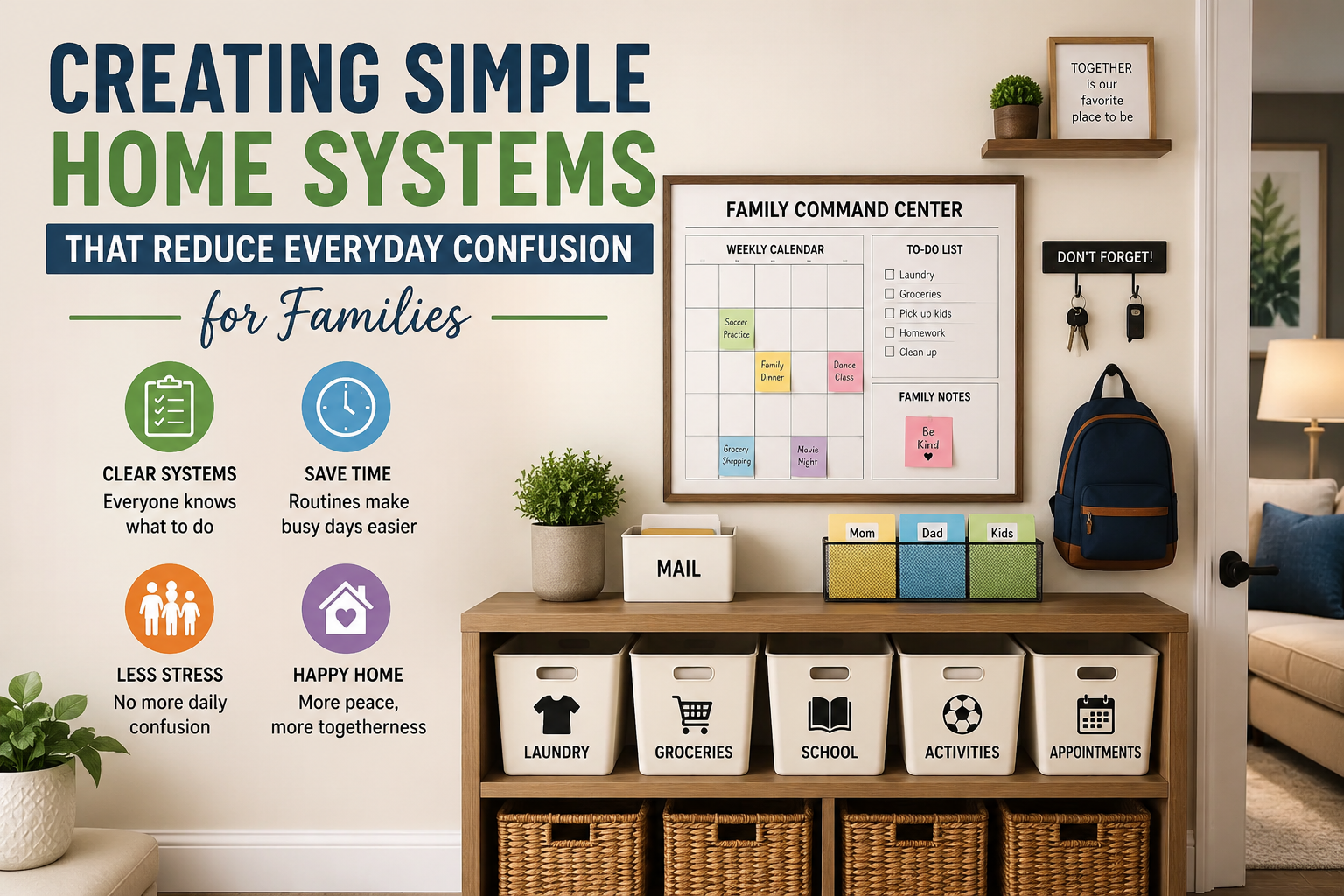
Create simple storage areas near the places where items are commonly used. A small entryway station can hold keys, bags, and shoes. A labeled drawer can store chargers and frequently used accessories. A family document folder can keep important papers together.
Choose locations that are convenient. A storage system may be ignored if family members need to walk across the home to use it. The easiest location is often the one closest to where the item is used or placed down.
Build Simple Morning and Evening Routines
Routines reduce the number of decisions people need to make each day. A consistent morning routine can help family members prepare without repeated instructions, while an evening routine can make the next day easier.
A simple morning routine may include:
- Get dressed and prepare personal items
- Eat breakfast
- Check the family schedule
- Pack school or work materials
- Place needed items near the door
An evening routine may include preparing clothes, checking the next day’s plans, returning items to their proper places, and completing a small household task.
Keep routines short and realistic. A routine with too many steps may be difficult to follow during busy periods.
Use a Shared Family Information Area
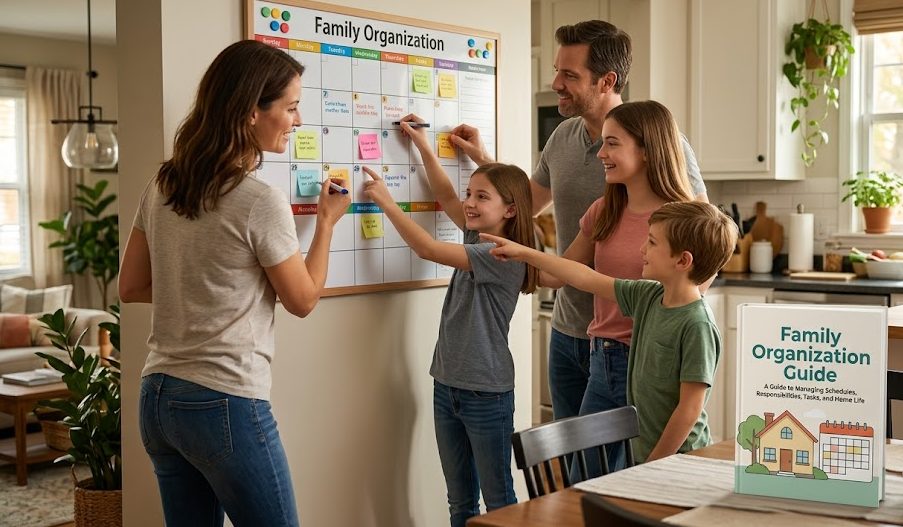
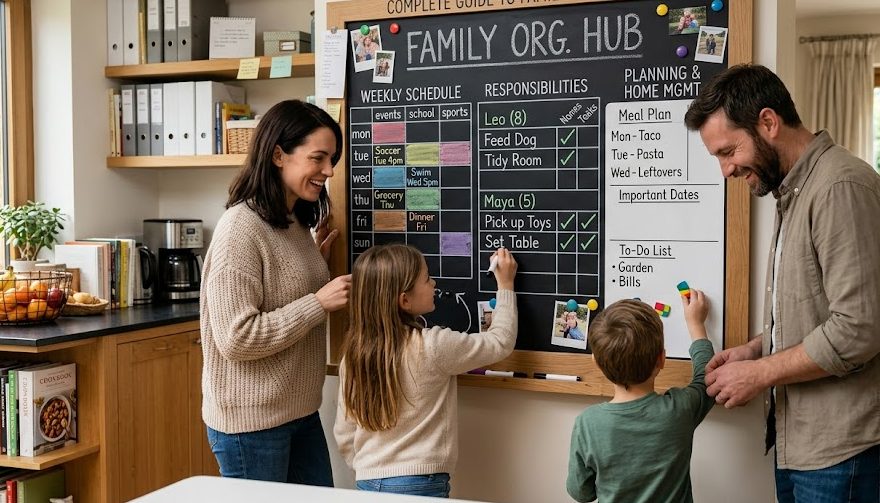
A shared information area can prevent important details from being lost in conversations or messages. It may include a wall calendar, whiteboard, notice board, or digital planning tool.
Use the area for information that affects more than one person, such as school events, appointments, meal plans, household tasks, and family activities.
Keep the information clear and current. A crowded board may be difficult to read, so remove old notices and update changes regularly.
📅 Calendar: Important dates and family activities
📝 Weekly plan: Main household priorities
🛒 Shopping list: Items that need to be purchased
🏠 Task list: Shared responsibilities
Make Household Responsibilities Specific
Confusion often happens when tasks are described in general terms. Instructions such as “clean up” or “help around the house” may mean different things to different people.
Make responsibilities clear by describing the task, the expected result, and when it should be completed. For example, instead of saying “organize the kitchen,” assign specific actions such as loading the dishwasher, wiping the table, or returning items to their shelves.
Consider each family member’s age, schedule, and abilities. Responsibilities should be fair and realistic rather than identical for everyone.
Create Easy Systems for Meals and Shopping
Meal planning can reduce daily questions about what to cook and help families prepare ingredients in advance. A simple weekly meal plan does not need to include every detail. It can list general meal ideas and leave room for changes.
Keep a shared shopping list in an easy-to-access location. Family members can add items when they notice that something is running low. This can reduce forgotten purchases and unnecessary trips to the store.
Consider organizing the list into categories such as fresh food, household supplies, personal care items, and pantry products. A clear list can make shopping faster and easier.
Use Checklists for Repeated Activities
Checklists are useful when the same steps are completed regularly. They can support independence and reduce the need for one person to remember everything.
Useful household checklists may include:
- School or work preparation
- Weekly cleaning tasks
- Travel packing
- Grocery planning
- Home maintenance checks
- Preparing for guests
Place each checklist near the area where it will be used. A checklist should be short enough to read quickly and clear enough for family members to follow without extra explanation.
Reduce Decisions by Preparing in Advance
Small preparation steps can make busy days feel more manageable. Preparing bags, clothes, meals, or important documents the night before may reduce morning pressure.
Choose a regular time for preparation. For example, family members can spend ten minutes each evening checking the next day’s schedule and gathering what they need.
Preparation does not need to be perfect. The goal is to reduce avoidable delays and make important tasks easier to complete.
Keep Systems Flexible and Easy to Maintain
A home system should support family life rather than make it feel overly controlled. Schedules change, responsibilities shift, and unexpected events happen. Build flexibility into routines so the household can adjust without abandoning the entire system.
Review systems regularly and ask whether they are still useful. If a checklist is ignored or a storage area becomes crowded, simplify it or change its location.
A system that is easy to maintain is more likely to become a lasting habit.
Involve the Whole Family
Home systems are more effective when family members help create them. Ask for ideas about where items should be stored, which routines are practical, and how responsibilities can be shared.
When people participate in the planning process, they are more likely to understand and use the system. Children can also learn valuable skills such as organization, time management, and responsibility.
Keep communication respectful and focus on improving the process rather than blaming someone when a task is forgotten.
Conclusion
Simple home systems can reduce everyday confusion by creating clear places for important items, predictable routines, shared information, and understandable responsibilities. The purpose is not to organize every minute of family life. It is to make common activities easier and reduce unnecessary stress.
Start with one area that causes repeated confusion, such as busy mornings, household tasks, or misplaced belongings. Add simple tools such as labeled storage, checklists, or a shared calendar, then adjust the system based on what works.
Over time, these small habits can help family members become more independent, communicate more clearly, and manage everyday responsibilities with greater confidence.